Exclusive

Houthi top diplomat says no intention to shut down Red Sea shipping, group open to talks

In an exclusive interview with Al-Monitor, Acting Foreign Minister of the Houthi-led administration Abdulwahid Abu Ras said concerns over a potential closure of the Red Sea are being fueled by Saudi Arabia.

Houthi
Acting Foreign Minister of the Houthi-led administration Abdulwahid Abu Ras is pictured in this undated image. — SABA

The Houthis’ top diplomat said Friday that the group has no plans to shut down Red Sea shipping, insisting traffic remains normal despite a decline in vessel movements following the rebels’ recent seizure of the territory around the Bab al-Mandeb Strait.

In an exclusive interview with Al-Monitor via Zoom, Acting Foreign Minister of the Houthi-led administration Abdulwahid Abu Ras said concerns over a potential closure of the Red Sea are unfounded and being fueled by Saudi Arabia.

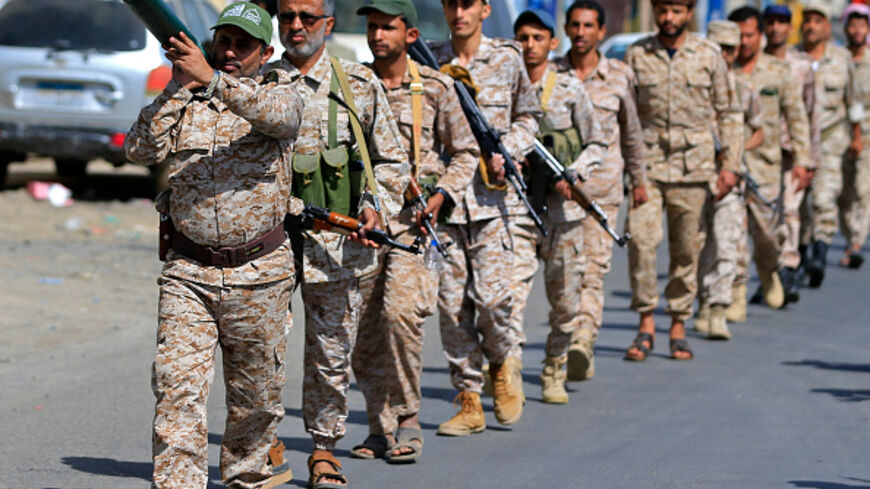
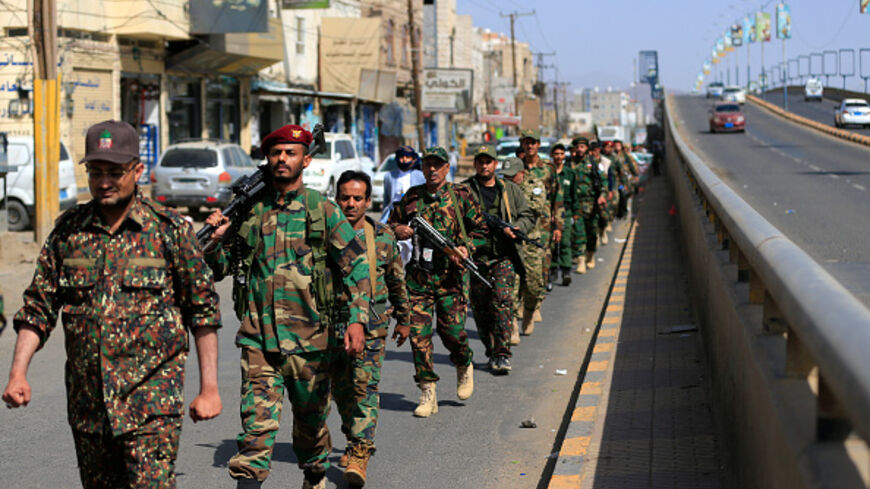
The Houthis control large swaths of northwestern Yemen and have around 350,000 fighters in their ranks, according to a 2024 United Nations estimate, posing a major challenge to the internationally recognized government and the Saudi-led coalition that supports it.

'Navigation is normal'

Abu Ras dismissed fears that the Red Sea could be closed, accusing Saudi Arabia of stoking those concerns.

“The Saudi regime is trying to scare the world that [the Houthis] will close Bab al-Mandeb and pose a risk to international navigation and the trade flow in the Red Sea," he said. "We have affirmed we have no intention to close Bab al-Mandeb or the Red Sea."

“Navigation is normal," he added. 

However, maritime traffic through the Bab al-Mandeb Strait has fallen following the Houthis’ recent military advances on Yemen's Red Sea coast. A total of 21 commodity vessels passed through the strait on Monday, down from 28 the previous day, Reuters reported, citing Kpler data. Before the US-Israel-Iran war began in February, around 50 ships transited the waterway each day.

The drop is even more pronounced in the Strait of Hormuz, where just four vessels transited on Monday, according to Reuters, compared with roughly 130 a day before the start of the war in February.

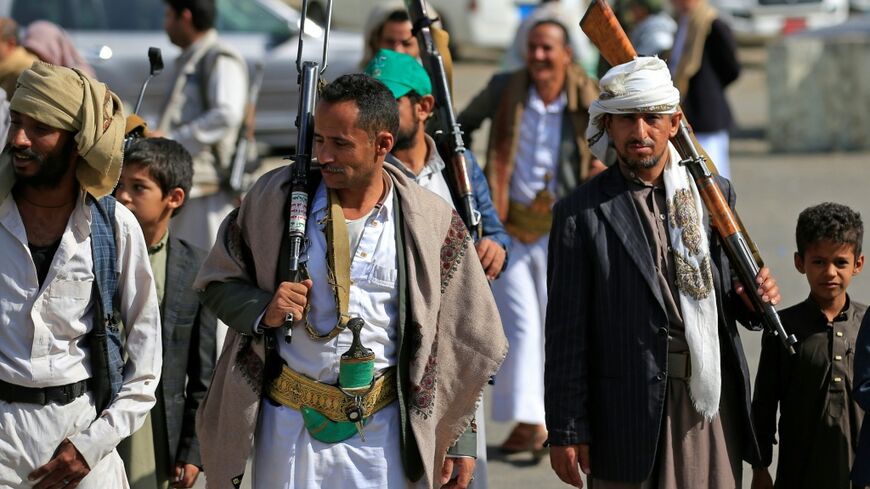
Fighters loyal to the Houthi authorities, gather during a rally to recruit more fighters, in Sanaa on September 10, 2026.
Fighters loyal to the Houthi authorities, gather during a rally to recruit more fighters, in Sanaa on Sept. 10, 2026. (Photo by Mohammed HUWAIS / AFP via Getty Images)

Saudi Arabia has been rerouting oil shipments through the Red Sea in response to disruptions in the Strait of Hormuz. Amid the broader shipping turmoil, Saudi crude production fell to 6.238 million barrels per day in August, down 1.9 million bpd from the previous month and its lowest level since 1990, according to Bloomberg. 

The shipping disruptions come after the Houthis seized the Yemeni territory along the Bab al-Mandeb Strait and the Red Sea port city of Mokha late last week, as well as several nearby islands, giving the group control of Yemen’s entire Red Sea coastline. The Houthis had already resumed attacks in July on vessels they say are linked to Saudi Arabia, following the renewed fighting in Yemen.

Abu Ras blamed the latest outbreak of widespread clashes on what he called “escalation by the Saudi regime,” saying the fighting erupted during a “period of de-escalation," while also denouncing US military support for Saudi Arabia.

The latest violence followed a July strike by the Saudi-led coalition on the Houthi-controlled airport in Yemen’s capital, Sanaa, which helped trigger a renewed period of fighting. The strike was intended to deter an Iranian plane carrying Houthi officials from landing after it failed to receive permission from the Saudi-led coalition, The Associated Press reported at the time.

In the latest sign of escalation, the Saudi civil defense issued an alert in Mecca on Tuesday, the first time such a warning has been made for the holy city since the Houthis began launching missile and drone strikes at the kingdom recently. Abu Ras denied the Houthis targeted Mecca, and Saudi authorities did not specify the exact reason for Tuesday's alert. Regional states including Qatar and Egypt condemned the Houthi strikes on Saudi Arabia in Tuesday statements but did not mention Mecca.

The Iran axis

Abu Ras said that the Houthis and Iran have “common ground regarding confronting the American and Israeli presence in the region,” but he insisted the group is acting independently. 

“Yemeni affairs are for Yemenis,” he said. However, he added, “We respect and appreciate Iran for the great efforts it makes confronting the Israeli enemy, and for the Palestinian and Lebanese people.” 

Iran has long provided extensive support to the Houthis, including during the latest escalation. Reuters reported in July that Tehran flew Islamic Revolutionary Guard Corps advisers and missile equipment to the group that month.

In July 2025, Yemen’s government-aligned National Resistance Forces intercepted 750 tons of Iranian-supplied munitions and military hardware bound for the Houthis, including missiles, drone components and radar systems, US Central Command said at the time.

The Houthis are a key part of Iran’s so-called Axis of Resistance, and their recent military operations have drawn praise from senior Iranian officials. Abu Ras, however, insisted the decision to resume fighting in July was a “Yemeni decision,” while acknowledging that others in the region may “benefit” from the conflict.

The Houthi attacks come as Saudi Arabia also faces strikes by Iran-backed militias in Iraq. On Friday, Saudi authorities announced the closure of the East-West pipeline, which carries oil from the kingdom’s eastern fields to the Red Sea coast, following an attack Riyadh blamed on Iraqi militias.

This frame grab taken from AFPTV video footage on September 9, 2026, shows a member of the Saudi-backed Yemeni government forces firing a heavy machine gun during clashes with Houthi fighters in the Al-Kadha area, west of Taiz province, on September 8, 2026.
This frame grab taken from AFPTV video footage on Sept. 9, 2026, shows a member of the Saudi-backed Yemeni government forces firing a heavy machine gun during clashes with Houthi fighters in the Al-Kadha area, west of Taiz province, on Sept. 8, 2026. (Photo by AFPTV / AFP via Getty Images)

Houthis 'open' to talks

Despite the surge in violence and faltering diplomacy, negotiations to end Yemen’s civil war remain possible, Abu Ras said.

“We are open,” he said of peace talks, praising the 2022 United Nations roadmap. “Our demand is clear: Lift the siege,” he added, referring to the Saudi-led blockade imposed on Houthi-held areas after Riyadh launched its military intervention in Yemen in 2015.

The UN-backed truce reached in 2022 sharply reduced hostilities and expanded humanitarian access, ushering in a period of relative calm that largely held until fighting resumed this past July.

The renewed conflict has since taken on broader international significance as Houthi advances and attacks threaten shipping through the Red Sea. The UN Security Council is set to discuss Yemen on Tuesday amid mounting concerns over maritime security in the strategic waterway.

The stakes extend well beyond Yemen. The Suez Canal, which connects the Red Sea to the Mediterranean, typically carries around 30% of global container traffic. Houthi attacks on commercial shipping during the Gaza war prompted major carriers, including Maersk, to divert vessels away from the canal. Maersk resumed transits through the Suez Canal in January.

Related Topics

You're reading a free AL-MONITOR Original

Want more like this?

AL-MONITOR All-Access gives you unlimited access to all our journalism, the full Daily Briefing, exclusive interviews, premium newsletters, and live events — for less than $2/week.

See Offers