Explainer

After $5B in Saudi backing, what’s next for bankrupt LIV Golf?

Saudi Arabia is likely to focus on hosting key sporting events and developing the esports scene after the failures of LIV Golf.

LIV Golf
The LIV Golf logo is displayed in this undated promotional picture. — LIV Golf

The PGA Tour said Tuesday that it is not currently considering a new pathway for LIV Golf players to return, further complicating the future of golfers who joined the Saudi-backed circuit. The setback comes as Saudi Arabia shifts its sports strategy toward hosting major events and away from costly efforts to build new leagues, following LIV Golf’s financial struggles, experts told Al-Monitor.

LIV, the breakaway golf competition that was once a threat to the Professional Golfers' Association of America, has vowed to push on after losing its backing from the Saudi sovereign wealth fund in April and declaring bankruptcy last week, but could struggle to stay afloat in the absence of money from the kingdom.

Rise and fall

LIV Golf, an international golf tour that was until recently funded by the Saudi Public Investment Fund, announced on Sept. 8 that it had filed for bankruptcy in the US state of New Jersey as part of a restructuring agreement with a subsidiary of the London-based asset manager BC Partners. CEO Scott O’Neill vowed that the league will go on, saying in a statement that he and the leadership “believe deeply in LIV Golf’s future.” 

The league said it is seeking recognition of its US bankruptcy filing in England and Wales in order to “preserve the value of its international assets and operations.” 

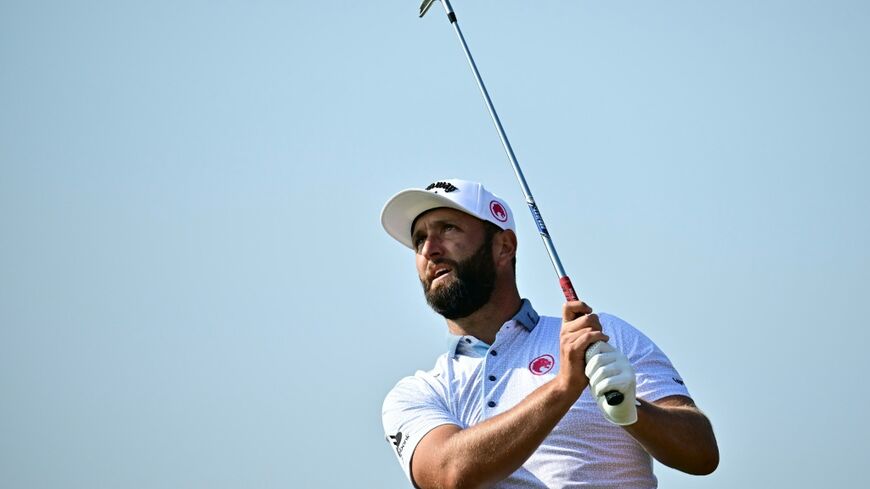
The filing shows that LIV Golf has between $500 million and $1 billion in liabilities. Jon Rahm is its largest player creditor, owed roughly $7.4 million, followed by Bryson DeChambeau at about $5.7 million. Several other players are owed more than $1 million.

LIV Golf has asked the bankruptcy court for permission to terminate its existing player contracts, arguing that the deals “do not reflect the contemplated compensation structure under LIV 2.0.” LIV 2.0 refers to a proposed restructuring of the league under a new ownership and compensation model involving players and a lead investor, the details of which are still being negotiated.

The PIF announced in April it was ceasing its funding of the league after it failed to meet viewership and revenue expectations. 

LIV Golf burst onto the scene in 2022, capturing top players like DeChambeau and Brooks Koepka. But it failed to meet expectations, lagging behind the PGA Tour in viewership and posting massive losses. 

While the PGA Tour’s tournaments are primarily played in the US and Canada, seven of LIV Golf's 12 events in 2026 took place outside the US and Europe on courses in Saudi Arabia, South Korea, South Africa and other locations. 

Threatened by the breakaway league, the PGA Tour agreed to a merger with LIV Golf in 2023. The merger never materialized, however, and LIV struggled both financially and in keeping up with the PGA Tour's popularity. The Athletic reported last week that the league had accumulated close to $2 billion in losses by the end of 2025 via its operations outside the United States alone. In terms of viewership, Golf.com found that the PGA Tour’s viewership was 17.78 times larger than LIV’s for final-round play during the first half of 2025. 

LIV Golf has been working to secure funding since the PIF’s exit. The league said in August that it had secured a new investor that would enable play in 2027, but did not reveal their identity or other details. O’Neill has been seeking a $300 million investment to keep the league afloat. 

Rethinking Vision 2030

The PIF reportedly spent more than $5 billion on LIV Golf as part of Saudi Arabia’s broader sports push under Vision 2030, the economic diversification strategy launched in 2016 to reduce the kingdom’s dependence on oil. The fund’s other major sports investments include the 2021 acquisition of English soccer club Newcastle United by a PIF-led consortium.

The pullback in Saudi funding comes amid the economic fallout from the US-Israel-Iran war. Saudi oil production fell to around 6.2 million barrels per day in August, its lowest level since 1990 and well below the more than 10 million bpd produced in February, before the conflict began.

Oil exports are responsible for about 60% of the Saudi government’s revenue. The kingdom has struggled to export its oil due to the conflicts in the Strait of Hormuz and the Red Sea. Meanwhile, Bloomberg reported in late August that the kingdom is seeking about $8 billion in loans to help alleviate war-related financial pressures. 

The fallout from LIV Golf could usher in changes in how Saudi Arabia handles sports ventures. Robert Mogielnicki, a nonresident fellow at the Arab Gulf States Institute in Washington, said that Saudi Arabia still has "plenty of interests in sports and entertainment assets," but is unlikely to undertake an endeavor like LIV Golf again with its billions of dollars in startup costs. 

"The higher-risk investment initiatives like starting up new leagues, however, are unlikely to be a primary focus going forward," Mogielnicki told Al-Monitor.

In comparison to the present strategy led by SURJ, Simon Chadwick, a professor at the Emlyon Business School in Shanghai, said that Saudi Arabia previously “had no coherent sports strategy” at the time LIV Golf was launched, characterizing the kingdom’s sports investments at the time as being driven by “political influence and financial opportunism.”

“The PIF nowadays has a specialist investment division within the organization, which has brought a more strategic, coherent approach to sports investments,” Chadwick told Al-Monitor.

Chadwick said he expects Saudi Arabia to concentrate increasingly on large-scale events and infrastructure, including the 2034 FIFA World Cup, esports, a potential Olympics bid and Qiddiya City, a vast entertainment and sports development that will include a water park and multiple sporting venues.

That shift is reflected in the PIF’s 2026-2030 investment strategy, released in August, which identifies esports development and the hosting of major international sporting events as priorities.

Saudi Arabia has already emerged as a major force in global esports. This year’s Esports World Cup, however, underscored the risks facing that strategy: The August tournament was moved from Riyadh to Paris because of war-related security and travel concerns.

Chadwick said LIV Golf could become more viable in the future by focusing on the relatively new golf markets in the Gulf and China. Still, BBC Sport reported last week that LIV Golf players have no obligation to sign on with the new version of the league that emerges following the bankruptcy proceedings, regardless of any multiyear contracts. 

An AL-MONITOR subscriber gifted you this article. Gifted by an AL-MONITOR subscriber.

A gift worth sharing.

This one's on us. Subscribe for unlimited access to everything we publish, plus gift articles for your inner circle. As low as $2/week. This one's on us. Get unlimited access, plus gift articles for your inner circle, from $2 a week.

See Offers

Related Topics