



EU grapples with migrant crisis in Spain's N. Africa enclave


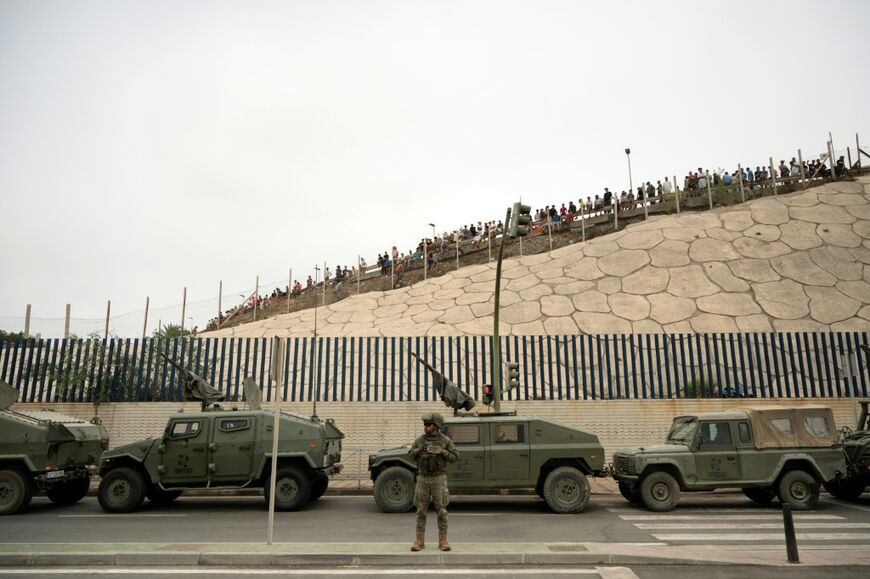
France and Italy bolstered border controls on Saturday after about 60,000 people crossed into Spain's enclave in North Africa, sparking one of the largest migrant crises for the European Union in recent years.
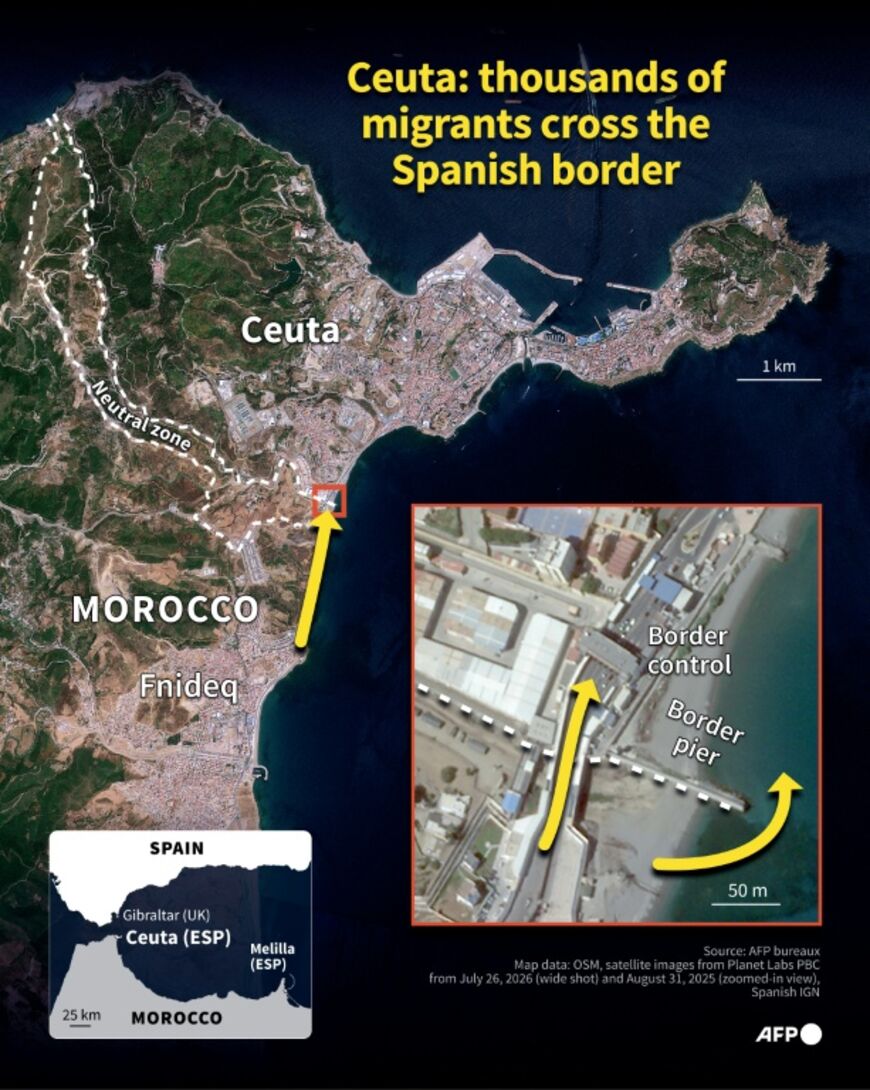
The migrants entered Ceuta from Morocco, the enclave's regional president Juan Jesus Vivas told reporters, but by Friday evening officials said more than 48,000 had returned.
To cross into Ceuta, many swam around a small border barrier that juts out into the Mediterranean. At least 34 people died in the attempt.
The sudden influx sparked an international crisis.
France tightened checks on its border with Spain and said it would increase its police presence there fivefold to 334 officers and gendarmes by Saturday.
Italy announced it had suspended its Schengen agreement with Spain allowing for visa-free movement between borders.
Italian officials said the suspension would take effect on Saturday and last for one month.
Several European countries suggested Spain's membership in the Schengen free movement zone should be suspended, though Spain's foreign minister said integrity of the zone was "guaranteed".
Across the Atlantic, US President Donald Trump led far-right efforts to seize on the crossing to advance hardline immigration policies.
- 'Trafficking mafias' -
Madrid rushed troops, more police, drones, divers and boats to the outpost that it has run for centuries as Prime Minister Pedro Sanchez and his interior minister visited on Friday.
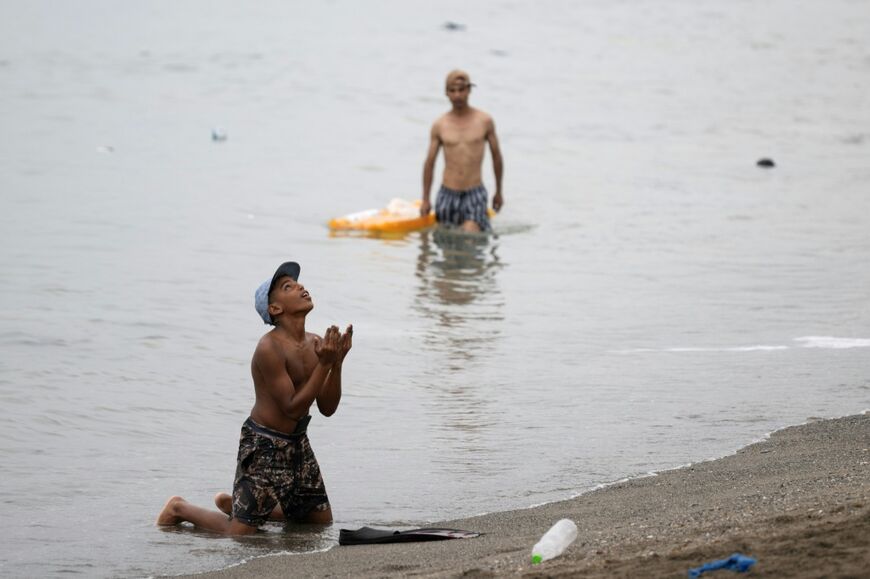
Overnight into Saturday, AFP journalists observed groups of young people wandering the beaches and streets of Ceuta. Dozens of men slept on the sand.
There was a massive police and military presence in the area, and some young people were seen turning back, saying "adios" or "goodbye" to officers before crossing over the border to Morocco.
Inside the city, shops were closed and annual fiestas were cancelled.
"It's catastrophic," said Mohammed, a local taxi driver and Ceuta resident.
"Sure, we sympathise with them -- they're having a terrible time in their own country, and all that -- but this isn't the way to enter a place, nor is it a way to live."
Previous migrant surges have occurred during tensions between Spain and Morocco.
Sanchez visited Algiers on July 20 -- the first such visit by a Spanish head of government in four years -- marking a thaw in relations with Morocco's rival Algeria.
But it was not clear if there was any connection between that visit and this latest influx.
In Ceuta, Sanchez blamed the surge on people-traffickers spreading rumours about a Spanish Supreme Court ruling this month that irregular migrants arriving by sea could not be immediately returned.
"What has emerged from our talks with Moroccan authorities is that trafficking mafias took a self-serving interpretation of a Supreme Court ruling," he said.
- Diplomatic fallout -
Fears of the crowds entering EU member states sparked diplomatic fallout.
EU chief Ursula von der Leyen called the scenes at Ceuta "unacceptable".
"We cannot allow anyone to come to our (European) Union without abiding by our rules," she said on social media.

Finland and Denmark on Friday backed Italy's moves, while German Chancellor Friedrich Merz demanded Morocco "take back illegal migrants immediately".
France and Britain said they stood ready to help Spain with the sudden surge, even as France tightened border checks.
Portuguese Prime Minister Luis Montenegro said he was considering reinforcing border checks but saw no need to suspend Spain from the Schengen zone.
Trump, meanwhile, warned: "It looks like an invasion of a country by hundreds of thousands of people, and that same thing's going to happen to us if the Republicans don't get elected, except worse, much bigger."
Spain's Foreign Minister Jose Manuel Albares tried to allay fears, saying it was "not possible to travel from Ceuta and Melilla to the Peninsula without identifying oneself at a police checkpoint," referring to Spain's two North African enclaves.
"Enough of this deliberate confusion".
- Successive crises -
Ceuta, a territory of 18.5 square kilometres (seven square miles), and the nearby enclave of Melilla are Europe's only two land borders with Africa.
Morocco's authorities have not yet issued an official statement on the flow of migrants.
During a similar surge in 2021, more than 10,000 migrants reached Ceuta from neighbouring Morocco over the course of two days during a diplomatic spat between the two countries.
The row erupted after Spain decided to host for medical treatment a leader of the Polisario Front, whose guerillas fought a long war with Rabat over the independence of the Western Sahara region.
The crisis ended in 2022 when Madrid reversed its long-standing policy of neutrality and backed Morocco's plan for Western Sahara -- a move that had caused a diplomatic rift between Madrid and Algiers.
pma/jj/ach/lga/djw
This one's on us.
The story doesn't end here.
Our correspondents are already on the next chapter. Read everything they file, from $2/week.
See Offers