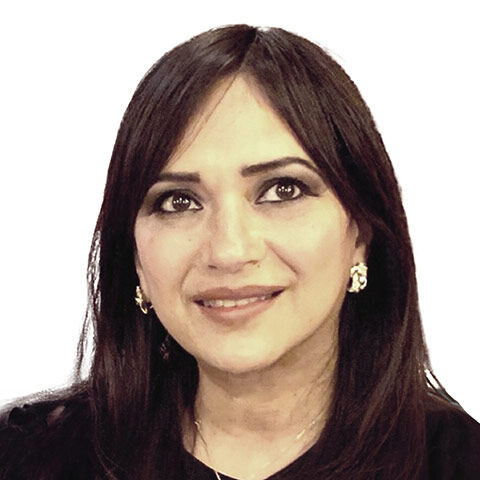
Syrian Kurdish commander Kobane says Turkey visit ‘in the making,’ Ocalan meeting possible
The SDF commander-in-chief reflected on a fragile integration deal with Damascus, growing Kurdish backlash and ongoing talks with Turkey as questions mount over Rojava’s political future.
Four months have passed since the Kurdish-led Syrian Democratic Forces signed a revised integration and ceasefire agreement with the Syrian government, brokered by the United States, which ended weeks of violent clashes. For many Kurds in Syria and beyond, the deal amounted to capitulation. The Kurds' dreams for a decentralized state in which they would preserve their political and cultural autonomy have gone up in smoke.
There is mounting anger at the SDF and civilian leaders over their failure to secure a better deal, amid unproven claims that the SDF is taking its cues from Ankara. Over the past week, their anger has grown as government authorities in the city of al-Hasakeh replaced a Kurdish-language sign above the local court known as the Justice Palace. Protesters tore down at least three signs in the Arabic language before calm was restored. Language rights, alongside women’s rights, are among the multiple friction points bedeviling Kurdish efforts to integrate peacefully with Damascus.
Leading the effort is the SDF commander-in-chief, Mazlum Kobane. In an exclusive hour-long interview with Al-Monitor that was conducted via WhatsApp, Kobane responded to the criticism and provided details on the progress achieved. He acknowledged that mistakes had been made in negotiations with Damascus and that the SDF could have shown more flexibility, especially with regard to the reintegration of Arab-majority areas.
The Kurdish commander also touched upon the status of Kurdish women fighters and ongoing talks with the Turkish government, revealing for the first time that a trip to Ankara was in the works and that a meeting with the imprisoned Kurdish leader Abdullah Ocalan was on the agenda.
The text of the interview, lightly edited for clarity, follows:
Al-Monitor: It’s been four months since you signed the revised Jan. 29 integration and ceasefire agreement with President Ahmed al-Sharaa in Damascus. Rojava has shrunk considerably. US forces have withdrawn from the region and integration talks with the central government are continuing. What have you — the commander-in-chief of the SDF — been doing during this time? What is your primary focus? A lot of people would like to know.
Kobane: Our primary focus is the proper implementation of the integration agreement with Damascus. Within this context, the integration of our military forces within the Syrian army is taking place and that of the institutions linked to our autonomous administration. We want this process to be executed justly and fairly. A key aspect of our work throughout this process is to ensure that the particularities of our Kurdish region are respected and preserved.
Al-Monitor: Could you kindly provide us with some further details?
Kobane: It’s a pretty weighty endeavor. We have different sets of colleagues dealing with individual files. For example, the team that deals with military integration. Sipan Hemo [Syria’s deputy minister of defense for the eastern region] is one of them. Then we have colleagues dealing with the integration of the autonomous administration’s other arms. Take the Asayish, for example. It was agreed with Damascus that the Asayish would remain intact in majority Kurdish areas. All Asayish officials and employees will retain their positions and be integrated with the Syrian state and be part of the Syrian state. We are talking about roughly 15,000 men and women.
In fact, there are two main principles that we have agreed on. None of the employees of the autonomous administration will either be dismissed or “disqualified.” They are to remain in their jobs and receive their salaries from the relevant government ministries. We are talking about roughly 50,000 people.
The second principle is that in majority Kurdish areas, local governance should be led by locals and that in ethnically mixed areas governance should be shared on the basis of consensus. By mixed areas I am referring to places like the city of al-Hasakeh, where you have Arabs, Kurds, Christians and others. In Kobani, there are two townships that are majority Arab — Sirrin and Shexler. Then there is Serekaniye. The Arabs in such areas need to assume leadership roles based on popular will. Afrin’s situation is a bit delicate because the Turkish state is still present there. However, it is incontestably Kurdish, as is the Shehba region around Afrin. Sheikh Maqsud in Aleppo is majority Kurdish.
Al-Monitor: You were offered several positions by the Syrian government but did not accept any. Why not?
Kobane: I told you, our primary focus is getting this integration work done. The second reason is that our other priority is cementing Kurdish unity.
Al-Monitor: Do you mean with the Kurdish National Council?
Kobane: With them and other parties.
Al-Monitor: I understand you proposed that the KNC get two of the four seats that are meant to be assigned to Kurds running for parliament from al-Hasakeh in national elections. The KNC accepted.
Kobane: We are working to achieve alignment on this matter.
Al-Monitor: Is it true that you are setting up a new political party?
Kobane: No. That is a demand that is coming from the people. We are evaluating it for that very reason. But to be honest it’s not top of our list right now.
Al-Monitor: Let's get back to integration. The government is not accepting demands that the Women’s Protection Units (YPJ) be part of the integration process. It has been repeatedly claimed that the government has accepted middle and high school diplomas issued by the autonomous administration, yet nothing has moved. What concrete steps has Damascus taken in these four months?
Kobane: The integration of military forces is progressing as planned. We had agreed on the establishment of four military brigades composed of SDF forces and led by SDF commanders. The formation and official recognition of these brigades has been more or less completed.
They have new designations as part of the Syrian army, but they are staffed exclusively by SDF fighters. So, for example, the brigade formed for Kobani is deployed in Kobani and is part of a division based in Aleppo. There are three other such brigades in the Jazeerah region. One is based in Derik, another in al-Hasakeh and the fourth in Qamishli. Ciya Kobane is in charge of all the brigades in Jazeerah.
The brigade in Derik is led by Sasun Derik, the one in Qamishlo by Loqman Khalil. The brigade in al-Hasakeh is commanded by Sardar Afrin and finally the brigade formed for Kobani is led by Mahmoud Kobane.
Al-Monitor: Does the SDF still exist?
Kobane: Until the integration process is completed, the SDF will continue to exist. The SDF has not been dissolved.
Al-Monitor: Once it is though it will be?
Kobane: Yes.
Al-Monitor: What will your title be then?
Kobane: That's a good question [laughs]. I will stay among our people. We will focus on organizing our people and naturally new organizations will be formed.
Al-Monitor: What about education? Why is Damascus dragging its feet?
Kobane: Implementation has been delayed, that is true. However, we have now reached a final agreement that will come into effect in the coming few days. Under its terms, our children graduating from middle and high school this academic year and the next and who will have studied under the autonomous administration’s curriculum will receive their diplomas from the Syrian state. And all middle and high school diplomas issued by the autonomous administration since the beginning will be officially recognized by the Syrian state.
Al-Monitor: What happens after the next academic year? Will the schools in your region revert to the government’s national curriculum?
Kobane: A joint committee, including officials from our side and Damascus, is being formed to discuss this issue. Our most important demand is that education in Kurdish-majority areas be in the Kurdish language. The national curriculum will be applied and translated into the Kurdish language. This committee is expected to deliver its opinion to the government in the next two months.
Al-Monitor: Can you kindly share with us how many people nominated by the SDF and the autonomous administration for positions in the government have been assigned positions so far?
Kobane: That is another point for which we criticize Damascus. We had jointly agreed that our people would join the government and the military. We had proposed more than 20 names for various positions in ministries and directorates. Most are former employees of the autonomous administration. We have not had a response so far.
Al-Monitor: President Sharaa just reshuffled his cabinet. Were you expecting some of your people to get posts?
Kobane: We had forwarded some names for those positions. Damascus needs to be more inclusive of the country’s diverse components, not only of the Kurds.
Al-Monitor: How does the budget situation work? Is Damascus providing any funding for the autonomous administration?
Kobane: The military forces that have been integrated with the Syrian army are being paid by the government. There are 3,000 forces in each brigade. We are working to integrate all SDF forces into the Syrian army. This is a matter that is currently being discussed. For now, the autonomous administration is paying their [the non-integrated forces'] salaries.
Al-Monitor: How does the autonomous administration generate revenues? The loss of the oil fields in Deir Ezzor must have reduced your income.
Kobane: Until the integration process is completed, some of the old revenue streams will remain available. We collect border revenues and taxes and some oil revenues.
Al-Monitor: Who controls the Rmeilan fields and other oil fields in your territory now?
Kobane: Under the terms of the agreement, the state has established a presence at the fields. And our own company, the Jazeerah company, which was managing those fields, is still present. Negotiations are continuing for a final agreement on production sharing. The fields belong to the Syrian state.
Al-Monitor: How many government officials are currently stationed in the regions under your control?
Kobane: I don’t have precise figures, but let’s say dozens of officials. It’s early times still. As for security forces, there are as many as stipulated under the Jan. 29 agreement. We have not experienced any problems with them. I would say that at this point it would be wrong to make a distinction between our forces and the Syrian army forces as they are part of the same army now.
Al-Monitor: The public perception is that in the beginning you and President Sharaa did not like each other much but that you get along quite well now.
Kobane: We both want the same thing: for the integration process to succeed.
Al-Monitor: Do you think the fact that you both come from military backgrounds helps you understand one another better?
Kobane: Yes. That’s a factor.
Al-Monitor: Will he be visiting your region? Have you invited him?
Kobane: We had invited him last year. We will renew our invitation once the integration process is concluded.
Al-Monitor: When will that be?
Kobane: It depends on how fast the sides move, on how committed they are to its full implementation under the terms that were agreed. We are fully committed.
Al-Monitor: The issue of the women fighters — how is that going to be resolved? It seems very difficult given that so many of the new Syrian army’s forces have jihadi backgrounds and would probably be spooked by the presence of radical feminists in their ranks.
Kobane: Damascus says there are no legal provisions for women to hold active combat duty or other positions in the military and that they should be integrated into the Ministry of Interior as part of the internal security forces. The reality is that our women are every bit as brave, smart and competent as any male fighter or commander, if not more so. Negotiations are ongoing, but it seems like that under the current circumstances our women fighters will become part of the internal security forces.
Al-Monitor: Moving on to another tricky topic: the ongoing prisoner exchanges with Damascus. How many SDF fighters and other people from your territory are being held by the government?
Kobane: Our mothers are very upset about this situation, and rightly so. The prisoner exchange should have started much sooner. The government has freed around 900 total so far. We freed over 500 total. There are around 500 people being held by the government at this time split evenly between SDF fighters and Kurdish civilians. We hope to resolve this issue as swiftly as possible.
Al-Monitor: Some of the SDF fighters are said to be Alawites who joined your forces.
Kobane: There are a few hundred of them. We do not distinguish between who is a Kurd and who is Alawite.
This is a humanitarian issue. Many of these people took refuge in our region following the mass violence that was perpetrated against the Alawite population in the coastal areas in March of last year. They were fleeing for their lives, and some took up jobs in the administration, in the SDF, to make ends meet, and they are welcome to stay. The government understands this. We are working to secure their freedom as SDF fighters, not on the basis of their ethnicity or faith. We are all equal: Arabs, Kurds, Alawites, Druze, Christians. You will find people of all these backgrounds in the SDF. This is a matter of principle for us and always has been.
Al-Monitor: What is the official death toll from January’s conflict? There are rumors that there are SDF fighters who remain unaccounted for and this is causing anger among the public.
Kobane: We have repatriated the remains of all our fallen heroes. The total number is 260. We continue to work on this file to ensure that no one remains unaccounted for. We had formed a task force with Damascus for this purpose. There are a few names in our files that date back to clashes that predate January, and we are investigating their whereabouts. We are determined to leave no stone unturned until all families have a full answer regarding their loved ones.
Al-Monitor: There are allegations that one of the reasons the SDF lost so much territory so fast is because the commanders abandoned their positions.
Kobane: No, that is absolutely false. There was a ceasefire agreement between us and Damascus that was brokered by the Americans for Deir Hafer. Just as we were withdrawing, as agreed under the ceasefire, the Syrian army violated its terms and moved into Deir Hafer. This triggered clashes, and we ordered our forces to not fight. We were committed to the ceasefire and wanted to avert further loss of life. Our people did not want war. First we fought a barbarous group like ISIS and then we were attacked by the Turkish military for years. People are sick of war. We were acting in the interests of our people. There is no question of commanders abandoning their comrades. Unfortunately, in conflict situations a lot of myths are fabricated, especially from afar.
(Mazlum Kobane (R) with Abullah Ocalan (L) in Damascus in the late 1990s)
Al-Monitor: I was in Rojava in January during the clashes, and people clearly did not want conflict. However, there is quite a bit of anger now being leveled against you and your fellow commanders and also against Abdullah Ocalan and the Kurdistan Workers Party (PKK). You are being accused of acting jointly under orders from Turkey to “destroy” Rojava, to capitulate. Others say you should have withdrawn from Raqqa and Deir Ezzor far sooner and on better terms, and so on. In short, quite a bit of criticism. Is any of it justified?
Kobane: No it is not. The Turkish state fought us, unprovoked, for years. As for Raqqa and Deir Ezzor. … Initially, we were not really interested in going that far. But a lot of the attacks against us were coming from Raqqa, Manbij and Deir Ezzor. In order to protect our core areas, it became necessary to go after the enemy in its own strongholds. This was a military prerogative. Moreover, there were appeals from the people living under ISIS [the Islamic State] in those areas for us to come and liberate them. We freed all those areas with the help of the locals there. We fought shoulder to shoulder and died in battle together. The US-led coalition was obviously supporting us from the air. When Raqqa was finally liberated, it was in ruins. You saw for yourself. We brought Raqqa back to life with incredibly limited means and as we were facing attacks from Turkey at the same time. Most of the coalition funding went to Raqqa and Deir Ezzor. If people were unhappy, why did they not leave Raqqa and move to areas under Assad’s control and even after Assad’s fall? The reverse was happening. Arabs from government-held areas were coming to us. It is therefore astonishing to find ourselves accused of doing “nothing.” That is not to say that mistakes were not made, that misguided policies were not implemented. But nothing is as black and white as it is being portrayed.
Al-Monitor: What of the images of people celebrating your withdrawal? Of children who had been held in prisons?
Kobane: Those were isolated cases. As I said, some mistakes were made.
Al-Monitor: But what about your failure to negotiate a better deal sooner rather than wait for the government to take back Raqqa and Deir Ezzor by force?
Kobane: There is a part of truth in this criticism. The March 10 agreement signed in 2025 with Damascus foresaw the reintegration of those areas. We wanted a final agreement that would secure the rights of the local people in line with a democratic Syria in which all components were recognized and fairly represented before withdrawing our forces from there. We envisaged the north and northeast as a region rather than territory to be yielded on a piecemeal basis. Why would we only be concerned by the rights of the Kurdish people to the exclusion of all the people we worked together with, fought with? We owed them more. We worked very hard for this, but unfortunately we were not successful.
Al-Monitor: Why not?
Kobane: I would say both sides were responsible for this outcome. The government kept stalling, not responding to any of our proposals. Our mistake was to not seek a middle ground. We did not show enough flexibility. We could have started the integration with the Arab-majority areas like Raqqa and Deir Ezzor. Instead, we demanded that the entire area under our control be treated as a whole, for the reasons that I already described.
Al-Monitor: In the meantime, the Americans had pivoted toward Damascus. They did not stand behind you.
Kobane: That is also true. The Americans’ policy favored the central government.
Al-Monitor: Wasn’t that something of a shock for you?
Kobane: We were not expecting it. When this war began, the Americans could have used their weight to stop it before the central government forces advanced as far as they did. They could have helped to broker an agreement before the situation deteriorated as badly as it did. They acted too late and only when the government forces came within reach of the Kurdish-majority areas. What they did thereafter to end the war, they could have done sooner. I am of course criticizing the administration’s policy. The American commanders and troops who served with us here in Rojava were always extremely supportive of us, and we should not blame them. They were following orders. And naturally we miss their company. We made a lot of dear and loyal friends, and we remain in touch with them. And of course we benefited from their knowledge and experience as they did from ours. It’s a new environment without the US military presence here, and we are adjusting to this new environment.
Al-Monitor: Are you still in contact with the American envoy for Syria, Tom Barrack?
Kobane: Yes, we spoke around two weeks ago over the telephone. He and his team remain engaged in the follow-up and implementation of the integration agreement.
Al-Monitor: For some time now, US President Donald Trump has been making some very derogatory comments about the Kurds, claiming that they had kept weapons destined for Iranian protestors for themselves. How does that make you feel, as a Kurdish leader who worked so closely with the United States?
Kobane: I can only imagine that he has been misinformed. There were some comments he made about our forces as well suggesting that we were mercenaries of some kind. We never took money from anyone. The funds that were used for the fight against DAESH [ISIS] were allocated by the Pentagon for that purpose, and we led that fight together and not just to protect ourselves but to protect the world from this scourge. Those funds were controlled by them.
Al-Monitor: Do you continue to receive funding from the Pentagon?
Kobane: There is discussion about providing funding for “forces integrated with the Syrian army” rather than for the SDF. Nothing has been finalized. It’s under discussion.
Al-Monitor: If you had any advice for the Iranian Kurds, what would it be? Should they trust the Americans?
Kobane: The Kurds of Rojhelat [Iranian Kurdistan] have legitimate demands. They have every right to pursue their rights. Whether it is through dialogue or armed resistance, that is a choice they will need to make. We will respect their decision either way. But the Americans have not provided the necessary guarantees for them to get involved in an armed campaign to change the Iranian regime.
Al-Monitor: Turning to Turkey. It’s clear that the peace process in Turkey is intertwined with your negotiations with Damascus. You have been holding informal talks with Turkish officials yourselves, including in Nusaybin. Are your contacts with Turkish officials continuing? It was reported that you met with the Turkish ambassador in Damascus, Nuh Yilmaz, a couple of weeks ago?
Kobane: The reports in the press were inaccurate. But our contacts with Turkish officials are continuing. I will not go into the details. However, we believe that it would be more fruitful for the Syrian government to be part of any discussion we have with Turkey. That is our position.
Al-Monitor: Have you made any progress with regard to reopening the Nusaybin-Qamishli border crossing?
Kobane: We had agreed with the central government during my talks in Damascus two weeks ago that the border would be reopened. A date was even set. But because of the incidents related to the sign above the court building in al-Hasakeh, the opening had to be postponed. But we have defused this crisis, and the opening should be happening soon.
Al-Monitor: Is Turkey on board for this? We know that Turkey has aired concerns over the presence of heavy weapons along your common border.
Kobane: Turkey has nothing to be concerned over. We always made clear that we wanted peaceful, neighborly relations. Besides, we are now part of the Syrian army.
Al-Monitor: In a recent interview, when asked whether you would consider traveling to Ankara, you responded “why not?” Have you received an invitation from the Turkish government?
Kobane: We can say that such plans are currently in the making.
Al-Monitor: If your trip to Turkey is confirmed, might this include a meeting with Abdullah Ocalan?
Kobane: Yes, it might.
Al-Monitor: When was the last time you spoke to Ocalan?
Kobane: I did not speak with him over the telephone.
Al-Monitor: Did you not correspond with him at all? It was widely reported that he sent you several messages in writing.
Kobane: We did receive letters. The last was one before the war in January.
Al-Monitor: Can we say that Ocalan remains a leadership figure for the Syrian Kurds?
Kobane: He is a national leader figure, and there is a large constituency here in Rojava that regards him as such. His role remains significant.
Al-Monitor: Going forward, is there not a risk that the ideals of your revolution are cast aside in favor of profit and power. The situation in Iraqi Kurdistan is a sad example of how things can go wrong. What are you doing to ensure such mistakes are not repeated in Rojava?
Kobane: Those risks have always existed, and the potential for such scenarios have certainly grown. That is why I told you our priority is to conclude the integration deal successfully on the one hand while organizing our people and rethinking our institutions and strategies on the other. The best way to inoculate our people from corruption and greed is to keep our revolutionary spirit alive and cement our unity as Kurds across the political spectrum. Together, it is our responsibility to create a fully transparent and inclusive system.
Al-Monitor: You acknowledge that mistakes were made. To acknowledge this publicly is a rare thing in the Middle East. So, in the final analysis, when you look back at these 15 years, what would you say the Kurdish people in Rojava have gained?
Kobane: It is very important to remember where we started. We were on the cusp of being destroyed by DAESH. Our people were under siege from all sides. Unlike our brothers in Iraqi Kurdistan, we had nowhere to retreat to. There was Turkey on one side and DAESH on the other. Let us recall what Kobani was reduced to in 2014. The majority of the population was forcibly displaced. We came back from the brink of annihilation. We fought for our survival, and we survived. Today, thanks to the sacrifices of our people, from the corridors of the American Congress to far-flung corners of the globe, the world knows about their heroic resistance against one of the most evil and bloodthirsty organizations that ever came into existence.
Today, in Syria, where Kurds were not granted formal identity papers let alone granted any ethnic rights, we are able to formally negotiate those rights with the government in Damascus, with President Sharaa himself, as Kurds and on behalf of the Kurds. It is true that our people’s hopes and dreams have not been fulfilled in the way we would have wanted. But that is not to say that we will not continue to struggle for our rights, that the story ends here and that we will not do everything within our means to help build a democratic future for Syria. Even if it’s under the overall command of the Syrian army, the Kurds have their own forces who will defend them in their own lands. For the past 15 years, Kurdish children have been studying in their own mother tongue, and we will ensure that they will continue to do so. Imagine that under Assad rule, when I was still a little boy going to middle school, I was imprisoned by the regime for carrying a book in the Kurdish language. Today’s Syria is incomparable with the one that existed before 2011. Our spirit remains unbroken. Forging consensus peacefully, through dialogue, without compromising our dignity, our distinct Kurdish identity — that is our path. The Kurds of Syria are a reality that can no longer be ignored.