



Oil fires, toxic air and water risks: Environmental cost of Iran war expands to region
The bombing of oil facilities in Iran and critical water infrastructure in the Gulf threatens the Middle East with long-lasting environmental destruction, as have similar tactics employed in previous conflicts.


As the US-Israel-Iran war spreads across the Middle East, attacks on energy infrastructure and other critical facilities are raising concerns about environmental damage that could affect millions of civilians and linger long after the fighting ends.
One of the clearest examples came over the weekend, when Israeli airstrikes hit several oil facilities in and around Tehran, triggering large fires that experts say could release toxic pollutants into the air and contaminate soil and water in one of the Middle East’s largest metropolitan areas.
According to Iranian news outlets, Saturday’s strikes hit four oil storage facilities and an oil transfer and production center in Tehran and its neighboring Alborz province. Israel described the targets as “fuel storage facilities in Tehran” linked to military operations. Iran's Petroleum Ministry said four people were killed in the attacks.
Tehran fires raise environmental alarm
Videos circulating online showed oil leaking onto the streets and massive plumes of smoke and flames over Tehran into Sunday. The following morning, rain fell in Tehran and Karaj, prompting Iran's Department of the Environment to advise residents to avoid unnecessary outdoor exposure and stay indoors as much as possible. The country’s Red Crescent also warned that toxic chemicals in the air could lead to acid rain, which can cause skin burns and serious lung damage, and advised against using air conditioners or going outside immediately after rainfall.
🇮🇷 🇮🇱 🇺🇸 🛢️ Massive fires after Israeli strikes hit oil depots in Tehran
— AFP News Agency (@AFP) March 9, 2026
Four oil depots and a petroleum logistics site were hit by Israeli strikes, engulfing Tehran in thick black smoke and temporarily interrupting fuel distribution. The fuel depot strikes are the first time… pic.twitter.com/u64QlJIezL
Doug Weir, director of the UK-based Conflict and Environment Observatory (CEOBS), said the oil fires released a complex mix of pollutants with varying degrees of toxicity, including particulate matter, nitrogen oxides, nitrous acid, carbon monoxide, sulphur dioxide and volatile organic compounds like formaldehyde, dioxins, furans, hydrocarbons and polycyclic aromatic hydrocarbons.
"People living nearby may suffer acute respiratory effects, particularly if they have preexisting health problems," Weir told Al-Monitor. He added that longer-term exposure through contaminated water and soils could pose developmental, neurological or carcinogenic risks. Contamination of soil and surface and groundwater resources can "last for years and decades," he added.
A report by CEOBS highlighted that even if people stayed inside, they would not be fully protected, as outdoor particulate pollution readily infiltrates buildings, and indoor particle concentrations often match outdoor levels during severe pollution events. On top of this, given its relatively stagnant winds, Tehran requires substantial rainfall to remove the most hazardous particles and gases from the air. While blackout conditions prevent direct measurements, weather models and satellite imagery suggest that rainfall so far has been limited.
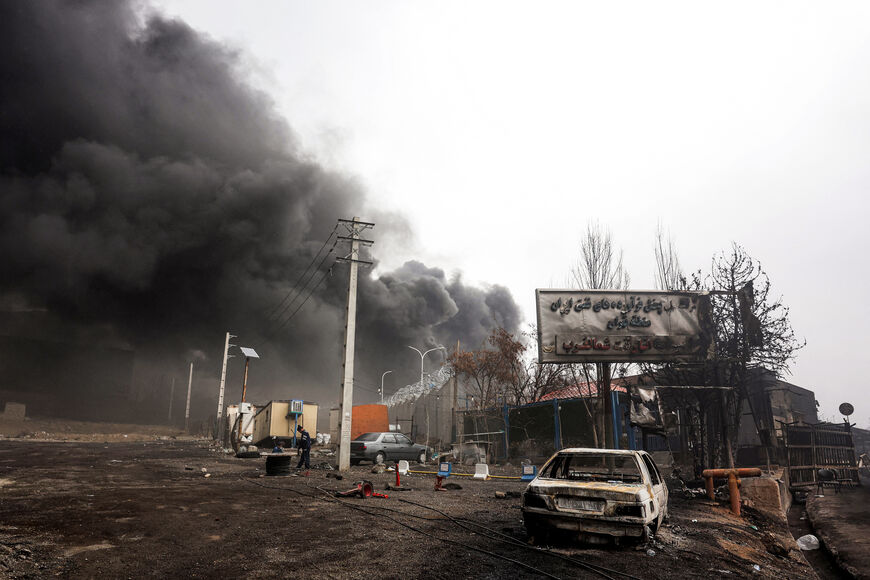
Smoke plumes rise from an ongoing fire following an overnight airstrike on the Shahran oil refinery in northwestern Tehran on March 8, 2026. (Photo by AFP via Getty Images)
Oil fires during conflicts have previously produced severe environmental damage. During the 1991 Gulf War, retreating Iraqi forces set fire to hundreds of Kuwaiti oil wells, releasing massive plumes of smoke and contaminating soil and groundwater across the region. Though the fires occurred 35 years ago, their environmental damage still persists in Kuwait.
Weir said that while it is not uncommon for oil sites to be targeted during conflicts, "it is rare that such incidents are in such a densely populated location and have the potential to directly impact the health and well-being of such a large civilian population," he told Al-Monitor. Nearly 10 million people live in the capital and another 5 million in the surrounding suburbs.
He also warned that firefighting foams used to control oil fires can introduce additional pollution. Many contain PFAS — the so-called forever chemicals linked to cancer and other health risks because they persist in the environment for decades.
Threats to water infrastructure and marine ecosystems
The environmental consequences of the war extend beyond Iran’s borders.
On Sunday, Bahrain said an Iranian drone damaged one of its desalination plants, essential infrastructure in a part of the world where cities rely almost entirely on processed seawater for drinking. According to United Nations data released in 2025, desalination accounts for roughly 90% of Kuwait’s drinking water, 86% in Oman, 70% in Saudi Arabia and 42% in the United Arab Emirates.
A desalination facility in Iran’s south was also reportedly struck. Iran is less reliant on desalination than Arab Gulf states, but faces an ongoing water crisis as its reservoirs dry up amid high temperatures, mismanagement and drought.
In addition to threatening the Gulf’s drinking water supply, CEOBS notes, damage to desalination plants can also release chemicals like sodium hypochlorite, ferric chloride and sulfuric acid into Gulf waters.
Weir also warned of "substantial" threats to the Gulf’s marine environment. Attacks on ports, tankers or offshore infrastructure could trigger spills or release fuels and chemicals, endangering ecosystems and fisheries in one of the world’s most heavily industrialized marine regions.
In a report published Tuesday, CEOBS shared satellite images of a roughly 12-mile (19-kilometer) oil spill near the coast of Sri Lanka caused by the US torpedoing an Iranian frigate last week.
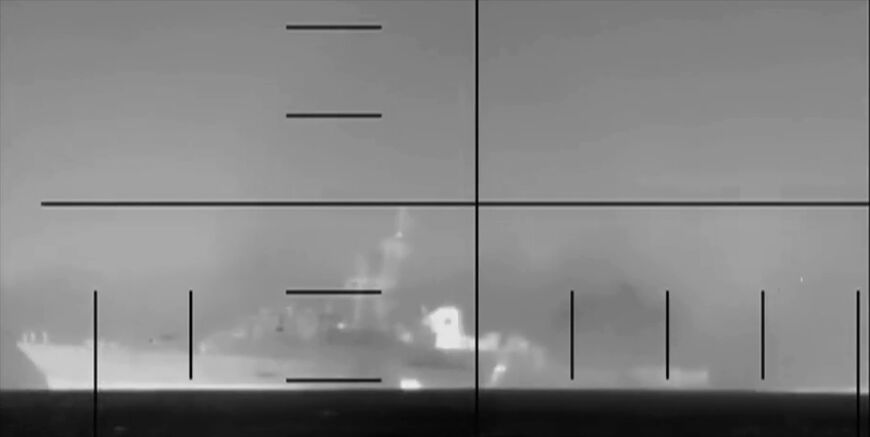
In this screenshot of video provided by the US Department of Defense, a US submarine sinks Iranian frigate IRIS Dena in support of Operation Epic Fury off Sri Lanka's coast on March 4, 2026, in the Indian Ocean. (Photo by US Department of Defense via Getty Images)
"We have already seen a range of environmentally problematic military conduct and have very little confidence that environmental considerations are being addressed in planning, despite the risks this poses to the civilian population and the region's ecosystems," Weir said.
Similar pollution risks emerged during the 2006 Israel-Hezbollah war, when an Israeli strike on Lebanon’s Jiyeh thermal power plant spilled thousands of tons of heavy fuel oil into the Mediterranean. The spill, roughly six miles wide, spread across more than 100 miles of Lebanon’s coastline, killing fish, threatening marine habitats and raising concerns about potential cancer risks.
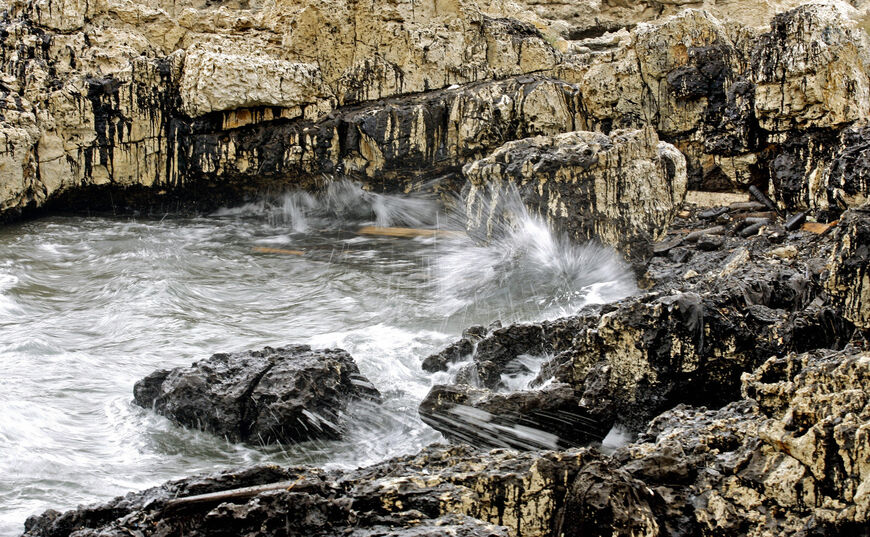
Waves splash on rocks still covered with black layers of oil at the coast of Amshit in northern Lebanon, Aug. 1 2007. (Photo by Marwan Naamani/AFP via Getty Images)
Incendiaries
Rights groups have also raised concerns about other forms of wartime pollution in Lebanon. In a report on Monday, Human Rights Watch (HRW) said that the Israeli military illegally used white phosphorus munitions over a residential area in the southern Lebanese town of Yohmor on March 3. In 2024, HRW documented the use of white phosphorus in 17 villages, and Amnesty International said it found evidence of its use in 2023. The American University of Beirut documented occurrences of its use in 1982, 1993, 1996, 2006 and 2023.
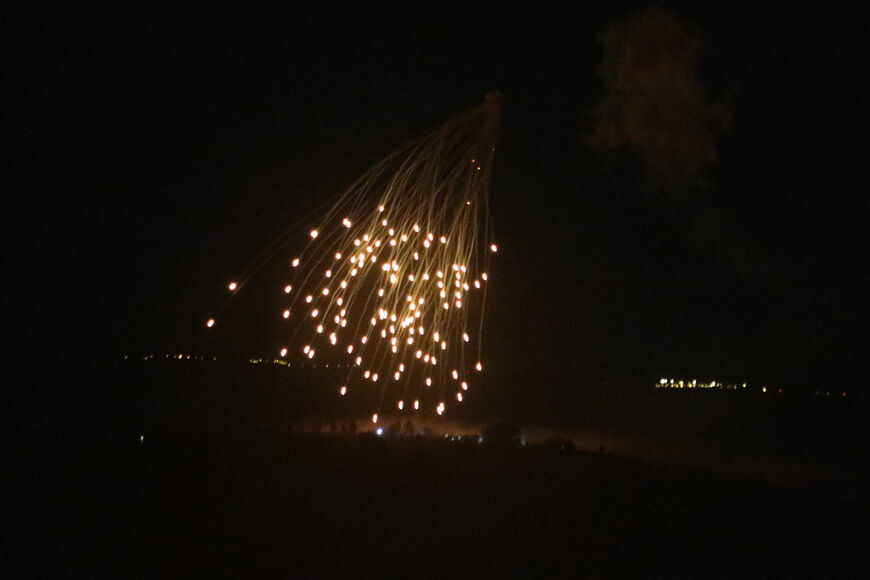
An Israeli strike illuminates the sky above the southern Lebanese village of Khiam late on April 17, 2024. (Photo by Rabih Daher/AFP via Getty Images)
White phosphorus ignites upon contact with oxygen, burning at extremely high temperatures. It can set buildings and vegetation on fire and cause life-threatening injuries such as severe chemical burns; burns covering as little as 10% of the body can be fatal. Its use over populated areas is considered unlawfully indiscriminate under international law.
Beyond the immediate human toll, white phosphorus can also damage the environment. The substance can burn land, degrading soil quality and reducing its agricultural fertility. Runoff from contaminated areas can carry phosphorus into rivers and streams and cause algal blooms that disrupt ecosystems.
This one's on us.
The story doesn't end here.
Our correspondents are already on the next chapter. Read everything they file, from $2/week.
See Offers