



Israeli bombardment sends Lebanese fleeing


As Israeli strikes shattered the nighttime quiet, Beirut cafe owner Hassan rushed home to whisk his wife and young daughter to safety in the nearby mountains outside the city.
The sound of heavy gunfire was a warning to residents that war had returned. The roads quickly clogged and the trip took Hassan, 30, and his family more than three hours.
"We rushed out without taking anything with us, no clothes and no food for my daughter," he said.
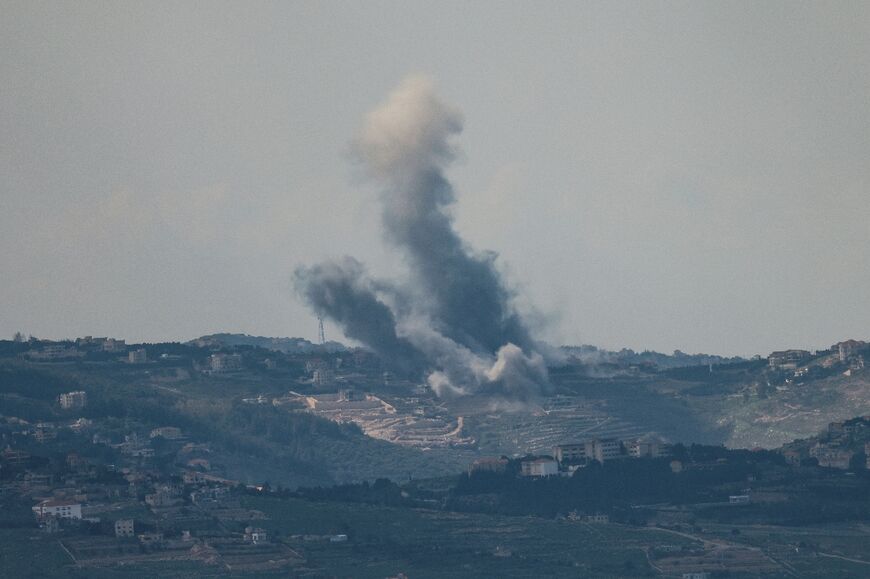
Israel has carried out a series of strikes on Lebanon since the early hours of Monday, killing at least 31 people and wounding at least 149 others, according to the health ministry.
The attacks were in retaliation for rockets launched by Iran-backed Hezbollah to "avenge the pure blood" of Iranian supreme leader Ali Khamenei, killed in a US-Israeli attack on Saturday.
On the outskirts of Beirut's southern suburbs, an AFP photographer witnessed crippling traffic jams as residents left in cars and on motorcycles, carrying whatever they could.
For many Lebanese leaving Beirut's densely populated southern suburbs and the country's east and south, areas where Hezbollah has a presence, it was a traumatic reminder of the 2024 war between Hezbollah and Israel, when Israeli strikes led to mass displacement.
An Israeli army spokesperson addressed the freshly displaced Lebanese on Monday, saying "air raids are continuing, so for your safety and the safety of your families, do not return to your homes".
- 'Suffering and exhaustion' -
The Lebanese authorities announced the opening of displacement shelters in dozens of schools in Beirut, the south, and Mount Lebanon.
During the last war, the government's shelter network was wildly inadequate to the scale of the displacement.
In the coastal city of Sidon, the gateway to south Lebanon, hundreds of northbound cars piled with mattresses, blankets, and children's schoolbags crammed both sides of the two-way highway.
"We've been on the road for seven hours," said one displaced southerner who declined to give his name.
"In this country, we live only for suffering and exhaustion."
At one Sidon school-turned-shelter, Izdihar Yassine was seeking shelter with her family, having fled her village in the southern Nabatieh province.
"We were sleeping and woke up to the sound of rockets... we left just as we were," she said.
"I have cancer. I was supposed to get treatment in Nabatieh today and I can't go."
On Monday morning, Hassan went back home to Beirut's southern suburbs to collect some of his family’s belongings.
"I came back to pack a bag and take whatever items I could, our ID cards, and some money," he said.
He is getting ready: "No one knows what awaits us or where things are heading."
This one's on us.
The story doesn't end here.
Our correspondents are already on the next chapter. Read everything they file, from $2/week.
See Offers