Trump insists talks happening 'right now' as Iran, Israel trade strikes


US President Donald Trump said on Tuesday that talks with Iran to end the Middle East war were under way "right now", even as the Islamic republic and Israel traded fresh strikes.
Uncertainty, however, swirled around Trump's claims, with Tehran not confirming any negotiations and Israel insisting its military campaign would go on "unchanged".
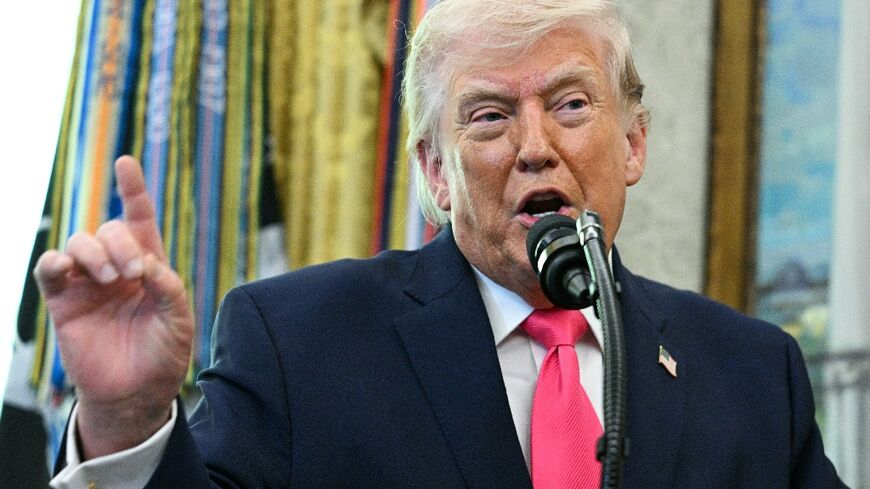
"We're in negotiations right now," Trump told reporters in the Oval Office, saying Vice President JD Vance, Secretary of State Marco Rubio, and envoys Steve Witkoff and Jared Kushner were involved.
Trump added that Iran gave him a "very big present" related to oil and gas, offering no details but saying he had new faith in Tehran's leaders.
The war that started on February 28 with US-Israeli attacks that killed Iran's supreme leader has since spread across the Middle East, sending energy prices soaring and roiling the world economy.
Speculation has mounted that Pakistan could emerge as a mediator following an offer from its prime minister to host US-Iran talks, but on the ground the hostilities went on unabated.
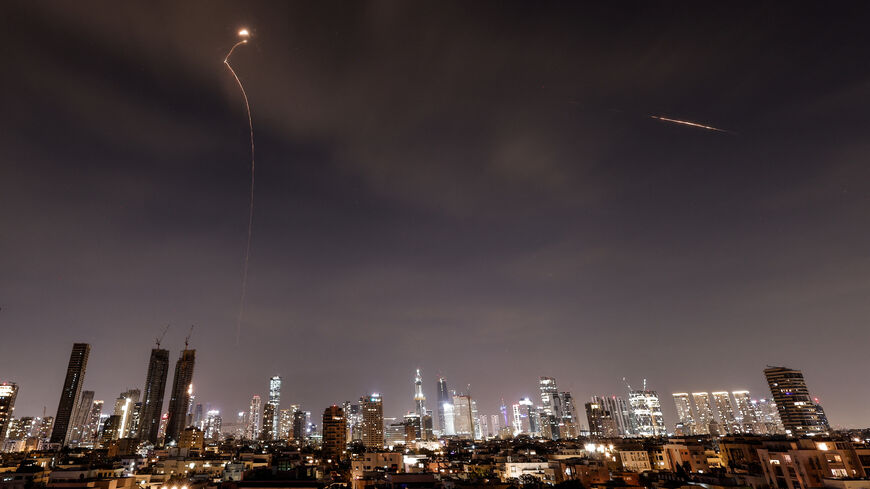
Israel's army said it had conducted a "large wave" of airstrikes across several areas of Iran, while Iranian attacks on Israel injured seven people including an infant.
Though Trump's attention seemed turned towards diplomacy, Israeli military spokesman Effie Defrin said his country's war plan was "unchanged" and that it would continue "to deepen the damage and remove existential threats".
Iran's atomic energy organisation said a strike Tuesday evening hit inside the compound of its Bushehr nuclear power plant, but caused no damage.
At the same time, US media reports said thousands of additional US troops were heading to the Middle East to support operations against Iran.
- 'Friendly countries' -
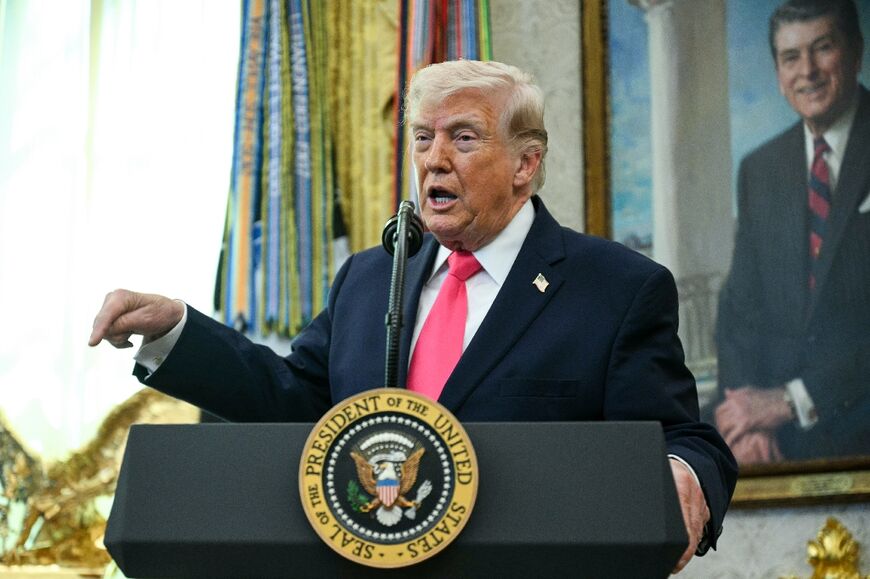
The first hint of diplomacy came Monday when Trump unexpectedly announced that his administration was speaking with an unidentified "top person" in Iran, as he extended by five days an ultimatum for the Islamic republic to reopen the Strait of Hormuz oil route or see its power plants attacked.
But Tehran's parliamentary speaker, Mohammad Bagher Ghalibaf, said "no negotiations" were underway, accusing Trump of seeking "to manipulate the financial and oil markets".
Iran's foreign ministry, however, acknowledged that messages had been relayed by "friendly countries" indicating a "US request for negotiations".
Pakistani Prime Minister Shehbaz Sharif said on Tuesday that he had spoken with Iranian President Masoud Pezeshkian, promising Islamabad's help to bring peace to the region.
Should the two sides agree, "Pakistan stands ready and honoured to be the host to facilitate meaningful and conclusive talks for a comprehensive settlement", Sharif wrote on X.
US media outlet Axios reported that Witkoff and Kushner may meet an Iranian delegation for talks in Pakistan as soon as this week, with Vice President JD Vance possibly joining.
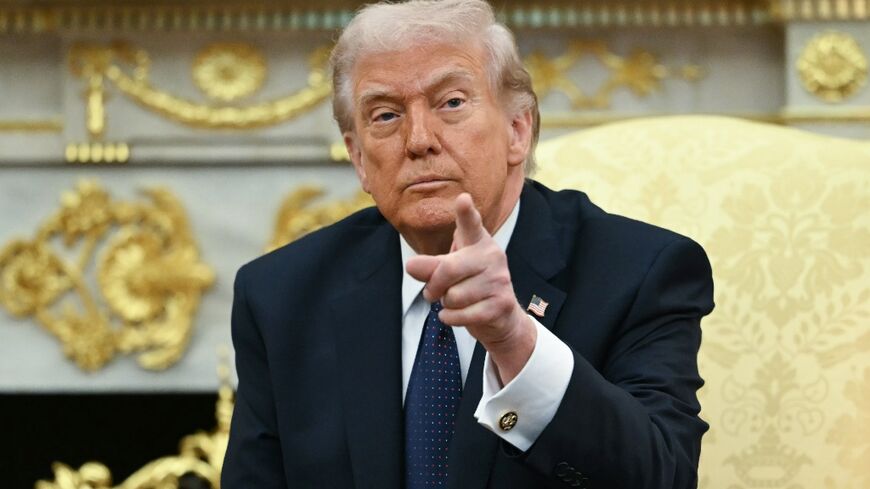
"We're actually talking to the right people, and they want to make a deal so badly," Trump told reporters.
Trump's administration has held two sets of multi-round talks with Iran on its nuclear programme since he returned to the White House, with both ending in surprise attacks on the Islamic republic -- in June last year and most recently on February 28.
Analysts have floated other possible mediators, including Egypt and Turkey.
- War is 'daily life now' -
Israel, meanwhile, stepped up its campaign against the Iran-backed Hezbollah militant group in Lebanon, saying its military would take control of south Lebanon up to the Litani river, around 30 kilometres (20 miles) from the border.
Israel pounded Lebanon on Tuesday, with the state-run National News Agency (NNA) reporting attacks in the country's south and east, as well as near Beirut, after a night of bombardment on the capital's southern suburbs.
Lebanon's health ministry said at least eight people were killed in Israeli strikes, including a three-year-old girl.
Lebanon was pulled into the Middle East war when Hezbollah began firing rockets into Israel on March 2 to avenge the killing of Iran's supreme leader Ayatollah Ali Khamenei.
Israeli Defence Minister Israel Katz said displaced Lebanese residents would not return south of the river "until security is guaranteed for the residents of the north" of Israel.
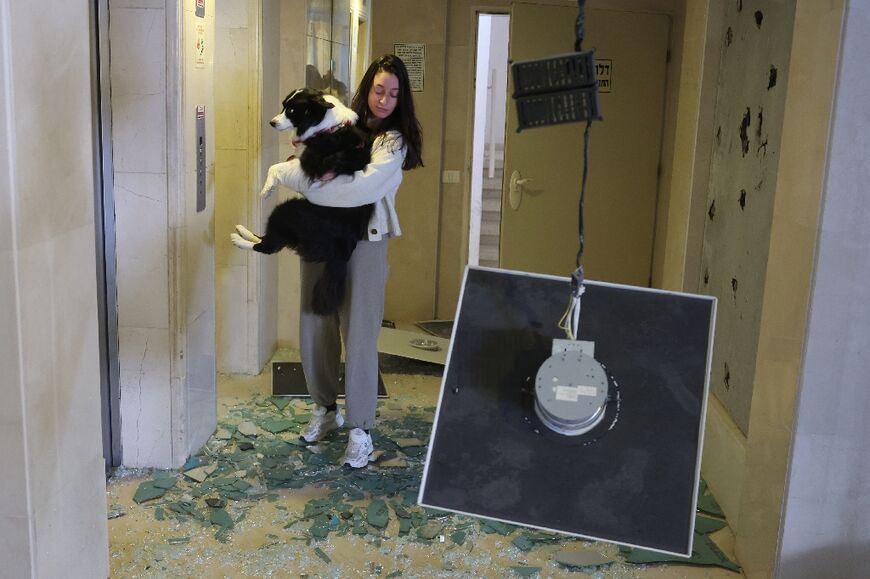
In Tel Aviv, Israel reported four people wounded after missile fire from Iran, with AFP images showing rubble-strewn streets. Israeli first responders said three people were injured during Iranian missile fire targeting the south of the country, including an infant.
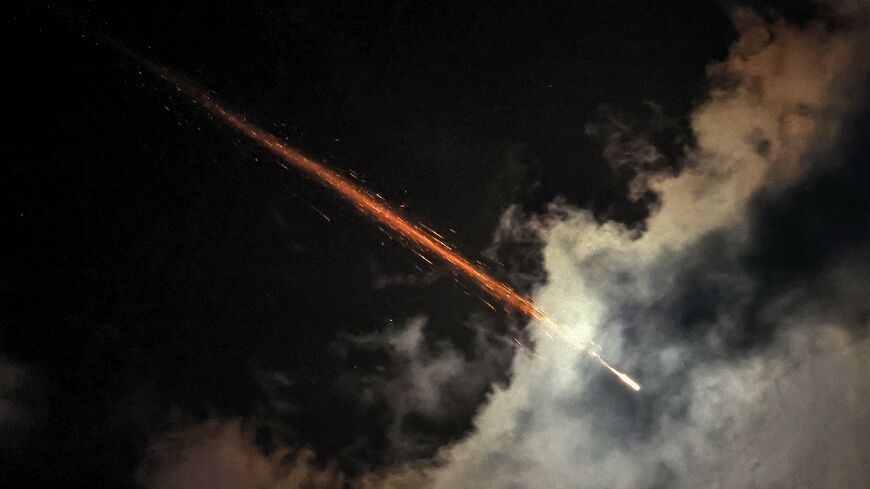
Bahrain, Kuwait, the United Arab Emirates and Saudi Arabia all said they had intercepted renewed drone and missile attacks as Iran kept up retaliatory strikes on US-allied Gulf states.
"The sounds, the explosions, the missiles -- they are part of our daily life now," a 35-year-old woman in Tehran told AFP by telephone.
"Our one real worry now is that our oil and gas infrastructure isn't targeted by missile strikes. I think that's the only thing all Iranians can agree on at the moment."
- 'Trust destroyed' -
Since the start of the US-Israeli attacks, Tehran has retaliated by throttling traffic through the Strait of Hormuz, pushing up fuel prices and fuelling fears of higher inflation and weaker global growth.
Oil prices, which had tumbled after Trump mooted talks on Monday, rebounded slightly in Tuesday trade, with Brent back above $100 a barrel.
Although Iran's chokehold on the strait gives it leverage in potential negotiations, analysts remained doubtful of any breakthroughs.
"I'm very sceptical (about the talks) because trust has been completely destroyed and the positions of the warring parties are further apart than ever," David Khalfa, a Middle East specialist at the Jean-Jaures Foundation, a Paris-based think-tank, told AFP.
burs-mfp/smw