



German defence giant Rheinmetall sees business boost from Mideast war


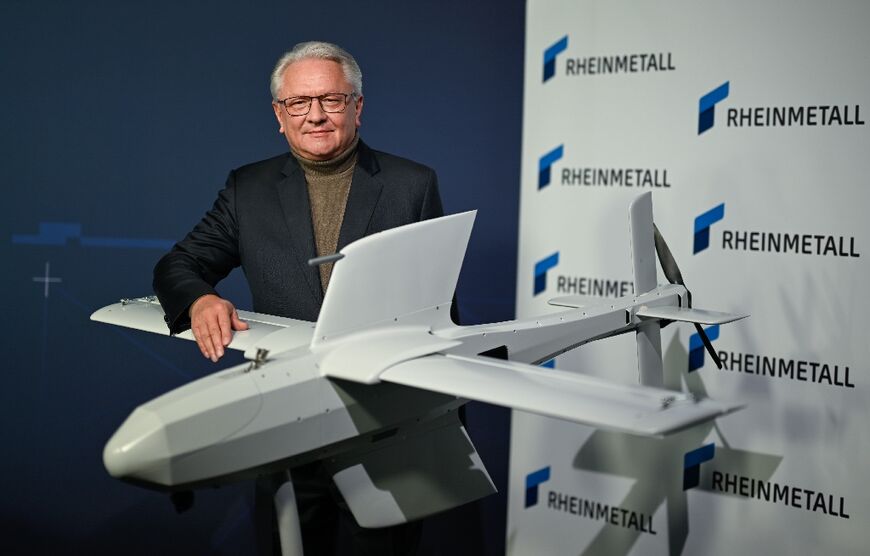
German arms maker Rheinmetall said Wednesday the Middle East war offered new business opportunities, especially for its air defence systems, as it forecast continued strong growth this year.
The conflict began with US-Israeli strikes on Iran at the end of February, triggering retaliatory Iranian attacks across the region, as well as turmoil on global markets.
Rheinmetall, whose business has boomed since Russia's 2022 full-scale invasion of Ukraine spurred a re-armament drive in Europe, said it may now turn its attention to the Middle East.
While stressing the war was "crazy" and that "we don't want any of this," CEO Armin Papperger told reporters that Germany's biggest defence group also saw "opportunities".
"Over the weekend the phones did not stop ringing. People want our systems," he said, referring to the group's range of armaments that defend against drone and missile attacks.
"Well over 100 drones were shot down in the Middle East over the weekend alone with our systems," he added without naming any countries involved.
Papperger also did not estimate how much the conflict could boost its business. But even without it, Rheinmetall is forecasting sales will jump up to 45 percent this year to a maximum of 14.5 billion euros ($16.9 billion), building on a near 30-percent increase in 2025.
Europe's drive to rebuild long-neglected militaries has given Germany's defence sector a major boost, with the trend picking up speed as President Donald Trump has shaken Europe's confidence in future US security commitments.
Rheinmetall has been thrust into the public eye after having spent years keeping a low profile in a country with a strong pacifist leaning due to its dark World War II history.
- Rapid expansion -
Papperger noted that the group had so far "focused heavily on Europe", but added that "depending on how the crisis situation develops in the coming years, we may also look to the Middle East.
"There is a considerable need for protection there as well."
Rheinmetall released its results for 2025 Wednesday, showing that core profit jumped a third to hit a record of 1.8 billion euros.
Its order backlog, closely watched by investors, also rose by 36 percent to a new record of 63.8 billion euros.
But the group's shares were down by more than two percent in Frankfurt as the profit came in below forecasts.
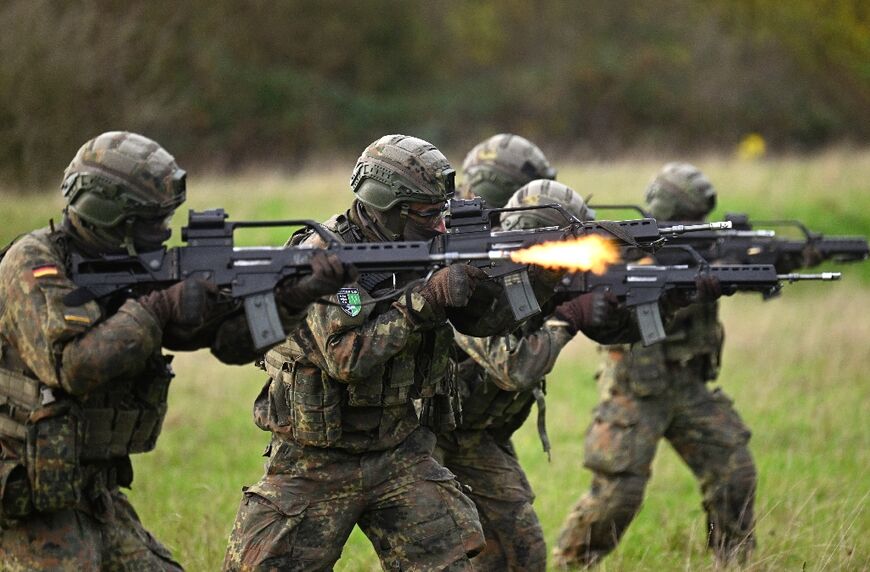
The Duesseldorf-based group has benefitted in particular from greater defence spending in Germany, where Chancellor Friedrich Merz has vowed to turn the Bundeswehr into Europe's largest conventional army.
Its rapid growth is set to continue in coming years -- according to a company-provided poll of analysts, sales will top 42 billion euros by 2030.
Growing demand has boosted the entire defence sector in Europe's biggest economy.
Germany overtook China to become the world's fourth largest-arms exporter in 2021-2025, with 5.7 percent of global exports, according to the Sipri research group.
But it is a tough task for European countries to rebuild militaries that shrank dramatically after the end of the Cold War, with soldiers frequently facing issues from ageing equipment to poor living conditions.
Many European countries have however committed to raise military spending as a result of pressure from Trump for NATO allies to cover more of the cost of their own defence.
For Rheinmetall, new business has driven a vast expansion.
It opened new munitions plants across the continent last year, and took over a German warship builder, Naval Vessels Luerssen, marking a major expansion into naval defence.
This one's on us.
The story doesn't end here.
Our correspondents are already on the next chapter. Read everything they file, from $2/week.
See Offers