



Buzz, unease as UK crowds watch US bombers head to war


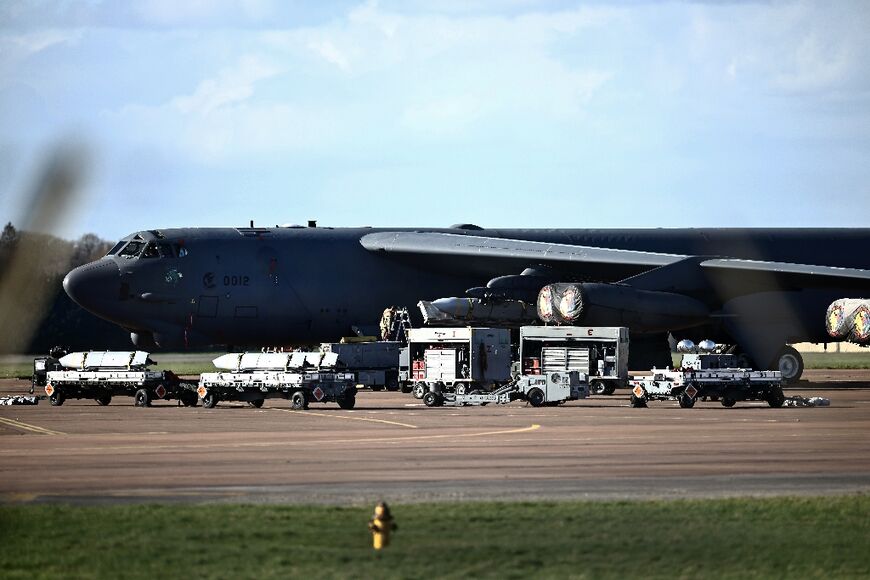
Hidden behind a tall hedgerow in the English countryside, Charlie Cumming stood at the fence of an air force base, camera raised towards a US B-1 Lancer bomber parked nearby.
He was one of hundreds of curious onlookers who flocked to the airfield at RAF Fairford in the southwestern county of Gloucestershire since US aircraft began arriving on March 6, days after the start of the US-Israeli war with Iran.
"I've come just for pictures for my Instagram, really," said the 17-year-old. "It's a bit concerning they're here, but I still think they're really cool to see."
Beside him stood his friend James Martin, 18, from Oxford, who first got him into plane spotting. Seeing bombers loaded for active combat felt "quite surreal", Martin said.
"Seeing these machines going out to cause destruction and actually being used in a war zone is quite a weird experience... we've always seen planes just doing standard training roles."
On Saturday, cars spilled onto verges and down narrow lanes as visitors converged from across the country.
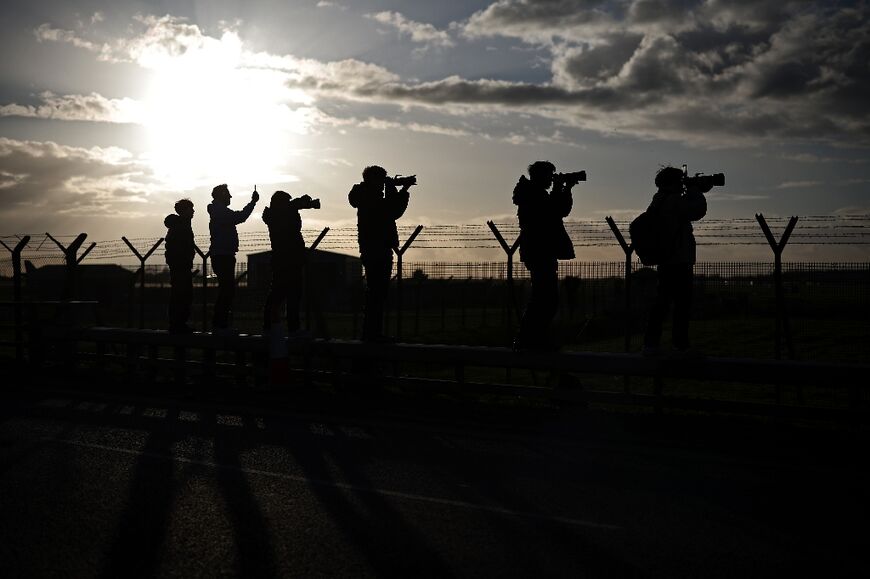
Along a road offering a panoramic view, veteran enthusiasts, excited locals, dog walkers and father-and-son pairs found their spots in the spring sunshine, armed with telephoto lenses, binoculars, stepladders and air-traffic scanners.
Some settled in with fold-out chairs, sandwiches and flasks of tea.
Dave Savage, a truck driver who had driven three hours from mid-Wales with his son, summed up the "excitement" many felt.
"I just like the power and the size of them," he said. "I get a buzz out of seeing something that big and that impressive."
Adrian, a warehouse worker from Doncaster, arrived in time to see a B-1 take off shortly after dawn.
He has spent 22 years spotting warplanes and said the turnout on Saturday dwarfed anything he had seen at a military airfield on a normal weekend.
"Down the lane there's just as many cars as there would have been on air show days," the 58-year-old said, asking not to give his full name.
He came prepared, arriving with a multi-camera setup and heavy-duty ear defenders round his neck.
"The B-1 is pretty much the loudest thing on earth. I've never heard anything as loud as that before."
- Thrill and dread -
Yet the excitement was tempered by an awareness of what these planes were being sent to do -- and Britain's role in their mission.
Fairford, along with Diego Garcia in the Indian Ocean, is one of two bases Britain finally allowed the United States to use for "defensive" operations in Iran.
The US Department of Defense did not immediately respond to a request for comment on its use of the base.
But according to estimates from AFP journalists at the site, around six B-52s and 12 B-1s have been using the base, conducting two to three sets of departures and landings per day.
Starmer's refusal to join the US and Israel in bombing Iran from February 28 triggered a public row with US President Donald Trump.
Polls show most Britons oppose the war, with half against US use of RAF bases even when the missions are restricted to bombing Iranian missile sites.
James Martin, who grew up close to RAF Brize Norton some 12 miles (19 kilometres) away, said even those in his local village accustomed to military aircraft overhead were now listening differently.
"Every time the fighter jet comes over, they're very worried about what that could mean," he said. "It's just scary how quickly it's evolving."
Research analyst Christoph Bergs from the London think tank RUSI said Fairford staff were experienced in dealing with large numbers of plane spotters.
"Given the US administration's public statements on Iran, visible activity at RAF Fairford may have been deemed an acceptable if not a welcomed externality of the current air campaign," he told AFP.
For Adrian, the spectacle was compelling.
"You can't turn your back on it, even though you might not necessarily agree with what they're actually doing," he said.
"We're never going to see this again. It's special in that respect -- but a little bit sad as well."
This one's on us.
The story doesn't end here.
Our correspondents are already on the next chapter. Read everything they file, from $2/week.
See Offers