



Thousands attend burial of slain son of Libya's Gaddafi


Thousands turned out on Friday for the burial of the slain son of former Libyan ruler Muammar Gaddafi in a town that still holds allegiance to the late longtime leader.
Seif al-Islam Gaddafi, once seen by some as Libya's heir apparent, was shot dead in his home in the northwestern city of Zintan on Tuesday.
His burial in the town of Bani Walid, some 175 kilometres (110 miles) south of Tripoli, brought together thousands of Gaddafi loyalists, nearly 15 years after the ruler was toppled and killed in a 2011 NATO-backed uprising.
Some came from other parts of the country.
"We are here to accompany our beloved one, the son of our leader in whom we placed our hope and our future," said Waad Ibrahim, a 33-year-old woman from Sirte, nearly 300 kilometres (186 miles) away.
The woman blamed the country's eastern and western rival powers for Seif al-Islam's killing.
"They met in France to agree that the only obstacle standing in their way was Seif al-Islam," she said referring to a recent US-brokered meeting in Paris between officials from both sides.
Libya remains split between Prime Minister Abdelhamid Dbeibah's UN-backed government based in Tripoli and an eastern administration backed by Khalifa Haftar.
The North African has struggled to recover from chaos that erupted following the 2011 Arab Spring uprising.
- Elections 'without him' -
Each year, Bani Walid celebrates the anniversary of a 1969 coup that brought Gaddafi to power, with people parading through the streets with portraits of the ex-leader and Libya's green flag from before the revolt.
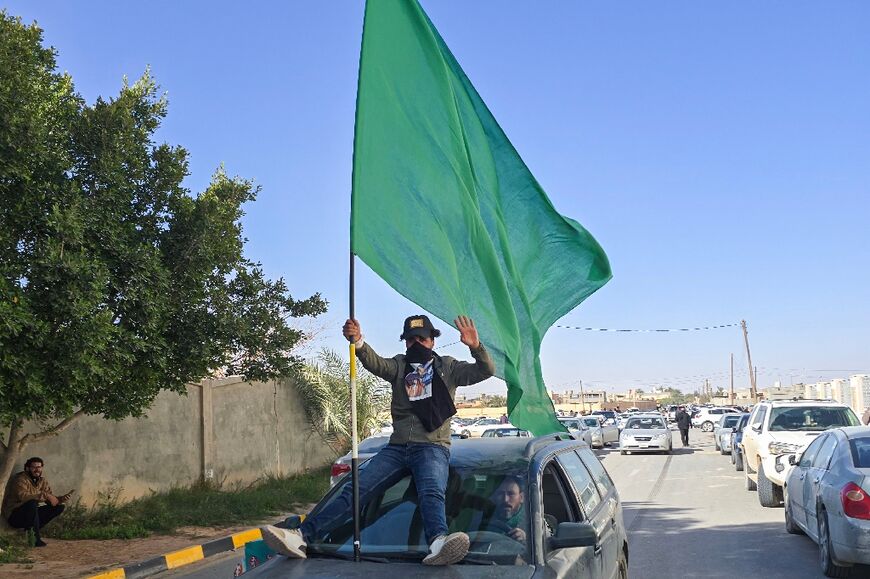
Ahead of the burial on Friday, locals also carried those portraits and flags while chanting pro-Gaddafi slogans and declaring that "the martyrs' blood will not be shed in vain".
Sabri Gachout, a 66-year-old from Tripoli, said Seif al-Islam's killing meant that "elections can now be organised without him in the electoral process".
In 2021, Seif al-Islam announced he would run for president, but the elections aiming to unify the country under a UN agreement were indefinitely postponed.
Marcel Ceccaldi, a French lawyer who had been representing Seif al-Islam, told AFP he was killed by "four-man commando".
Authorities said they were probing his death as the assailants remained at large.
Saadi Gaddafi, Seif al-Islam's younger brother, said his dead sibling would be buried "next to his brother Khamis Gaddafi", who was killed during the 2011 unrest.
Under his father's iron-fisted 40-year rule, Seif al-Islam was described as the de facto prime minister, cultivating an image of moderation and reform despite holding no official position.
But that reputation soon collapsed when he promised "rivers of blood" in retaliation for the 2011 uprising.
He was arrested that year on a warrant issued by the International Criminal Court for alleged crimes against humanity, and a Tripoli court sentenced him to death, although he was later granted amnesty.
This one's on us.
The story doesn't end here.
Our correspondents are already on the next chapter. Read everything they file, from $2/week.
See Offers