



Storm Leonardo displaces 140,000 as heavy floods hit northern Morocco
Heavy rains from the storm have flooded northern Morocco, prompting mass evacuations and straining emergency services.


Storm Leonardo has soaked northern Morocco with heavy rains since Tuesday, prompting authorities to evacuate more than 140,000 people from the northern provinces.
What happened: Morocco’s Interior Ministry said on Thursday that 143,164 people had been moved from flood-affected areas in the northwest. The majority of evacuations were in Larache province, where 110,941 people were relocated. Other provinces include Kenitra with 16,914 people, Sidi Kacem with 11,696 and Sidi Slimane with 3,613. Evacuations began last Friday.
Ksar El Kebir in Larache province has been particularly hard hit because of its location near the Loukkos River. The river, the third-largest in Morocco, has overflowed, flooding neighborhoods and forcing authorities to close schools and public services. A reported 85% of Ksar El Kebir's residents have been evacuated.
Power and water outages have also been reported.
Morocco World News reported on Thursday that Moroccan authorities, including the armed forces, have been mobilized across all flood-prone areas.
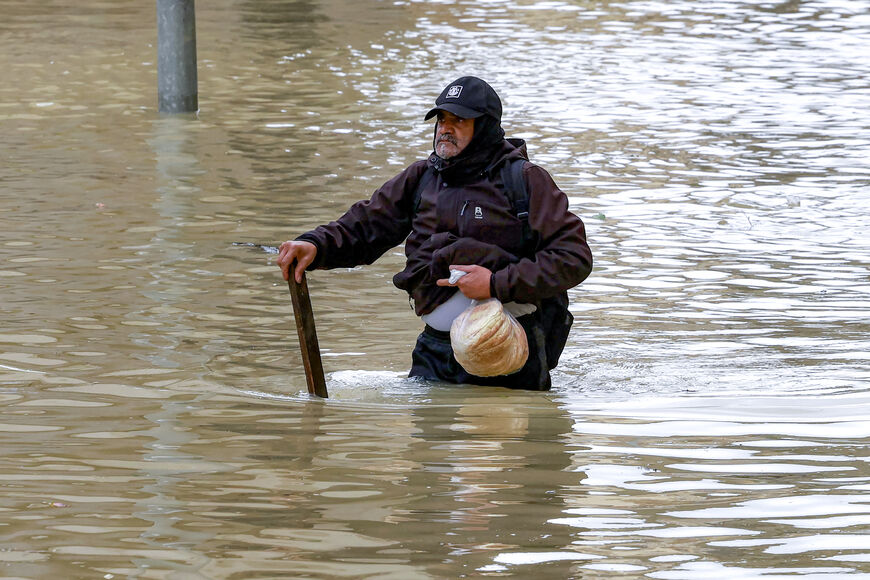
A man walks through a flooded street carrying a bag of bread in Morocco's northwestern city of Ksar El Kebir on Jan. 29, 2026. (Abdel Majid BZIOUAT / AFP via Getty Images)
Morocco’s Ministry of Equipment and Water issued a warning on Thursday, predicting 2 to 3.5 inches of rain from noon Thursday to Friday night in Chefchaouen, Tetouan, Larache, Al Hoceima and Taza. Taounate and Ouezzane are expected to receive 1.5 to 2 inches and an additional inch of rain is forecast for Kenitra, Sefrou, Fez, Sidi Kacem, Sidi Slimane and other cities. Strong winds are predicted in parts of the north.
Storm Leonardo has also hit Portugal and Spain, with one death reported in Portugal and one missing in Spain as a result of flooding.
Background: Morocco emerged from a seven-year drought in 2025, according to Minister of Equipment and Water Nizar Baraka. Speaking on Jan. 13 in Rabat, Baraka said Morocco recorded roughly 4.2 inches of rainfall from Sept. 1, 2025, to Jan. 12, 2026, 95% more than the previous year and 17.6% above the average.
According to Baraka, the heavy rains filled reservoirs and secured at least a year of drinking water in parts of the country.
While the rainfall has eased drought conditions, the flooding has exposed strains in Morocco’s infrastructure. The country faces ongoing water issues linked to rising temperatures and variable precipitation, contributing to reduced groundwater levels and increased demand on dams.
Morocco plans to produce 1.7 billion cubic meters of desalinated water annually by 2030, supplying about 60% of its drinking water needs through new plants in an effort to reduce pressure on traditional water sources.
In August, the Beijing‑based Asian Infrastructure Investment Bank approved a $200 million loan as part of a package with the World Bank intended to improve Morocco’s climate resilience.
Know more: Last month, extreme weather swept North Africa and the central Mediterranean. In mid‑January, Storm Harry brought record rainfall and flooding to Tunisia, killing at least five people.
The storm also worsened conditions along the central Mediterranean migration route. A boat that left Tunisia on Jan. 20 carrying migrants to Italy ran into Storm Harry near southern Italy and Malta. The Italian coast guard reported last Monday that up to 380 people may have drowned, while the Italian nongovernmental organization Mediterranea Saving Humans said that as many as 1,000 migrants are missing at sea due to the storm.
This one's on us.
The story doesn't end here.
Our correspondents are already on the next chapter. Read everything they file, from $2/week.
See Offers