Analysis

Venezuelan crisis unlikely to impact MENA crude exporters in short term

Oil prices inched up on Monday as global oversupply concerns outweighed output disruption fears over the upheaval in Venezuela.

The Iranian-flagged oil tanker Fortune is docked at the El Palito refinery after its arrival to Puerto Cabello in the northern state of Carabobo, Venezuela, on May 25, 2020.
The Iranian-flagged oil tanker Fortune is docked at the El Palito refinery after its arrival to Puerto Cabello in the northern state of Carabobo, Venezuela, on May 25, 2020. — AFP via Getty Images

The United States’ capture of Venezuelan President Nicolas Maduro over the weekend and its pledge to revive the country’s oil sector are unlikely to significantly affect crude-exporting Middle Eastern economies in the short term, analysts told Al-Monitor.

Oil prices inched up on Monday as global oversupply concerns outweighed disruption fears over the upheaval in Venezuela. Brent futures were up about 1.60% at 12:46 p.m. Eastern Time, trading at $61.67, while WTI futures rose 1.57% to around $58.22.

“Oil has held up quite well today, with the market appearing to discount both short-term supply disruptions and the difficulty of ramping up Venezuelan production given large investment requirements and long timelines,” said Carla Slim, Standard Chartered’s chief economist for the Middle East and Pakistan. She added that Middle Eastern economies are likely to see little indirect impact on oil prices or supply, though geopolitical spillovers remain a risk.

The muted market reaction comes after US President Donald Trump said American forces had launched airstrikes on Saturday at several sites in Venezuela, including Caracas, and captured Maduro, who was transported to New York with his wife to face charges including narcoterrorism. Trump said the United States would take control of Venezuela, including its oil fields, until a political transition is possible, though he provided few details.

OPEC cautious

The Organization of Petroleum Exporting Countries and its allies, led by Saudi Arabia and Russia, opted for caution Sunday, keeping crude output unchanged for the first quarter of 2026 amid persistent oversupply and Maduro’s capture. The virtual meeting of the eight-nation OPEC+ group — which pumps about half of the world’s oil — followed a more than 18% drop in crude prices in 2025, the steepest annual decline since 2020, during the COVID-19 pandemic. 

The group reiterated its November decision to pause planned production increases in February and March 2026. OPEC+ said its next meeting to review output levels will take place Feb. 1.

Oil exports near zero

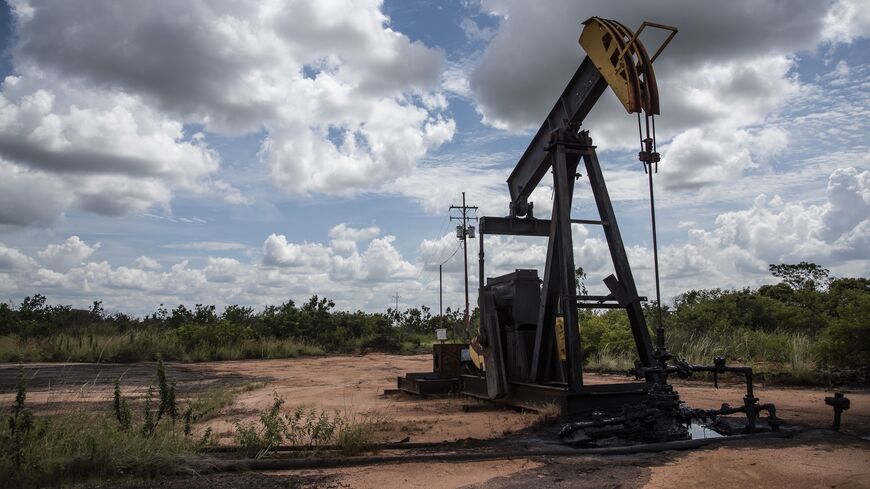
Despite holding the world’s largest oil reserves, Venezuela produced only about 1.1 million barrels per day in 2025, according to OPEC, or roughly 1% of global supply. Exports are now near zero after the United States imposed a blockade on Venezuelan oil tankers in December and seized two oil tankers last month.

Once the richest country in Latin America, Venezuela has been crippled by decades of corruption, underinvestment and mismanagement. Analysts say deteriorating infrastructure, equipment decay and a severe brain drain mean oil production cannot rebound quickly, even after Maduro’s removal. At its peak in 1998, Venezuela was producing around 3.5 million bpd.

In a Jan. 4 research note, investment bank Goldman Sachs analysts said any recovery would require gradual and substantial investment, with production levels in 2026 largely dependent on how US sanctions policy evolves. 

“It will likely take years, with many ideal outcomes all happening, to have a meaningful impact on oil prices,” Patrick de Haan, head of petroleum analysis at GasBuddy, told Al-Monitor.

A risky investment

With oil prices hovering near multiyear lows of around $60 — levels last seen during the pandemic — analysts say Venezuela is unlikely to attract immediate large-scale investment. 

“It’s not realistic that oil companies will want to spend billions of dollars right away,” de Haan said.

Karen Young, a senior research scholar at Columbia University’s Center on Global Energy Policy, told Al-Monitor that Maduro’s removal poses little short-term threat to oil prices or supply. “If anything, the short term could see continued curtailment and US sanctions on Venezuelan exports,” she said, adding that it would take several years and high investment costs for production to return to its historical peak.

“Given lower oil prices, there are other places worth investing [in] first, where costs are lower and political risk is more manageable,” Young added.

While a sharp increase in Venezuelan output could pose a longer-term challenge to OPEC’s dominance, Young said such a scenario remains unlikely. She also noted that Washington alone would not be able to significantly boost Venezuelan exports without coordination with Caracas.

Asked about how the turmoil in Venezuela could impact Middle Eastern economies, Young said, "For now, Gulf states are likely more concerned about the precedent of a sitting president being arrested and taken to face charges in US courts."

Related Topics