With Trump inaugurated, how will the Republican trifecta reshape Middle East?
Subscribe for as low as
$2/week
to access this story and all reporting.
By entering your email, you agree to receive AL-MONITOR's daily newsletter and occasional marketing messages.
Why AL-MONITOR?
AL-MONITOR is an award-winning media outlet covering the Middle East, valued for its independence, diversity and analysis. It is read widely by US, international and Middle East decision makers at the highest levels, as well as by media, thought and business leaders and academia.
Read by
Live news & notifications
Follow over 100 expert journalists based across the region and get notified in real time of breaking stories and exclusives. *Expanded coverage on Energy & Defense sectors.
Premier analysis of the Middle East
Access the sharpest and most diverse regional minds giving you all the angles on regional trends.
Live events & video
Priority access to roundtables, summits and other events alongside AL-MONITOR's global community of regional influencers.
Specialized Newsletters
Get timely reporting on key countries and sectors with up to 10 daily and weekly newsletters straight to your inbox.
Big, exclusive interviews
Follow conversations with the region's biggest names in politics and business.
AL-MONITOR archives since 2012
Access a repository of over a decade's worth of regional coverage, insights and trends.
Subscribe for unlimited access
By becoming an AL-MONITOR subscriber, you drive our team’s rigorous and independent journalism spanning the Middle East.
Donald Trump is sworn into office as Melania Trump holds the Bible in the U.S. Capitol Rotunda on January 20, 2025 in Washington, DC. Donald Trump takes office for his second term as the 47th president of the United States. — Saul Loeb - Pool/Getty Images
The new government trifecta in Washington, with freshly inaugurated President Donald Trump in the White House and the Republican Party controlling both the House of Representatives and the Senate, will mean a reshuffling of Middle East policy priorities as the Biden administration takes its leave and congressional Democrats, now in the minority, are left with few levers of power.
Most Republican lawmakers can be expected to align with Trump, who was inaugurated and took office on Monday. Members of the new congressional majority could play an advisory role to the president as Trump works to implement the ceasefire and hostage release deal that went into effect on Sunday.
The first phase of the deal includes the release of hostages, a phased withdrawal from Gaza by Israeli forces, the return of Palestinian civilians to their homes in northern Gaza and a surge of humanitarian assistance. But the US role in providing aid — or rebuilding Gaza, a priority outlined in phase three of the deal — could prove uncertain. Last year, Republicans proposed legislation to significantly reduce aid to Palestinians, including ending all funding for the United Nations Relief and Works Agency for Palestinian Refugees (UNRWA). A final government spending bill has yet to be passed, with lawmakers facing a March 14 deadline to reach a deal for fiscal 2025.
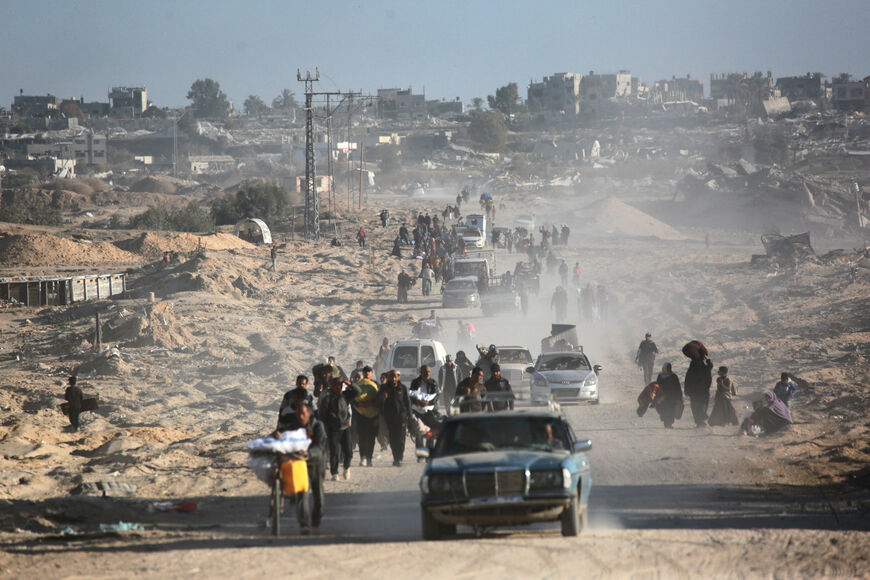
Palestinians transport belongings amidst building rubble in a ruined neighbourhood of Gaza's southern city of Rafah on January 20, 2025, as residents return following a ceasefire deal a day earlier between Israel and the Palestinian Hamas group. Photo by BASHAR TALEB/AFP via Getty Image
You're reading a free AL-MONITOR Original
Want more like this?
AL-MONITOR All-Access gives you unlimited access to all our journalism, the full Daily Briefing, exclusive interviews, premium newsletters, and live events — for less than $2/week.