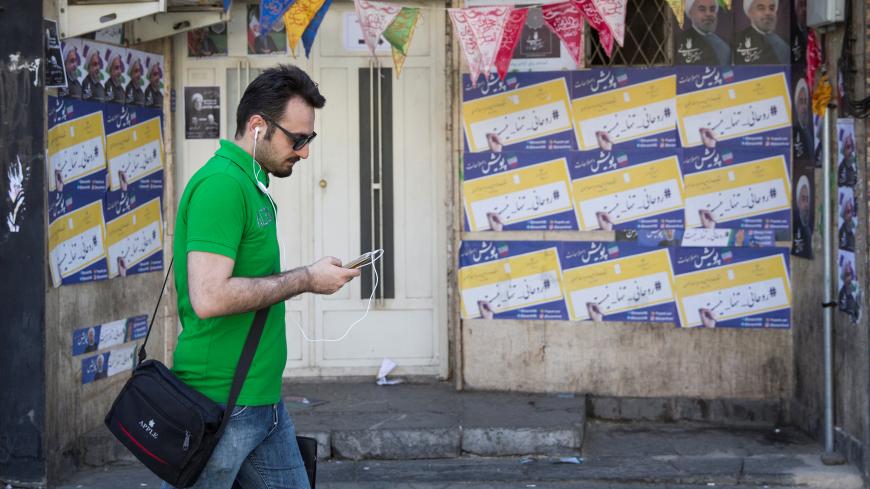
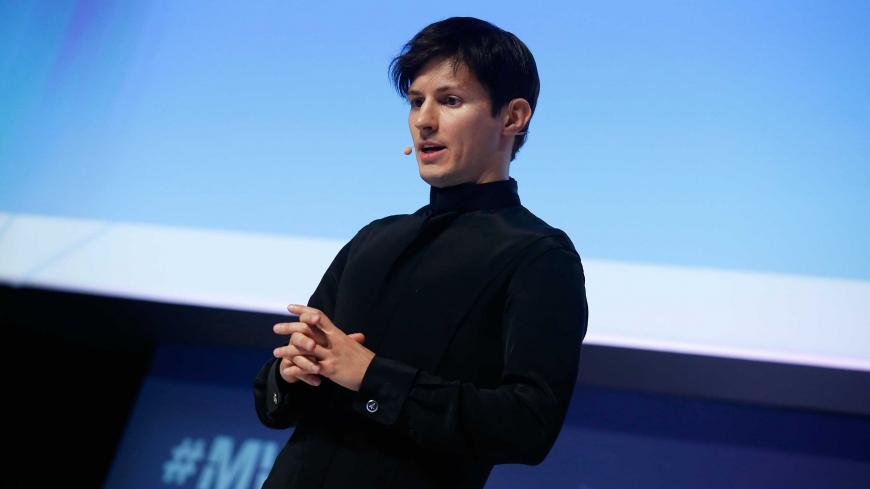
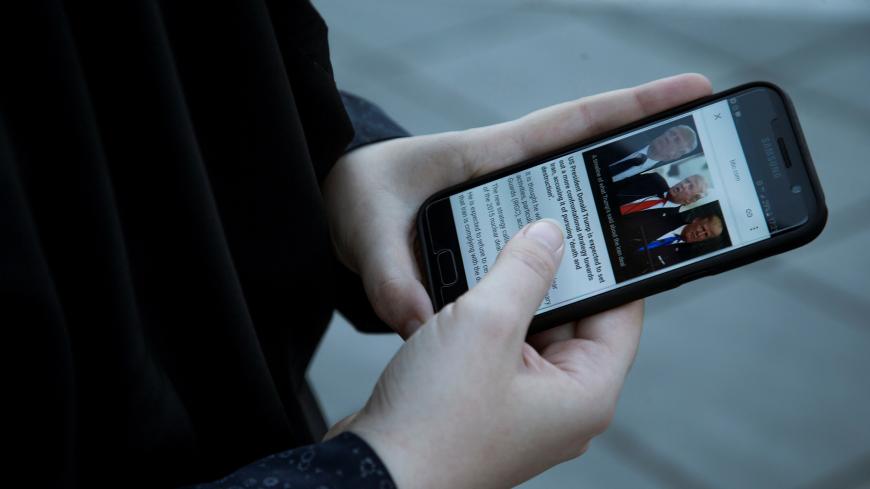
Telegram has become the biggest social networking app in Iran, used by millions of individuals and entities. The app, founded by Russian entrepreneur Pavel Durov, allows users to set up groups and "channels" for communication and is believed to have played a significant role in mobilizing anti-government protests that hit Iran in late December 2017 and early January 2018. In the wake of the deadly unrest, the popular social media app began to be perceived as an enemy of the state.
Still, President Hassan Rouhani has been accusing conservative rivals of restricting the media. "I'm wondering why some hate social media networks and why they can't stand the flow of information to the public," he said during an April 21 address in Tehran.
Now a hard-line politician has reignited the unending blame game over who blocked Telegram. "It was the president who ordered it during a meeting of the Supreme National Security Council," Ezzatollah Zarghami told a group of students in Tehran Dec. 10. Zarghami is a member of the Supreme Council of Cyberspace and a former CEO of Iran's state-funded public broadcaster. During his tenure as IRIB chief from 2004 to 2014, he faced accusations of bias, censorship and refusing to give voice to the opposition, particularly during the country's 2009 protests over the disputed presidential election that landed Mahmoud Ahmadinejad a second term in office.
"Telegram was banned under a verdict from the judiciary," responded Alireza Moezzi, a top public relations official at the presidential office. "We are not suffering from memory loss! Who was behind banning Facebook and Twitter?" he added, implying that it is the conservative camp, which makes great efforts to impose such bans. In contrast, Zarghami's comment was interpreted by some as a sign of Rouhani's hypocrisy and treason against the nation.
AL-MONITOR All-Access gives you unlimited access to all our journalism, the full Daily Briefing, exclusive interviews, premium newsletters, and live events — for less than $2/week.