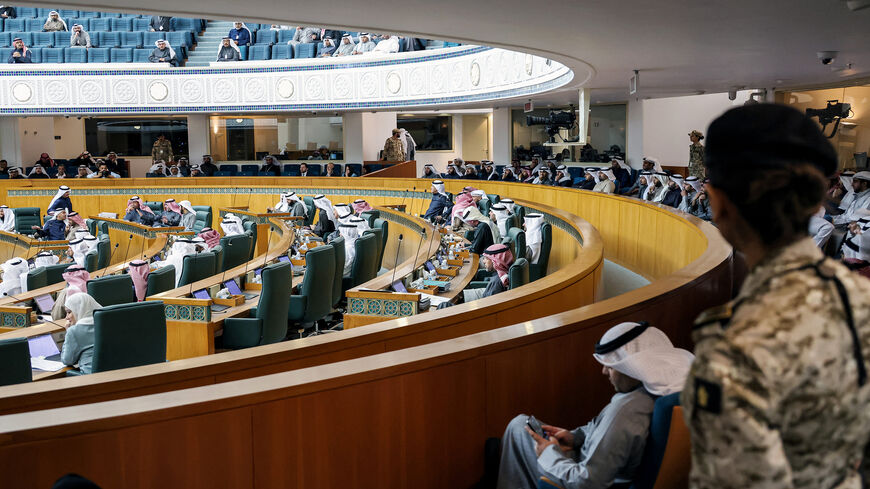
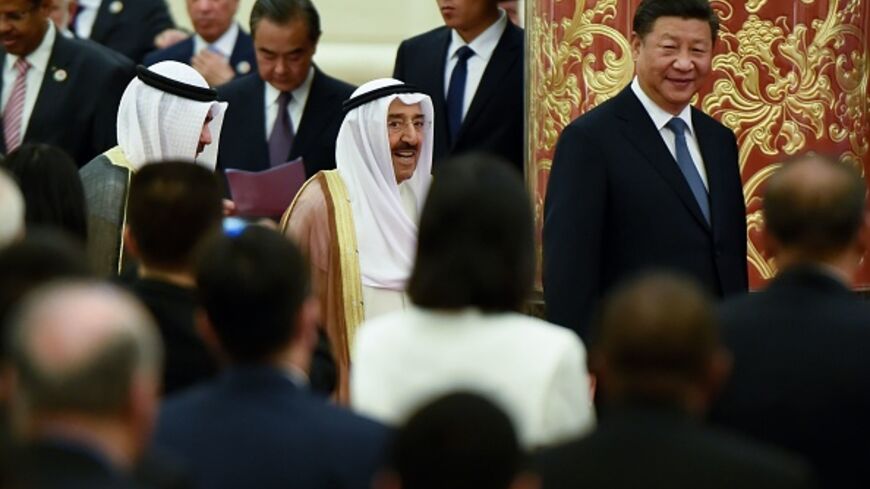
Events taking place in the Middle East since 2011 have inevitably percussed throughout the nations of the Gulf Cooperation Council (GCC) where US-allied monarchies seem fixed. Popular uprisings throughout the Levant and North Africa escalated actions by already vocal Kuwaitis to challenge authority with added creativity and force. Events in Syria and Egypt in particular, however, have also exacerbated Kuwait’s existing social and political cleavages. The divides of Shiite-Sunni and Islamist-secularist are widening in response.
Throughout the summer, and even though Kuwait’s parliament had just been dissolved again on a shaky legal precedent, the situation in Egypt dominated Kuwaitis’ Twitter feeds. Since Egyptian President Mohammed Morsi’s removal from office and the subsequent debacle of the Muslim Brotherhood, secularists have been quick to claim the absolute demise of the Brotherhood region-wide, including in Kuwait. The Islamic Constitutional Movement (ICM, or Arabic acronym HADAS) has been weakened and is now evermore the target of distaste among secularists. The ICM is the opposition parliamentary bloc associated with the Egyptian brand, but distinct in origin and method due to the system in which it operates.
Although the ICM unanimously boycotted the past two consecutive parliamentary elections in protest of the standing electoral law, it has been a strong political bloc when it participates (parties are illegal). Salafist loyalties remain split, however, with many in support of the emir and his government. But as a political grouping they evoke less direct admonition from secularists than Kuwait’s Brotherhood, even though Salafists espouse a far more puritanical interpretation of Islam. The underlying reason is the traditionalism of Salafists to submit to authority — in this case Kuwait’s secular monarchy — while Brothers commit to political processes that empower them to remove or change leadership.
The strain on sectarian differences that the Syrian conflict is posing for Kuwait, and to some extent Bahrain, is even more pronounced than the Islamist-secularist divide. Similar to Bahrain, for example, Kuwait’s monarchy is Sunni. Yet unlike Bahrain, Kuwait’s Shiites are generally supportive of Emir Sheikh Al-Sabah, viewing his secular government as a means of protection from those Sunnis who may view them as Iranian-influenced.
AL-MONITOR All-Access gives you unlimited access to all our journalism, the full Daily Briefing, exclusive interviews, premium newsletters, and live events — for less than $2/week.