Why Saudi-UAE split and Yemen escalation spell trouble for China
For China, a Yemen that is simultaneously a proxy arena for Saudi‑UAE competition and a permissive environment for Al-Qaeda in the Arabian Peninsula jeopardizes Red Sea shipping and complicates Gulf integration.

Hi readers,
2026 has opened with chaotic headlines, with Yemen emerging as a key Middle Eastern flashpoint. Rising instability in South Yemen and the growing divide between the UAE and Saudi Arabia threaten Gulf security, with potential spillover effects for China, despite its limited involvement in the country.
A turbulent Yemen threatens China’s interests on the Red Sea, bolsters the conditions for a resurgence of Al-Qaeda in the Arabian Peninsula (AQAP) and puts at risk Beijing’s bet that Gulf-led regional integration can stabilize key trade and energy corridors.
Let’s unpack,
Joyce (sign up here)

Leading this week
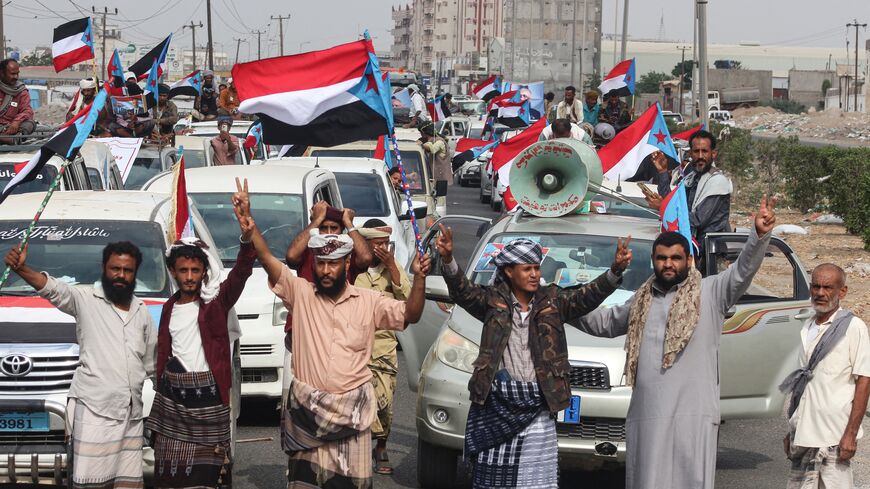
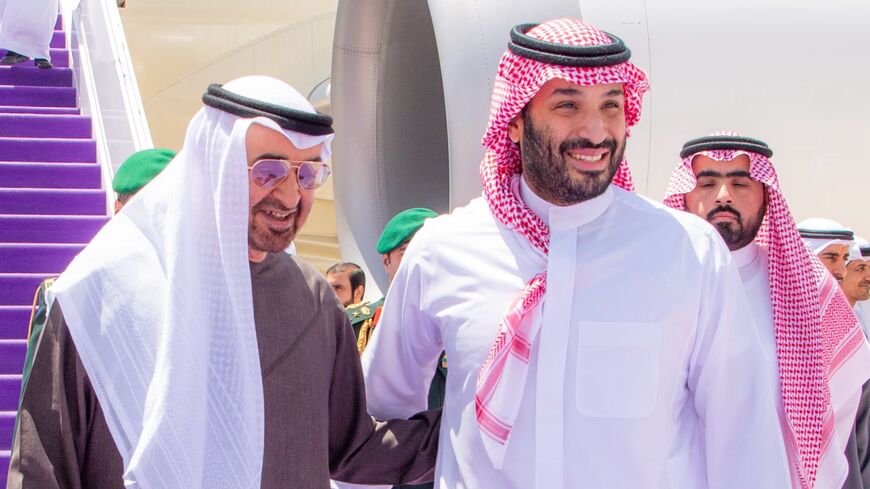
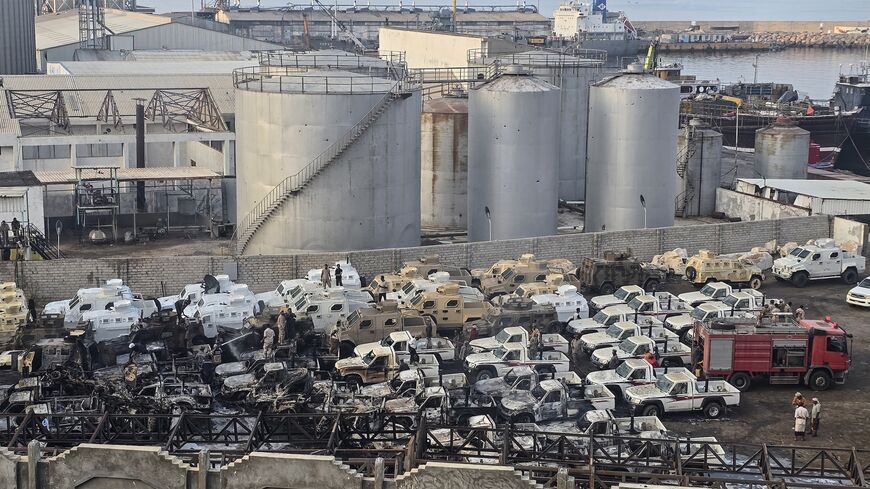
Yemen has entered a new phase of instability, as clashes continue between Saudi‑backed government forces advancing in Aden and UAE‑backed southern separatists from the Southern Transitional Council (STC) that are retreating from their latest push to consolidate control in the south and east. Riyadh has responded with airstrikes on STC positions, and Abu Dhabi withdrew its counterterrorism forces, underscoring how a close partnership between Saudi Arabia and the UAE has now turned into a confrontation by proxy on Yemeni soil. Read Amberin Zaman's latest on what is fueling the UAE-Saudi rivalry.
➡️ Why this is bad news for China
🟡 Maritime interests: For Beijing, Yemen sits across the Bab el Mandeb, the choke point linking the Red Sea to the Gulf of Aden, through which a substantial share of China-Europe trade and energy flows passes. Renewed fighting, Yemeni civil war, fragmented control of ports and a security vacuum that encourages Houthi or AQAP attacks on shipping would complicate China’s efforts to restore normal Red Sea routes after years of disruption.
🟡 Two allies fighting: China has invested heavily in parallel strategic partnerships with both Saudi Arabia and the UAE, seeing them as anchors in a more connected Gulf and Red Sea economic space. As that relationship ruptures, Beijing risks seeing two of its closest regional partners undercut each other’s influence and drag shared projects in energy and infrastructure into their rivalry.
🟡 Economic impact — BRI and beyond: Yemen’s coastline and islands sit on potential Belt and Road‑linked routes that could one day support Chinese‑backed ports, industrial zones and undersea cables. Continued conflict and divided control of territory make it far harder for China to invest in the Red Sea basin.
➡️ What can China do?
🟡 China’s relations with the southern separatists: Beijing moved quickly to recognize South Yemen after its 1967 independence and saw it as an important ideological and strategic partner during the Cold War. China backed the Marxist government with economic aid, technical experts and some military assistance, including by helping to build basic infrastructure and factories around Aden.

Republic People of China's President Mao Zedong shakes hands with People's Democratic Republic of Yemen Salim Rubai Ali, in August 1970, in Pekin, as Ali leads a South Yemen's delegation in China. During the visit, China announced it would provide an additional $43 million loan to South Yemen, earmarked for new projects, including the construction of a textile factory outside Aden and a road of 315 kilometers leading to Mukalla. (Photo by -/XINHUA/AFP via Getty Images)

But beginning in the late 1980s, as China shifted toward a more pragmatic, less ideological foreign policy, it toned down its activism in South Yemen and balanced ties with both the north and south. That adjustment allowed Beijing to smoothly welcome Yemeni unification in 1990 and later emphasize Yemen’s territorial integrity in line with its own stance against separatism. Beijing has so far kept its distance from the STC, maintaining formal ties with Yemen’s internationally recognized government while engaging cautiously with a range of local actors. China is unlikely to anger Saudi Arabia by initiating channels with STC on the retreat.
➡️ Can China mediate between the UAE and Saudi Arabia?
🟡 In theory, Beijing’s close economic ties to both Gulf powers and its neutral branding on Yemen position it as a potential behind‑the‑scenes facilitator. In practice, Saudi‑UAE tensions are rooted in deep strategic competition over ports, trade routes and regional leadership, areas where China benefits from both powers and has little incentive to pick sides. So any Chinese role is likely to be limited to quiet messages urging deescalation and protection of commercial traffic rather than high‑profile mediation efforts.
💭 Joyce’s take: The latest escalation in Yemen magnifies a potential security vacuum that AQAP has long exploited, using weak governance and rival militias to rebuild cells, recruit fighters and plot attacks beyond Yemen’s borders. With Emirati forces and their counterterrorism capabilities leaving Yemen and Saudi‑aligned units now focused on confrontations with the STC, there is a real risk that AQAP could regain space in southern and eastern provinces, close to maritime routes and energy infrastructure.
For China, a Yemen that is simultaneously a proxy arena for Saudi‑UAE competition and a permissive environment for AQAP- or Houthi‑linked disruption is the worst of both worlds: It jeopardizes Red Sea shipping, complicates Gulf integration and exposes the limits of Beijing’s strategy of benefiting from regional stability without assuming major security responsibilities.

Photo of the week

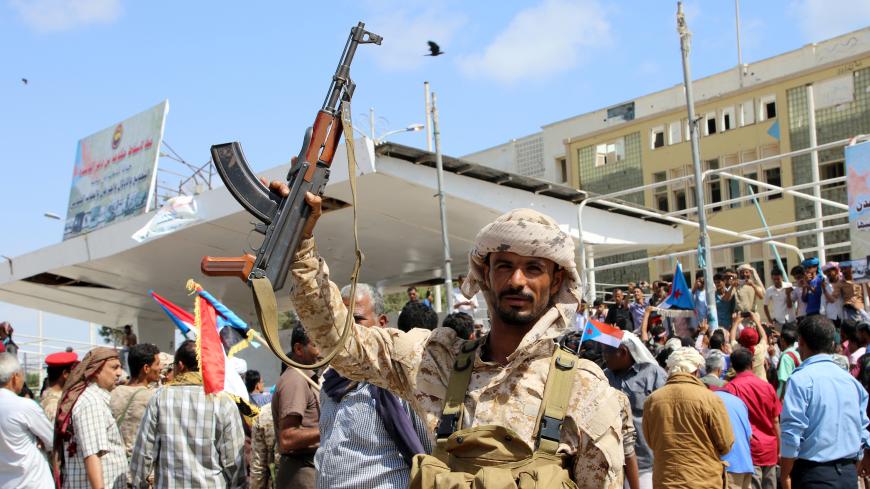
Members of the Southern Giants Brigade, aka Al-Amaliqa, stand next to an armored vehicle deployed in Aden on Jan. 7, 2026.

Deals and visits ✈️
- China voices support for Saudi-backed Yemeni dialogue in Riyadh
- Chinese company breaks ground on $2 billion fertilizer complex in Iraq
- Jordanian culture minister discusses cultural cooperation with Chinese ambassador
- Chinese chemical supplier Capchem to build $260 million lithium battery materials plant in Saudi Arabia
- Chinese FM says strengthening relations with Arab states a priority for 2026
- China’s Guizhou Tyre approved $300 million investment for tire factory in Morocco
- Chinese company completes Algeria’s first heavy-haul desert railway line
- China’s Dongfeng Motor in talks to produce cars in Turkey
- Libya’s Renewable Energy Authority meets with Chinese charge d’affaires in Tripoli
Thanks to Rosaleen Carroll for helping with this section.

What we are reading
- Chinese refiners expected to replace Venezuelan oil with Iranian crude: Reuters
- Why Africa has been Chinese FM's first annual trip for over three decades: CGTN
- Does anyone still want to help the Uyghurs?: The Economist