



China adjusts to Middle East turbulence in 2025, faces challenges in Iran, Yemen
While evading new US sanctions on Iran, adjusting to changes in Syria and expanding military footprint with key Arab partners especially Egypt, China closes 2025 with gains in the Middle East but confronts new challenges with UAE-Saudi rupture in Yemen and Sudan.


Hi readers,
In our last issue of the year, we look at China’s careful but steady 2025 in the Middle East.
China closed the year having turned quiet, patient engagement in the Middle East into hard power, trade and political leverage — all while evading new US sanctions on Iran, adjusting to changes in Syria and expanding its military footprint with key Arab partners — especially Egypt, whose President Abdel Fattah al-Sisi has yet to visit Washington.
As we look ahead, the ongoing conflicts in the region, the risks of new Israeli strikes on Iran and developments in Yemen pose risks for Beijing in 2026.
Let’s explore more below!
Happy New Year, thank you for following and reading throughout 2025 🍾
Rosaleen and Joyce (sign up here)

Leading this week
➡️ China in 2025: Navigating crisis
As the region experienced unprecedented tumult with the Iran-Israel war and US strikes on Tehran’s nuclear facilities in June, Beijing took a cautious approach, verbally condemning the attack but working behind the scenes to preserve its energy and maritime interests.
The Chinese idiom “渔翁得利,” or “The fisherman gains the benefit,” is about a shellfish and a bird fighting as a fisherman picks up both — an apt metaphor for this instance. Iran emerged more reliant on China after the war and economic penalties did little to dissuade Beijing from trading with Tehran.
China continues to buy large volumes of Iranian oil through indirect channels and opaque intermediaries that help Tehran cushion the impact of US sanctions.
In 2025, Iran, Russia and China held joint naval drills that showcased blue‑water interoperability and signaled a shared interest in challenging US dominance in key maritime corridors. The exercises showed China is increasingly comfortable operating alongside sanctioned or confrontational states, so long as it serves its broader strategic and energy interests.
The Iranian defense minister’s visit to China in June, just after the war with Israel, further highlighted Beijing’s role as a security partner of choice for states in open or latent confrontation with US allies.
But as the risks of another Israel-Iran confrontation loom in 2026, Beijing is faced with the prospect of more disruption to energy flows and maritime navigation in the region. Such conflict could further weaken the Iranian regime, which is already grappling with a currency crisis, and raise questions on the post-Ayatollah Ali Khamenei order.
➡️ Military, security footprint with Arab partners
2025 also marked a step change in China’s security cooperation with Arab states. Beijing conducted its first‑ever joint aerial drill with Egypt in April, followed by a second, more advanced joint air exercise with the UAE in December, underscoring growing defense ties with historical US partners.
With Saudi Arabia, China moved from arms sales and training into more visible hard‑security collaboration, including a joint naval drill in October that showcased maritime coordination in key shipping lanes.

➡️ Energy, trade and infrastructure web
Beijing simultaneously wove a denser economic web across the region. SINOPEC’s nearly $4 billion joint venture with Saudi Aramco, announced in April, reinforced China’s central role in the kingdom’s downstream and petrochemicals strategy, anchoring long‑term energy and industrial interdependence.
In December, Kuwait awarded a $4 billion port project contract to China Communications Construction Company, extending Beijing’s Belt and Road‑style infrastructure footprint along the northern Gulf.
Across the Gulf, Chinese Foreign Minister Wang Yi’s December tour of the UAE, Saudi Arabia and Jordan capped a year of intensifying ties, including the China‑UAE air force exercise and a steady flow of ministerial visits on both sides. These moves reinforced Beijing’s role as a multi‑sector partner — from drones and telecoms to ports, refineries and logistics platforms.
Earlier in the year, Morocco hosted the China‑Arab States Forum in May, cementing Rabat’s position as a gateway for Chinese trade and logistics into North and West Africa, while Saudi Arabia’s investment minister traveled to China in August to court further manufacturing and tech investment. China’s BYD, meanwhile, accelerated plans in July for an EV plant in Turkey, positioning Turkish production as a bridge between Middle Eastern markets and Europe.
➡️ Egypt: Tech and defense
Egypt leaned noticeably toward Beijing in 2025. After Cairo conducted its landmark April air force drill with China, it continued the courtship, deepening ties with Chinese tech giant Huawei for digital infrastructure and telecoms. In late June, Egypt’s electricity and renewable energy minister traveled to China to push for more Chinese investment in power, grids and green energy projects, locking in Beijing as a long‑term partner in Egypt’s energy transition.
➡️ Cautious on Syria
On Syria, China moved carefully in the post-Assad era. Beijing remained wary of the legacy of Uyghur fighters who passed through or settled in northern Syria during the war, seeing the Syrian theater as both a counterterrorism concern and a necessary diplomatic venue to establish ties with the new Islamist rulers. That caution did not prevent China from upgrading political ties: In November, Syrian Foreign Minister Asaad al‑Shibani visited China, signaling that Beijing is prepared to engage with Damascus in the post‑war phase, but on its own terms and timetable.
➡️ Eyeing role in Gaza
China also used aid and multilateral diplomacy to frame itself as a more balanced actor on the Israeli‑Palestinian file. In December, it announced a $100 million aid donation to Gaza, pairing humanitarian signaling with political outreach, including a January meeting between Palestinian President Mahmoud Abbas and China’s Middle East envoy.
➡️ Multilateral stage and strategic messaging
Regionally, 2025 showcased China’s comfort with leading big‑tent diplomatic platforms. It hosted the Shanghai Cooperation Organization summit in late August and early September, bringing Iranian President Masoud Pezeshkian and Turkish President Recep Tayyip Erdogan together under a largely Eurasian security and economic umbrella in which the US has no seat.
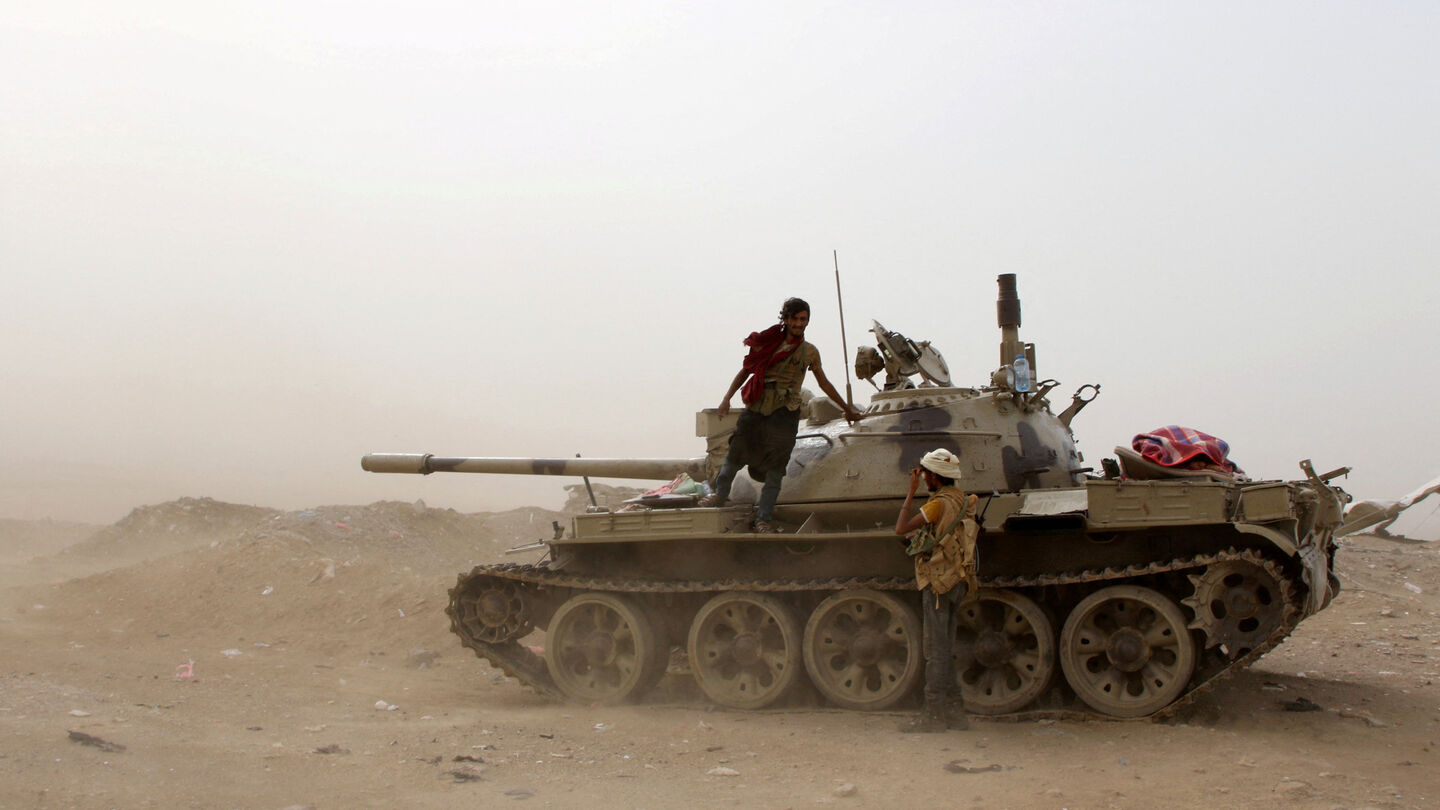
Members of UAE-backed southern Yemeni separatist forces stand by a tank during clashes with government forces in Aden, Yemen Aug. 10, 2019. REUTERS/Fawaz Salman/File Photo
➡️ Challenges in Yemen and Sudan
The new rupture in Yemen between Saudi Arabia and the United Arab Emirates is problematic for China. Not only does the Riyadh-Abu Dhabi fissure complicate Beijing’s growing interests with the two, but further instability in Yemen is threatening for China.
In a statement on Monday, China called on all parties in Yemen to uphold the country’s sovereignty, unity and territorial integrity. A divided Yemen is bad for China because it threatens Beijing’s strategic and economic interests that are tied to stability in the Bab el-Mandeb Strait, a vital maritime chokepoint that connects the Red Sea to the Gulf of Aden, as risks to shipping routes drive up maritime security costs.
Similarly, the conflict in Sudan threatens China’s interests by undermining the security of key investments and destabilizing a critical Red Sea corridor.
Our take: On the face of it, 2025 has not been ideal for China in anchoring stability and shoring up friendly regimes in the Middle East. Broadly, however, the year preserved China's ambitions of maintaining a permanent, multi‑dimensional power in the region. It preserved a network of energy, infrastructure, tech and defense partnerships that can outlast any single US administration. The new fronts in Yemen’s and Sudan’s wars will likely see Beijing heavily weighing on diplomacy to safeguard its interests.

Photo of the week
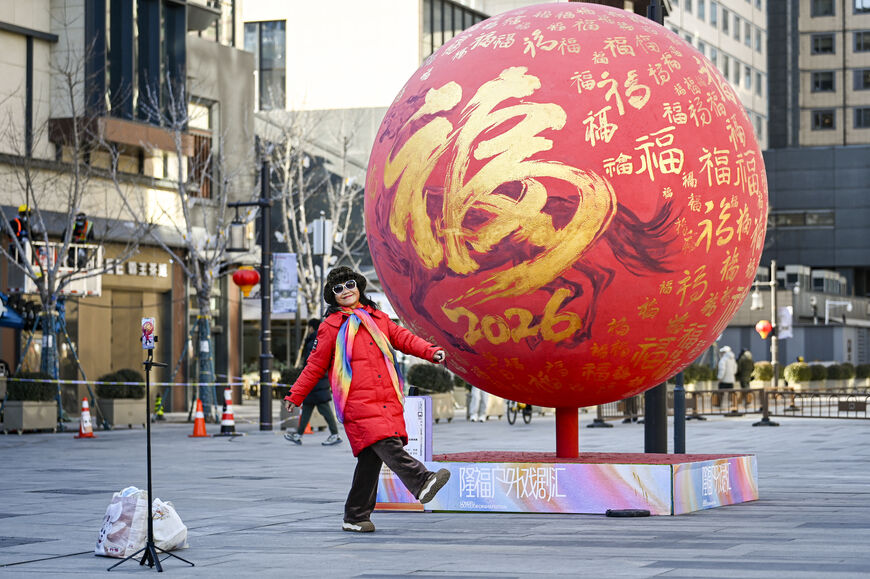
A woman poses with a New Year's-themed installation outside a store in Beijing on Dec. 25, 2025. (WANG Zhao / AFP via Getty Images)
Deals and visits ✈️
- China to develop new port in Kuwait for regional and global trade
- Egypt partners with China on three major industrial projects with investments worth $1.15 billion
- Riyadh hosts Saudi-Chinese festival as cultural year draws to close
- Iran's exports to China rise 3% in November
- China sets record with frozen strawberry imports from Egypt

What we are reading
- Why Saudi Arabia might not fulfill spending pledge to US amid China-America rivalry (SCMP)
- From Sputnik to satellites: How China is pulling Egypt and Gulf into its space orbit (Al-Monitor)
- China threatens detention in Xinjiang over banned Uyghur songs (AP)
This one's on us.
The story doesn't end here.
Our correspondents are already on the next chapter. Read everything they file, from $2/week.
See Offers