



Trump warns Mideast truce on 'life support', Iran says ready for any aggression


President Donald Trump warned the ceasefire in the Middle East war was on "life support" Monday after rejecting the latest counteroffer from Iran, which said its military stood ready to respond to any act of aggression.
The president's angry reaction to Iran's position -- delivered in response to a US proposal -- sparked a spike in oil prices and dashed hopes that a deal could be quickly negotiated to reopen the Strait of Hormuz to commercial shipping.
After slamming the reply as "TOTALLY UNACCEPTABLE," Trump insisted the United States would see a "complete victory" over Iran, adding that the truce which has largely halted fighting in the Gulf for over a month was on its last legs.
"The ceasefire is on massive life support, where the doctor walks in and says, 'Sir, your loved one has approximately a one percent chance of living,'" he told reporters on Monday.
Iranian parliamentary speaker Mohammad Bagher Ghalibaf, who served as chief negotiator in previous talks with Washington, said shortly afterwards that the country's armed forces were ready to "teach a lesson for any aggression."
He added in a later post on X that "there is no alternative" but to accept the points laid out in Iran's 14-point proposal rejected by Trump.
"Any other approach will be completely inconclusive; nothing but one failure after another. The longer they drag their feet, the more American taxpayers will pay for it," he said.
The developments unnerved global energy markets already thrown into chaos by the war and the overlapping blockades imposed by Iran and the US around the Strait of Hormuz -- a vital conduit for oil and gas shipments.
"The energy supply shock that began in the first quarter is the largest the world has ever experienced," the CEO and president of Saudi oil giant Aramco, Amin Nasser, told investors, warning it would take months for markets to rebalance even if the strait opened immediately.
"If its opening is delayed by a few more weeks, then normalisation will last into 2027," he said.
- Hunger and starvation -
The world now also faces a shortage of fertiliser -- much of which comes from Gulf ports -- and risks food supplies for tens of millions of people.
Jorge Moreira da Silva, executive director of the United Nations Office for Project Services (UNOPS), told AFP there were just a few weeks left to avert a potentially "massive humanitarian crisis."
"We may witness a crisis that will force 45 million more people into hunger and starvation," he said.
Trump did not provide details on Iran's response, but Tehran's foreign ministry said it had called for an end to the US naval blockade of its ports and to the war "across the region" -- implying a halt to Israel's strikes targeting Hezbollah in Lebanon.
Crucially, ministry spokesman Esmaeil Baqaei told reporters Iran demanded the "release of assets belonging to the Iranian people, which have for years been unjustly trapped in foreign banks."
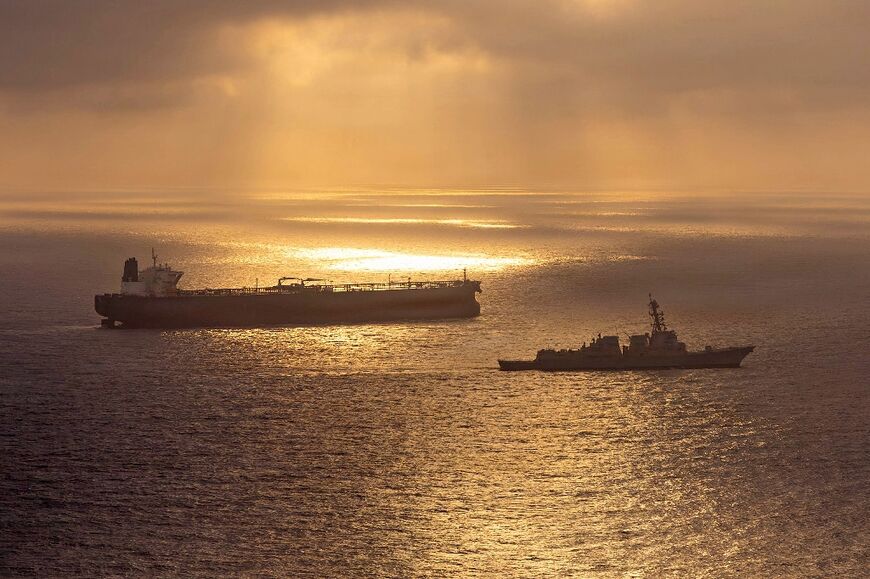
That would represent a victory in the Islamic republic's long-standing campaign against its economic isolation, going further than a return to the status quo before the US and Israel launched the war on February 28.
Any end to international sanctions would diminish Washington's leverage over Tehran as it tries to secure a lasting end to Iran's nuclear enrichment.
The US, Israel and their allies have long accused Iran of seeking nuclear weapons, an accusation Tehran has repeatedly denied.
Israeli Prime Minister Benjamin Netanyahu has insisted the conflict would not end until Iran's nuclear facilities were destroyed.
The Wall Street Journal, citing people familiar with the matter, said Iran's counterproposal had included the possibility of diluting some of its highly enriched uranium, with the rest transferred to a third country.
The American newspaper also reported on Monday that the United Arab Emirates had carried out attacks on a refinery located on Iran's Lavan Island in early April, revealing previously unknown participation in the war by the Gulf country.
AFP has not been able to independently verify the Emirati attacks, which the Wall Street Journal, citing unnamed sources, said took place around the time Trump announced the ceasefire on April 7.
- 'Restraint over' -
The lack of a path to a resolution has focused concern on the Strait of Hormuz, where Iran is restricting maritime traffic and setting up a payment mechanism to charge tolls for crossing ships.
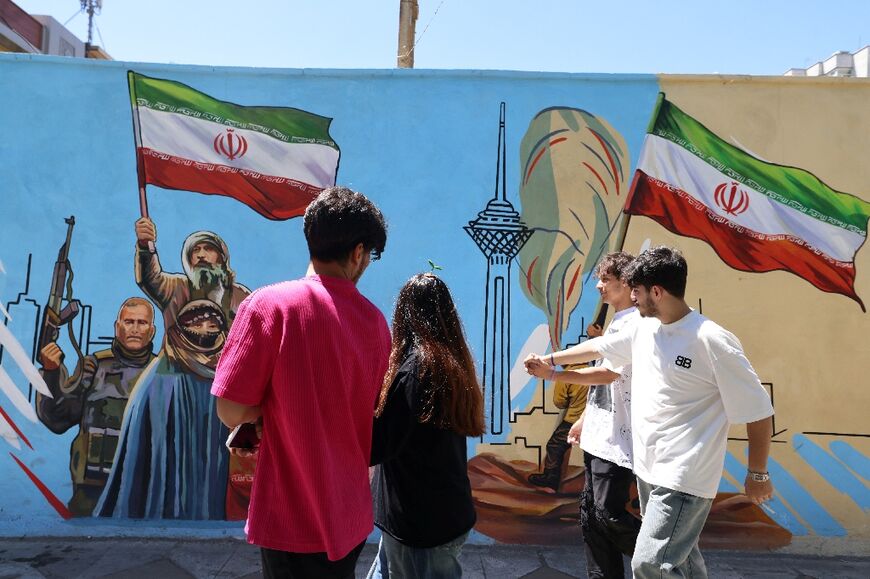
US officials have stressed it would be "unacceptable" for Tehran to control the international waterway.
Trump told Fox News that he was considering reviving a short-lived US operation to guide oil tankers and commercial ships through Hormuz, but that he had not yet taken a final decision.
Saudi sources previously told AFP that Saudi Arabia had prohibited the US from using its airspace and bases for the operation the first time around, fearing "it would just escalate the situation and would not work."
Seeking to increase economic pressure on Iran, the United States issued sanctions against 12 individuals and companies in Iran, Hong Kong and the UAE that it said facilitated the sale and shipment of Iranian oil to China.
burs/smw/msp/dw/jgc/ceg/lga