



Syria advances cultural revival with nine new heritage listings
Nine heritage sites have been added to list of the Islamic World Educational, Scientific and Cultural Organization, which restored Syria’s membership last year after a 14-year suspension.


Syria announced on Sunday the registration of nine new heritage sites to the Islamic World Educational, Scientific and Cultural Organization (ICESCO) heritage list, marking the country’s first addition since rejoining the organization last year after a 14-year hiatus.
According to a statement released on Sunday by the Syrian General Directorate of Antiquities and Museums, the newly listed sites include the following:
• The Saladin Castle, which sits 400 meters above sea level in the northwestern province of Latakia: The medieval castle dates back to the Byzantine era in the 10th century. • The Umayyad Mosque, located in the heart of the Old City of Damascus: The mosque is one of the most ancient Islamic landmarks in the world, built between 705 and 715 during the Umayyad dynasty.
• Al-Azm Palace in Damascus' Old City: It was built in the 17th century during the Ottoman period and served as the private residence of Asaad Pasha al-Azm, the governor of Damascus during that era.
• Maktab Anbar, which was originally built as the private home of a wealthy Jewish merchant in the Jewish Quarter of Old Damascus, during the Ottoman period in the mid-1800s: The building was later converted into a prestigious school before it was abandoned in the early 20th century. Today, Maktab Anbar serves as a cultural center that includes a museum, an exhibition hall and a library.
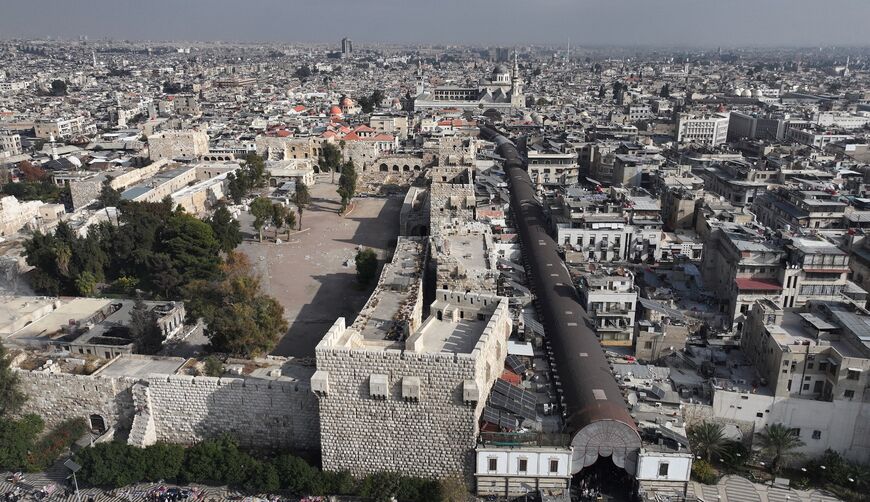
• The Citadel of Damascus, which consists of a palace and fortress located in the Old City of the capital: It was founded in the 11th century under the Seljuk period, and its construction continued to expand until the Ayyubid era in the 13th century.
• Al-Omari Mosque in the southern province of Daraa: The mosque, which dates back to the 7th century, was repeatedly targeted by former regime forces during Syria’s civil war.
• The archaeological site of al-Lajat in Daraa province: The site, which spans over an area of 1,000 square kilometers (386 square miles), is considered an open-air archaeological museum and is home to ancient buildings and citadels dating back to Nabataean, Roman, Byzantine and Islamic eras. • The Waqf Library in Aleppo, in northern Syria, established in 1926 at the Sharafiyah School: The new Syrian government launched a project last December to restore the library, which houses thousands of ancient manuscripts and printed books.
• The ancient site of Apamea in the central province of Hama: The site is home to Hellenistic, Roman, Byzantine and Islamic ruins.


