



The economics of social unrest in Iran
While the protests themselves are unsurprising, given the economic crises plaguing the country, the fact that they were centered in the southwestern province of Khuzestan is significant.


Iran is witnessing a new wave of social protest in reaction to the price hikes caused by the government’s reforms of direct and indirect subsidies. The public is unhappy with prolonged high inflation eating into purchasing power. Aside from the political consequences of these protests, the socio-economic damage will further weaken the Iranian economy.
An academic analysis of the costs of social unrest, using the International Monetary Fund’s methodology, is not possible due to lack of accurate data. Therefore, we will look at some anecdotal, but interrelated facts and developments.
Iran has experienced high inflation for most of the past decade (see table below). The only two years when inflation was below 10% were 2016 and 2017, after the lifting of sanctions as part of the JCPOA nuclear deal. Ever since the Trump administration withdrew from the JCPOA in 2018, the average Iranian family has lost purchasing power and has become poorer. Frustration is further aggravated by high level of corruption, mismanagement and domestically caused crises.
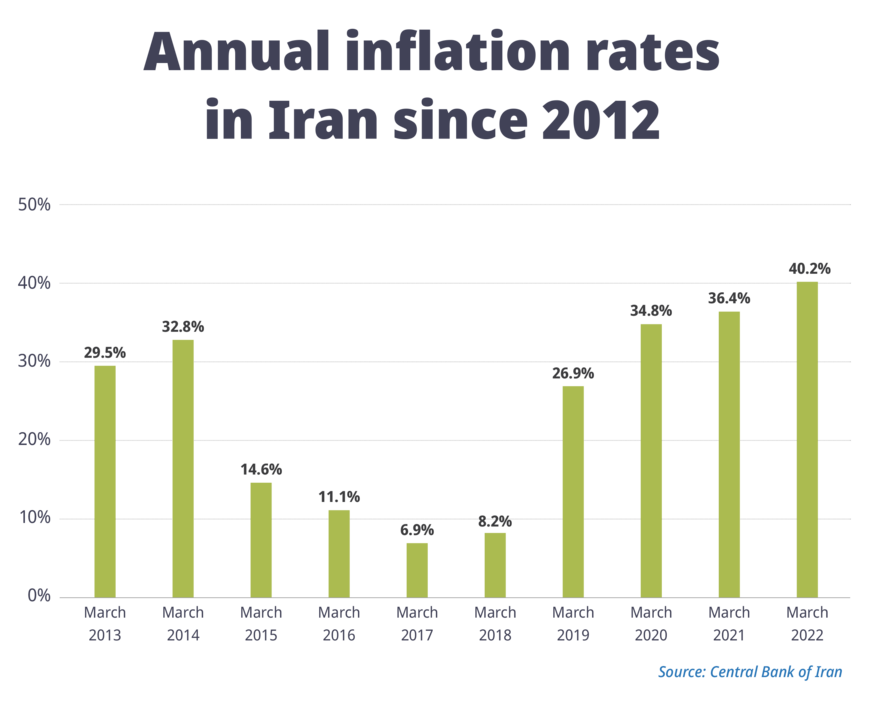
Consequently, the protests are unsurprising, especially since political restrictions limit the space for peaceful protest. However, the fact that the recent protests mainly took place in the southwestern province of Khuzestan is significant. There is a massive mismatch between the wealth of Khuzestan as the country’s main oil-producing region and its low level of development – adding another layer to the social disillusionment. The impact of social unrest on security and political risk may lead to lack of investment in a specific region. Therefore, social unrest completes the vicious cycle that starts with underdevelopment and underinvestment.


