



Camels weep as their young perish in Syria’s killer drought
Camels are a miserable canary in the coal mine of Syria, which is experiencing its worst drought in 70 years.

AL-AJAJ, RAQQA, Syria — A baby camel moans in anguish as it sits in a muddy manger, its forelegs folded under its emaciated frame. Its large dark eyes are wet with tears as the creature gazes imploringly at its owner. The cries grow louder and longer, then exhaustion prevails.
Like many of the camels in this desolate Bedouin village west of Raqqa, the one-year old is dying of malnutrition and has grown so weak that it can no longer lift itself off the ground. “There is no rain, no water,” said Ayash Shalhoub, a Bedouin camel herder whose tribe has bred camels for centuries. “No rain means no vegetation, hence no food for our camels. If things continue this way, neither our animals nor we can survive,” he told Al-Monitor on a recent afternoon.
This year more than half of the pregnant camels in the village’s 500-strong herd miscarried due to the lack of food. “Look, she is still weeping for her lost baby,” said Shalhoub pointing to another camel emitting piercing wails. “Camels, they are like humans. They cry.”
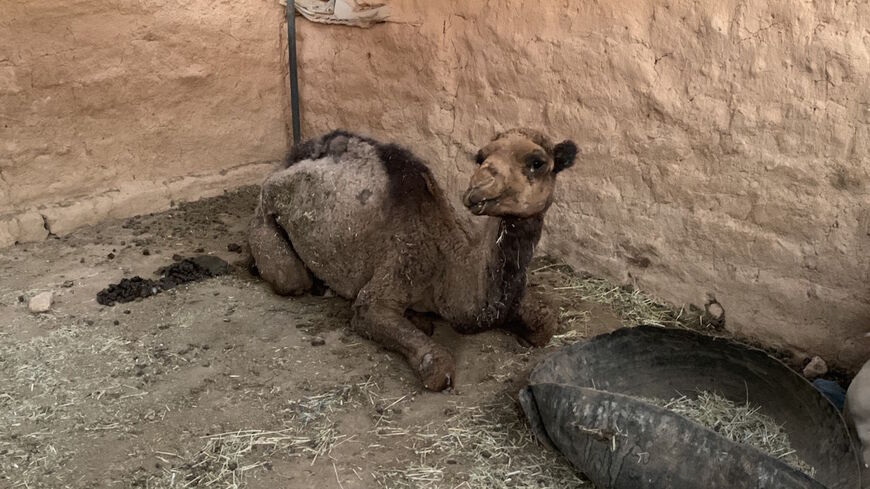
A sick baby female in al-Ajaj, Nov. 2, 2021. (Amberin Zaman/Al-Monitor)


