



What's next for Russia’s relations with Hezbollah?
A Hezbollah delegation visits Moscow, with Lebanese politics and stability and Syria's political future atop the agenda.
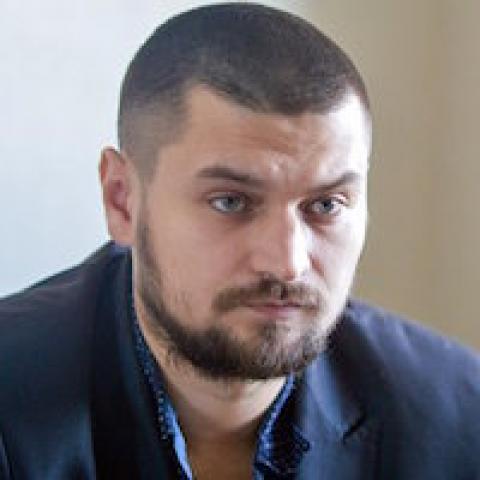

A delegation from Lebanese Hezbollah, led by the head of the movement’s parliamentary bloc, Mohammad Raad, arrived in Moscow on March 14 for a four-day visit that came on the eve of the 10-year anniversary of the start of the Syrian war. On March 15, the delegation, which included Hezbollah’s foreign relations chief Ammar Al-Moussawi and his aide Ahmad Mhanna, was received by Russian Foreign Minister Sergey Lavrov. The delegation also had separate talks with Mikhail Bogdanov, a Russian deputy foreign minister and the special presidential representative on the Middle East.
By a strange coincidence, the Hezbollah delegation’s visit to Russia occurred almost simultaneously with the visit of Israeli Foreign Minister Gabi Ashkenazi, who arrived in Moscow on March 17. Moreover, Hezbollah’s talks with Lavrov were held the same day that two Russian deputy foreign ministers — Oleg Syromolotov and Sergey Ryabkov — met with the Israeli Foreign Ministry's deputy director general for strategic affairs, Joshua Zarka. Syromolotov, a former chief of the FSB Counterintelligence Service who rose to the rank of army general, oversees measures against terrorism. So this string of meetings looks like more than just a coincidence and makes for a rather awkward situation.
Any official contacts between Moscow and Hezbollah have the potential for causing an uproar. The problem is not just the status of the movement, which many countries, including Israel, consider to be terrorists. It is also the nature of Hezbollah’s relations with the Russian diplomats, security officials and intelligence services. One can recall the scandal that broke out in December when the Russian ambassador in Israel, Anatoly Viktorov, blamed Israel for destabilizing the situation in the Middle East to an even greater extent than Tehran. Viktorov also tried to vindicate the Tehran-allied Shiite military-political organizations, most notably Hezbollah. Once a rival force that kidnapped and murdered Soviet diplomats, Hezbollah has turned into the Kremlin’s ally in "fighting terrorism." Moscow took steps to smooth out the situation around Viktorov’s comments. Yet such rhetoric — not the first such statements on Hezbollah coming from Russian diplomats — is not explained solely by the discretion of a particular ambassador but by the specifics of Russia’s presence in Lebanon and by Beirut’s role in circumventing sanctions against Damascus.
The last few years saw Moscow performing a delicate balancing act. On the one hand, it has sought to deny Hezbollah’s participation in drug trafficking; at the same time the Russian military was conducting joint missions with Hezbollah militias. A case in point is the takeover of East Aleppo, where Russian special forces and Hezbollah fighters acted together. Indeed, Russian forces were allowed to disguise themselves as Hezbollah fighters for some operations. Hezbollah units, in turn, were granted permission to raise the Russian flag for cover from Israeli airstrikes. Still, the Russians did not raise particular objections to Israeli’s airstrikes against mobile targets. Moscow also feels obliged to monitor the arms traffic from Syria to Lebanon and to constrain Hezbollah’s actions both in the Damascus airport area and in the southwestern provinces.


