



Palestinians fight to keep property in East Jerusalem
Palestinians continue to fight for their rights to their properties and homes in the Sheikh Jarrah neighborhood of East Jerusalem, thanks to the support of Jordan that has historical documents proving their ownership.
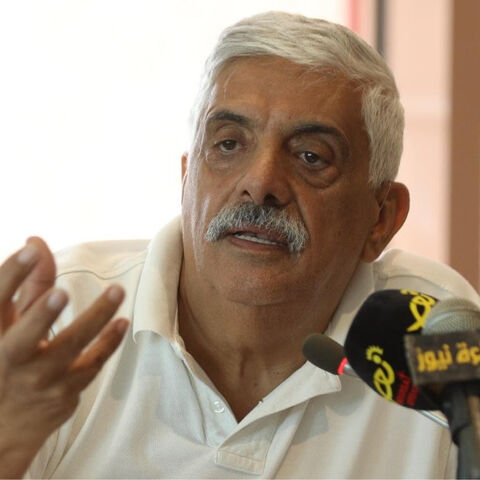

As legal Palestinian efforts to stop Israeli efforts to evict Palestinians from their homes in the East Jerusalem neighborhood of Sheikh Jarrah fail to produce results, Palestinians are appealing to the international community. Palestinians have invited diplomatic representatives in Jerusalem to visit the homes in the neighborhood and have asked for their support in putting a stop to the Israeli efforts to evict Palestinians. Court-ordered evictions are due to take place no later than May 2.
Fadi al-Hidmi, minister of Jerusalem affairs, told Al-Monitor that the international community must “stand up” against this violation of international law. “The international community needs to intervene immediately and urgently to put pressure on the Israeli government to stop the displacement of Palestinians from their homes in the occupied city, in light of the Israeli governmental and judicial institutions' insistence on flouting international decisions,” he said.
The 28 families living in this East Jerusalem neighborhood were homeless refugees from the Nakba, or catastrophe, that expulsed Palestinians from their homeland in 1948. Jordan allowed the United Nations Relief and Works Agency (UNRWA) to build 28 simple homes in 1956 as part of an agreement with the UN. Their rental agreement is preserved in the Jordanian archive and Israel has a copy of it. However, the latter now refuses to recognize it, even though it initially did — an Israeli court rejected the eviction of the families from their homes in 1972.
Jordan, which was in charge of East Jerusalem at the time, signed an agreement with UNRWA allowing these homes to be built on abandoned properties. Since its occupation, Israel has retained the tenant protection law. However, Israeli settlers are trying to evict the Palestinian families questioning that they had legitimate rental agreements.


