Baghdad’s Mustansiriya Madrassa ready for World Heritage List
Baghdad’s Mustansiriya Madrassa established by Abbasid Caliph Al-Mustansir around 1230 suffers obsolescence, dampness, environmental pollution and urban sprawl.


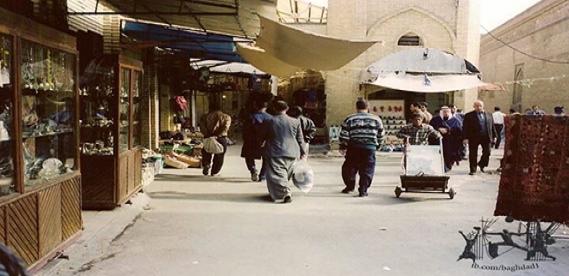
Iraq's Ministry of Culture, Tourism and Antiquities announced Feb. 5 the launch of the rehabilitation project for Mustansiriya Madrassa, a historic school building established in the capital Baghdad during the Abbasid Caliphate in 1230. The ministry refutes the news of restorations in the historical structure that may harm its historical value. Recent photos had spread of four sewage pipes penetrating the complex’s external wall overlooking the Tigris River and surrounding Mustansiriya Madrassa from the back. The building seems to disappear in a corridor surrounded by a multitude of shops and markets with narrow, winding alleys, most notably the Khaffafin and Saffaren markets.
Mustansiriya Madrassa is one of the oldest universities in the world, and one of the greatest works of Islamic civilization. The university taught the sciences of the Quran, medicine and mathematics, at the hands of senior sheikhs and scientists in Iraq and the Levant. Only bright students were admitted to this university, which was home to 80,000 books.
Al-Monitor spoke to Iyad Mohammed Hamzah, director general of the Department of Maintenance and Preservation of Antiquities at the Ministry of Culture. “Mustansiriya Madrassa and the Abbasid Palace have been nominated to join UNESCO's World Heritage tentative list since 2014,” he said. “The modernization works and restorations are conducted in a scientific manner and within UNESCO conditions to boost Mustansiriya Madrassa’s chances in the global list.”
Regarding the details of the development work, Hamzah explained, “Efforts focus on eliminating the groundwater danger threatening the structure. The water level of the Tigris River, adjacent to the madrassa’s backyard, greatly affects the foundations, especially when water levels are high.”