



Cairo talks on Mideast peace show key players preparing for post-Trump era
The latest meeting appears to be a signal to the new US administration that the Middle East Quartet and the Palestinians are serious about talks based on a multilateral approach.

Political pundits were initially taken aback by the meeting of the Middle East Quartet — made up of the United States, the United Nations, the European Union and Russia — in Cairo on Monday. After all, the incoming US president has yet to be inaugurated, Israel is holding general elections in March that might see the downfall of Prime Minister Benjamin Netanyahu, and even the Palestinians are poised to have their own elections.
But the meeting in Cairo should be seen as directly tied to these potential leadership changes. The quartet appears to be trying to prepare itself for the post-Donald Trump era, which is expected to see a number of regional changes.
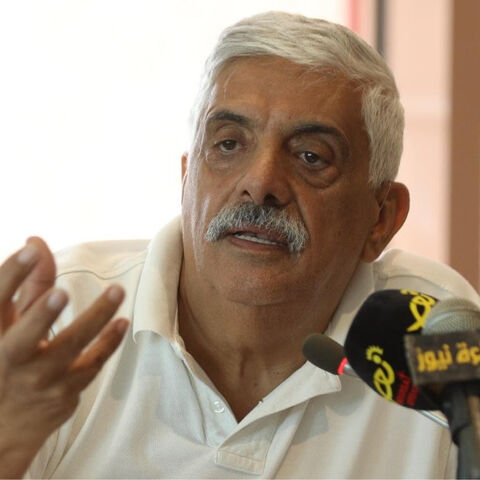
Wadie Abunassar, director of the Haifa-based International Center for Consultations, told Al-Monitor the talks in Cairo are not consequential in and of themselves. He noted, however, that "the meeting might be important as a sounding board for what will happen in the coming years.”
Riyad Mansour, head of the Palestinian delegation to the UN, told Al-Monitor there is hope that the changes that took place in the United States lead us to believe that our idea of a collective approach to world problems can be used in the Palestine context. “Our policy is to have a collective approach in dealing with the Israeli Palestinian conflict. This was reflected in the speech and statements of President [Mahmoud] Abbas at the UN last October.”


