



Israeli Arabs left to rely on 'self-help' for coronavirus testing
The discrepancy in the Israel government's approach to coronavirus testing in Jewish and Arab communities has put the burden on Arab Knesset members and local Arab authorities to organize to try to keep infections under control in Arab towns and villages.
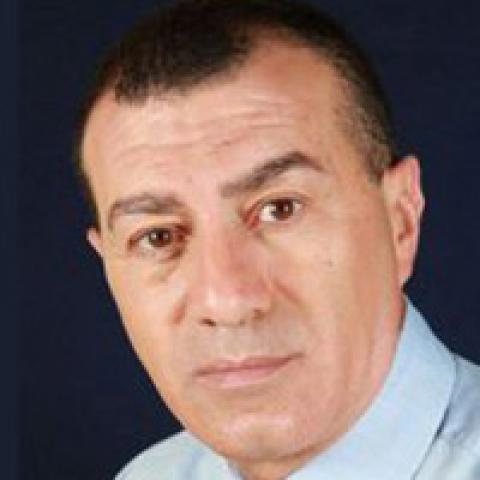

Leaders of the Arab community in Israel, including Knesset members from the Joint List, claim that Arab citizens face discrimination in testing for the novel coronavirus. Figures released by the Ministry of Health show that the number of people infected with the virus among the Israeli Arab population is significantly lower that that among the Jewish population. Out of almost 9,000 cases in Israel on April 7, about 200 are in predominantly Arab localities.
This is a surprising figure, given that Arab citizens constitute 20% of Israel’s total population. The highest concentration of confirmed Arab cases, 19, is in Umm al-Fahm, followed by Tamra, in the north, with 15 infections. Nevertheless, the number of tests allocated for Arab towns and villages is disturbingly lower than for Jewish areas. Speaking about testing, Knesset member Yousef Jabareen (Joint List), a resident of Umm al-Fahm, told Al-Monitor, “It is incredible that as Knesset members, we had to pressure the Health Ministry to get what any Jewish citizen can take for granted in Israel.”
According to Jabareen, it took enormous effort and pressure by Joint List leaders and the heads of Arab local authorities to set up two drive-thru testing facilities, at Wadi Ara, in the north, and in Arara, in the south. The two stations helped increase the number of tests performed in Arab communities to around 10,000, he estimated.
“This national blindness, which hurts everyone, clearly revealed the dearth of Arab representation at the professional decision-making level,” said Jabareen. He further remarked that there is no professional Arab team that works with the Ministry of Health to advise it or provide an up-to-date picture of the Arab community and its needs. Magen David Adom, for instance, doesn’t even have an Arabic-language copy of the questionnaire required to conduct coronavirus testing. So far, finding solutions to such problems has been driven by local organizing.


