



Palestinians tell Trump, Israel: We are not for sale
The Trump administration boasts of a generous economic framework offered to the Palestinians, while in truth it hopes the private sector will come up with the funds.
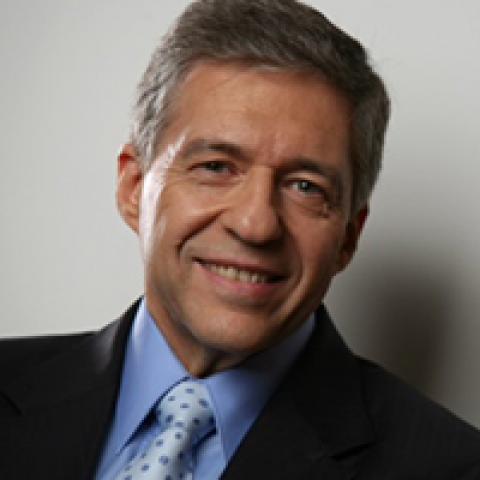

Palestinian President Mahmoud Abbas made a respectable, reserved appearance at the Feb. 11 session of the United Nations Security Council, regarding US President Donald Trump’s "deal of the century.” As anticipated, Abbas was excoriated. Danny Danon, Israel’s envoy to the UN and Prime Minister Benjamin Netanyahu’s right-hand man, announced that so long as Abbas leads his nation, there is no chance for peace. After the speech, Ehud Olmert, former Israeli prime minister who spent time in prison afterward, met with Abbas in New York; this earned a hysterical announcement on Netanyahu’s part as he called their meeting “a historical low.” He did not explain what was Olmert’s “crime” in meeting with a Palestinian leader who signed an agreement with Israel, fights terror and calls the security cooperation with Israel “sacred.”
But as the days go by, the severity and the dangers of the deal become clearer. The Palestinians view it as a slap in the face because what is being offered to them is only partial autonomy, constituting an enclave within the State of Israel; a capital city on the very outskirts of East Jerusalem; and an Israeli veto on the number of Palestinian refugees they will be permitted to absorb in their country. Since the publication of the plan, the Palestinians succeeded in averting a positive response to it from the Arab League and from the Organization of Islamic Cooperation. As for the West Bank Palestinians, Abbas now enjoys sort of a comeback. On the one hand, he succeeded in orchestrating well-attended demonstrations against the program. On the other hand, Abbas managed so far to avert the deterioration of these protests into violent confrontations against Israeli security figures and Israeli citizens.
Now that the defense system has studied the program carefully, severe reservations can be heard also on the Israeli side. The first reservation concerns the lengthening of the Green Line border (the 1949 armistice line) from 311 kilometers (193 miles) to 1,400 kilometers (870 miles) in Trump’s plan. It would be almost impossible to guard such a long border, given current military factors. Also, imposing Israeli sovereignty on 15 settlement blocs in the heart of the Palestinian state assigns overwhelming responsibility to the defense system, a task they have no idea how to enforce. The army might have to decide between settling for "formal authority" but with no practical ability to reach the Israeli enclaves when needed, or posting numerous forces in these enclaves that are disproportionate to the number of settlers who would remain.
And then we get to the economic part of the program. Trump, with his tremendous experience in accumulating capital and declaring bankruptcy, sees the world through his money box. He believes that ultimately, anyone and everyone can be bought. Those who are ostensibly “set up to be sold” become furious. (“All our rights are not for sale,” said Abbas.) But once we take a serious look at the economic program under discussion, it becomes clear that Abbas is not giving up on a very big temptation.


