



Israel’s Meretz party giving up on Arabs
Despite the support it gained in the September elections within the Israeli-Arab communities, the Meretz party list will not include an Arab candidate in a realistic slot.

Midnight on Jan. 15 will be the last chance parties have to submit their lists of Knesset candidates for the 23rd Knesset to the Central Elections Committee. With both parties hovering around the electoral threshold, Meretz and Labor-Gesher came to the conclusion on Jan. 12 that they have no choice. If they really want to survive the upcoming elections, they will have to unite. “We need to join forces with Meretz,” said Amir Peretz, Labor-Gesher party chairman and Knesset member, at a meeting of his party’s leadership. Then he added, “Even if we are being forced into it." He and Meretz party Chairman Nitzan Horowitz then met for a meeting described as “decisive.” By the end of the meeting it was decided that the two parties would run March 2 on a joint ticket.
On the eve of the September 2019 election, Meretz merged with former Prime Minister Ehud Barak’s Democratic Israel and Stav Shaffir’s Green Movement and ran as a single list, known as the Democratic Camp. Together, these three parties were able to garner just five seats. At the same time, the Labor party, which joined forces with Orly Levy-Abekasis’ Gesher party, received just six seats. Since then, the Democratic Camp has fallen apart, and Meretz, like Labor-Gesher, could, according to the most recent polls, fall below the electoral threshold.
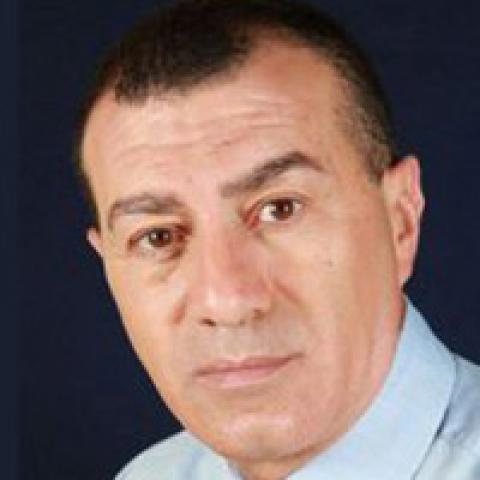
Even before the decision of a joint run, Meretz signaled that it will not have an Arab candidate in a realistic slot on its list. This direction was confirmed after the unification. Knesset member Issawi Freij had saved Meretz twice: first in April 2019, when he managed to recruit thousands of voters in Arab settlements, particularly his own town of Kafr Qassem, and again in the September 2019 election, when he pushed for the party to join forces with Ehud Barak. This time around he has been pushed to the fifth slot on Meretz’s list. More so, with the unification, he is now placed in the 11th slot — a spot that is hardly electable.
In the past, Meretz took pride in being a party known for raising the banner of Jewish-Arab partnership. This time, it came down hard on Freij in particular and the Arab voters in general. The party’s Knesset members are exhausted by all of the recent elections coming one after the other, so that today, they are fighting less for the principle of partnership than they are for their own personal survival.


