



Islamic Jihad leader's elimination serves both Netanyahu, Hamas
Hamas' silence amid the violence with Israel indicates that the rulers of Gaza are shedding no tears over the fate of assassinated Islamic Jihad leader Bahaa Abu el-Atta, and the escalation is benefitting Israel's embattled prime minister as well.
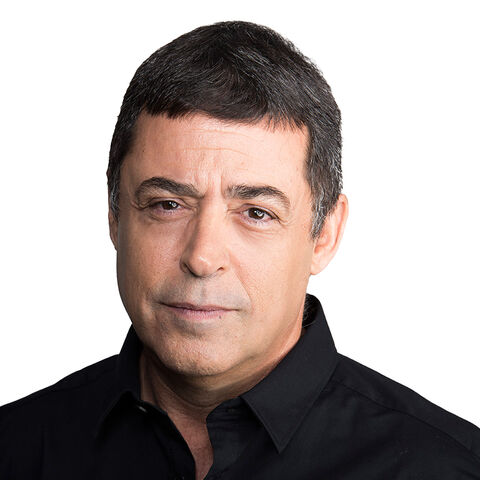

Islamic Jihad senior Bahaa Abu el-Atta is out, and Quds Force commander Qasem Soleimani is still in. They were the two highest-level troublemakers whose photographs graced the offices of Israel’s defense system. But on the morning of Nov. 12, a few hours after he was killed in Gaza, al-Ata’s picture was removed from the walls of the Defense Ministry and the prime minister’s office. Soleimani’s photo is still there.
The Israeli defense system saw both men as almost completely independent figures, uninhibited by their mother organizations. They represent a new class of independent terror generators that are not necessarily connected to any political chain of command. Abu el-Atta had stuck out his tongue at Hamas, torpedoed all efforts for an arrangement between Israel and Hamas and tried to usurp Hamas’ sovereignty in the Gaza Strip. Similarly, according to high-placed Israeli military sources, Soleimani conducts a completely independent policy in the Lebanese, Syrian and Iraqi spaces. He is not synchronized with Iranian President Hassan Rouhani and speaks only to Supreme Leader Ayatollah Ali Khamenei.
A high-ranking Israeli military source told Al-Monitor on condition of anonymity, “We aren’t fighting Iranian policy; our sights are not focused on Khamenei or Rouhani. The one we have to cope with is Qasem Soleimani, period. He’s our man, no one else.”
Under such circumstances, Israel must be strongly tempted to focus on Soleimani. But in the past, Israel saw its targeted killings backfire out when it emerged that the successor to the job was much worse than the predecessor. The best example is that of Hezbollah leader Hassan Nasrallah, who inherited the position from Abbas al-Musawi, who was killed by Israel in 1992.


