



Syrian city bans face coverings to fight crime, terror
The local council in Azaz has prohibited civilians and armed forces from wearing masks and other face coverings in an attempt to make it harder to evade identification when committing a crime.
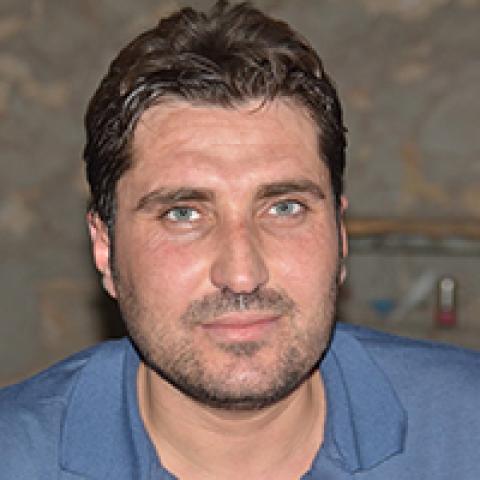

ALEPPO, Syria — Officials in Azaz, Aleppo province, recently announced a new policy designed to counter rising crime. Said Akach, media director of Azaz's local council, told Al-Monitor, “We made the decision to ban wearing masks for security reasons, because of the increasing security incidents, assassinations, crimes and thefts, not to mention car explosions, bombings and motorcycle explosions, that are targeting residential neighborhoods, crowded markets in Azaz and villages in the countryside.”
Akach further explained that the rule applies to military personnel, civilians, civil and military police, and customs and security forces in the city. The council also ordered surveillance cameras installed in official districts and on most main streets.
People covering their face with a piece of cloth or a kaffiyeh took root in Syria in the early days of the Syrian revolution in 2011, when peaceful protesters sought to hide their identity from government security forces. From there, the practice spread to the ranks of the opposition Free Syrian Army (FSA) when the rebellion entered its armed phase. Members of extremist groups, such as those who joined the Islamic State, also adopted the practice of hiding their faces.
Mohammad Kinno, an Azaz resident, told Al-Monitor, “It's a huge mistake for FSA members to wear masks because they're giving criminals the chance to hide. A masked person can do anything without fear of being identified. Criminals, agents, government-affiliated security cell members and the Kurdish People’s Protection Units are increasingly adopting this method in [the province] to hide their identity.”


