



Who cares about Israel’s polluted air?
According to environmental groups, one is more likely to die from pollution in Israel rather than by a rocket, terror attack and road accident combined.
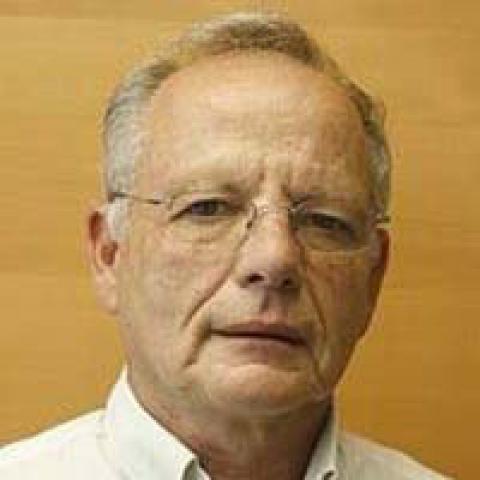

The current coalition talks that are now reaching their end were no different from previous rounds, in the sense that everyone wanted a “prestigious” portfolio — defense, justice or education. The head of the ultra-Orthodox Shas party, Aryeh Deri, was set to maintain his hold on the Interior Ministry, which is close to his heart. The ultra-Orthodox Yahadut HaTorah party demanded to retain its hold on the health portfolio. Moshe Kahlon insisted on keeping the position of finance minister. Acting Foreign Minister Yisrael Katz hoped to be a full-time foreign minister. Miri Regev sought an upgrade from the Ministry of Culture to the Ministry of Public Security. As always, the Ministry of Environmental Protection was at the bottom of the national political league. The current minister, Ze’ev Elkin, wanted to flee the office, but he crawled back after losing the Jerusalem mayoral race in October 2018.
On May 22, due to a combination of the traditional Lag b’Omer bonfires and heavy heat, the environmental issue made headlines. Newspapers reported Elkin’s call to the public to act responsibly and limit the number of bonfires, “for the sake of the environment and your health.” Deputy Health Minister Yaakov Litzman urged parents to “avoid endangering their health and that of their children by smoke, fire or exposure to environmental and health damage.” The head of the firefighting services issued a special order to curtail the extent of bonfires, and municipal inspectors increased their presence on the ground. The following day, news reports crowned the campaign a success. Pollution rose “only” a little over 11%. The Ministry of Environmental Protection was pleased with the rising public awareness of the issue and noted that a decline in pollution was recorded on Lag b’Omer in many areas of the country compared to previous years.
But what about daily awareness on the part of elected officials of environmental issues in Israel and on our planet? What is the government doing to clean up the air that Israelis breathe? According to a March 28 Globes article by the head of the Green Course environmental activist group, Mor Gilboa, figures indicate that the chances of dying of pollution in Israel are greater than the chances of dying of a rocket strike, terror attack and road accident combined. Gilboa added that some 2,500 Israelis die annually of pollution. Half of those deaths are due to polluting industries, and the other half to transportation-related pollution. Yet the government continues to allow polluting industries to operate in cities such as Haifa and Ashdod. According to official data, only three of the 35 member states of the Organization for Economic Cooperation and Development (OECD) were found to have higher concentrations of polluting particles dangerous to human health than Israel’s as of 2017: Poland, the Czech Republic and Mexico.
A May 6 report by the state comptroller attributes these shortcomings to the low fines imposed on polluters for endangering the health of the country’s residents. Most of the violations do not merit administrative or criminal enforcement and are handled, if at all, through regulation. The vast majority of the cases investigated between 2014 and June 2018 (some 77%) were closed without an indictment, and fewer than one-quarter ended in an indictment — a 1.7% rate of all the substantive violations that occurred in those years.


