



Whose side is Russia on in Libya?
The visit to Russia by Khaled al-Mishri, president of Libya's High Council of State and a former Muslim Brotherhood member, has raised speculation about Russian policy on a resolution for the Libyan conflict.
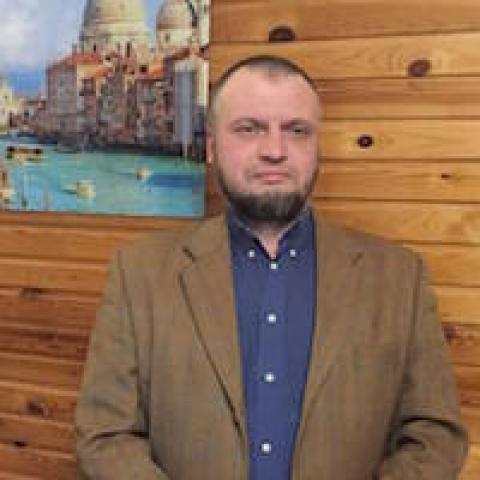

On March 17, Khaled al-Mishri, president of Libya's High Council of State (HCS), arrived in Moscow at the invitation of the Federal Council, Russia’s upper house of parliament, to discuss bilateral relations and ways to tackle Libya's ongoing political crisis. Mishri was received by Valentina Matvienko, speaker of the Russian council, and also held talks with Deputy Foreign Minister Mikhail Bogdanov, special presidential envoy for the Middle East and Africa. The Foreign Ministry issued a press release in which it cited Russia's support for a conference of all the Libyan parties under the auspice of Ghassan Salamé, the UN secretary-general's special representative for Libya.
Lev Dengov, head of the Russian Contact Group on Libya at the Foreign Ministry and the State Duma, denied an assertion in the Libya Observer that Russia is supportive only of Gen. Khalifa Hifter, leader of the so-called Libyan National Army (LNA), head of the House of Representatives (HoR) in Tobruk and a longtime adversary of Mishri. “Russia favors any side that is capable of positively impacting Libyan developments,” Dengov said. “The environment in the country is replete with numerous opposing camps. … As for us, we are working to help Libya agree on a single policy and restore peace without intervention in its internal affairs.”
The visit by Mishri, as head of the Tripoli-based body charged with advising the UN-recognized Government of National Accord (GNA), should be considered evidence of Russia maintaining a balanced policy on Libya. It was reported in Al-Monitor in October that Moscow was shifting away from a strategy of maintaining equal distance between itself and Tripoli and Tobruk and instead developing closer ties to Hifter, a Tobruk ally. This was symbolized by Hifter's visit to the Russian capital last November, during which he had discussions with Defense Minister Sergei Shoigu, in the run-up to the Palermo conference on Libya that same month. Since that time, there had been no significant meetings between Russian officials and Hifter's Tripoli-based opponents. Thus, Mishri trip to Moscow should serve to demonstrate that Moscow remains flexible in its approach to resolving the Libyan conflict.
One should bear in mind that Mishri and Hifter are longstanding opponents. The Hifter-led HoR does not recognize the HCS's authority over it despite the council's mandate to that effect under the Libyan Political Agreement. Also, throughout most of Mishri's political career, he has been a member of the Libyan Muslim Brotherhood Group and its affiliated Justice and Construction Party, while Hifter has opposed the Muslim Brotherhood and voiced his commitment to eradicating it in Libya. Mishri resigned from the Brotherhood in January, but has stated that he still respects the organization and defends its role in Libyan society. Of note, Russia has designated the Muslim Brotherhood a terrorist organization within its borders.


