



Israeli ultra-Orthodox journalists in love with Twitter
Ultra-Orthodox journalists explain that the use of Twitter opened up their world to the general Israeli society, breaking several stigmas and misunderstandings.
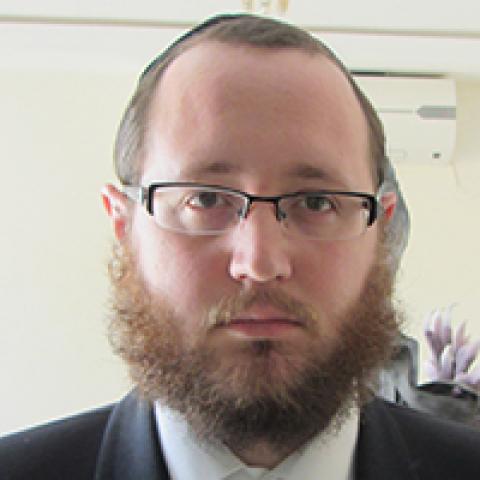

Ultra-Orthodox journalists are increasingly dominating Twitter. What started as a marginal phenomenon has become over the past year a broad one, with growth in the number of ultra-Orthodox tweeters and the number of followers among the general public. The influence of ultra-Orthodox journalists on general discourse on the popular social media platform has also grown. The phenomenon is especially prominent in the current election cycle, in the course of which ultra-Orthodox journalists and politicians have been updating, and sometimes breaking, news from the sector, but also from outside it.
Aryeh Ehrlich, editor at Mishpacha newspaper, is one of the pioneering ultra-Orthodox journalists on Twitter. He set up his account in February 2013 and has amassed more than 29,000 followers. “When I opened my [Twitter] account I was one of the first ultra-Orthodox journalists on this medium,” he told Al-Monitor. “In the beginning there were quite a few tweeters who asked me if it’s acceptable in the ultra-Orthodox community [to be on Twitter]. Today there’s nothing more natural. The deputy mayor of Jerusalem — ultra-Orthodox Yossi Daitsh — has an active Twitter account. Chairman of the ultra-Orthodox Shas Party Aryeh Deri is also an active Twitter user.”
Journalist Shimon Breitkopf, who has 11,000 followers, believes that the ultra-Orthodox presence on the social media platform shatters stigmas and myths. “Twitter has shown that the ultra-Orthodox are like everyone else,” he told Al-Monitor. “There are ridiculous people, there are brilliant people and there are those who don’t get jokes. Twitter has humanized the ultra-Orthodox, who have always been presented [in Israeli society] as a stereotype. In my opinion, this is important especially on Twitter, since it is a key medium for journalists and public opinion shapers. Those who are hurt by the phenomenon are journalists [who report] on ultra-Orthodox affairs at the main media organizations — those who flourished in the 1990s but in recent years have lost their primacy. Now you no longer have to have heroic courage to infiltrate the community as a journalist in order to document what’s happening in [Jerusalem’s ultra-Orthodox neighborhood of] Me’ah She’arim. Me’ah She’arim is on Twitter.”
“You could say that the best way to get to know the ultra-Orthodox world, relatively speaking of course, is through Twitter,” said Yerach Toker, a public relations expert with 25,000 followers and the spokesman for Knesset member Moshe Gafni [Yahadut HaTorah]. “Before the era of Twitter, there was a phenomenon of [secular] ultra-Orthodox affairs journalists. Today we hardly see this phenomenon. Even on TV talk shows where there’s a relevant topic, they bring ultra-Orthodox people and not analysts on ultra-Orthodox affairs. In my opinion, Twitter is responsible for this to some extent. The ultra-Orthodox tell about themselves in a much more authentic and reliable way, and they have their own voice. There’s no longer a need for someone to mediate them to Israeli society. Today when you want to know about the ultra-Orthodox, you just follow them on Twitter.”


