



How US sanctions intensify rent-seeking in Iran’s pharma sector
As US sanctions hit Iranian patients, it is becoming clear that the impact of the sanctions — including renewed opportunities for rent seeking — are also intensifying turf wars in the country’s pharmaceutical sector.
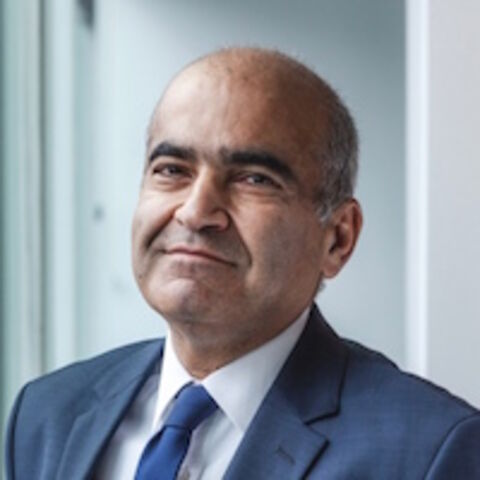

The recent resignation of Iran’s minister of health, Hassan Ghazizadeh Hashemi, led to many speculations. Officially, insufficient allocations in the next Iranian year (beginning March 21) was cited as the reason, but commentators also referred to factional infighting within the Hassan Rouhani administration as well as shifting interests as a result of renewed sanctions. One hint emerged when a video was released from the outgoing minister’s last meeting with his senior staff, in which he stated that practices such as corrupt deals, importation of low quality products and rent-seeking would clash with his personality. This statement would suggest that Ghazizadeh’s resignation was the consequence of the shifts in the industry as a result of renewed US sanctions, i.e., the fact that Iran would have to yet again start importing medicine and medical devices from Asian sources. However, there is more to this development than meets the eye. In fact, a closer analysis may indicate how sanctions, rent-seeking and politics overlap in Iran.
Before shedding light on the related statements, three facts need to be considered:
- During the last wave of harsh sanctions (2011-2015), Iran had no choice but to import low-quality medicine from Asian exporters. One of the decisions in the Rouhani government was to forbid the importation of such products in 2015, when it was clear that sanctions would be lifted under the nuclear deal. In the intense political debate on these restrictions, Mohammad Piroram, secretary-general of the syndicate of pharmaceutical manufacturers, openly referred to the “mafia structure” in the industry, especially with regard to imports.
- Though pharmaceutical exports are not subject to US sanctions, in the past banking limitations severely undermined Western medical exports to Iran. A 2013 study by business consultant Siamak Namazi, who has since been unjustly imprisoned, concluded, “Although the Iranian government deserves firm criticism for incompetence in handling the crisis, poor allocation of scarce foreign currency resources and failing to crack down on corrupt practices, the main culprit are the US and European sanctions that regulate financial transactions with Iran.”
- The key power centers in the Iranian pharmaceutical sector are the Ministry of Health and Medical Education; the Ministry of Cooperatives, Labor and Social Welfare; its subsidiary, the Social Security Organization; the Iran Health Insurance Organization (a subsidiary of the Ministry of Health and Medical Education); and a number of local manufacturing and importing companies, mainly owned by semi-state organizations. The latter group is dominated by the so-called Setad (Execution of Imam Khomeini’s Order), which owns the massive conglomerate of domestic producers under the brand Barkat. Some of the leading domestic manufacturers are also owned by the state-owned Bank Melli Iran.
According to Gholamreza Asghari, former head of the Food and Medicine Organization, the country’s pharmaceutical market is worth $20 billion. While quantitatively 96% of the needs are manufactured domestically, the value of the high-end imported products stands at about $2 billion annually. The sector is heavily subsidized on all levels and one can see the competing interests between local manufacturers, importers and exporters and also the potential for rent-seeking through corruption in licensing as well as smuggling — a phenomenon that will rise as a result of renewed US sanctions. One fact about the smuggling of medicine is its two-way nature. In other words, many of the heavily subsidized domestic products are smuggled out of Iran to neighboring countries, while foreign brands are illegally brought into the country.
In 2013, Ghazizadeh was the odd minister in Rouhani’s first-term Cabinet. He was the only minister who had no previous political position. In fact, he came from a business and academic background. In the 1990s, he founded the Noor Ophthalmology Complex in Tehran, which made him a wealthy businessman. With this background, he started reforming the health sector, focusing on financial transactions, especially the share of insurance companies in bearing the cost of health care. While this shift earned him popularity, he started making enemies within the country’s complex business networks. His so-called health evolution reform shifted many interests among industry stakeholders.


