



Iran, Russia move to expand security collaboration
Tehran sees its prospective security accord with Moscow as a stepping stone for wider bilateral cooperation.
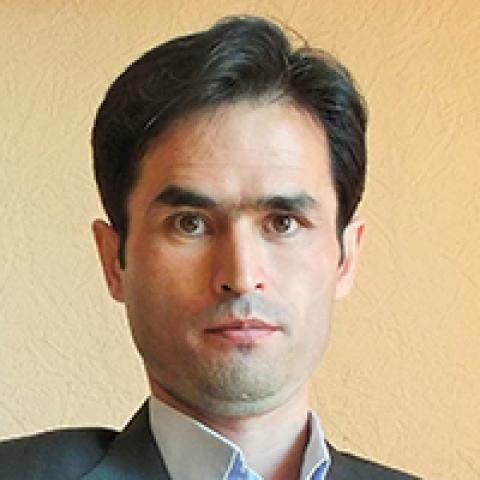

Iran's deputy interior minister for security affairs, Hossein Zolfaqari, met with Vasilii Piskarev, the chairman of the Russian Duma’s Committee on Security and Corruption Control, on Nov. 5. At the meeting, both sides stressed the need to finalize a bilateral security agreement and described cybersecurity, the fight against terrorism and countering drug proliferation and illegal immigration as key aspects of such an accord.
One of Iran’s goals in signing such an agreement is to boost its domestic security, particularly considering the threats emanating from Afghanistan, Iraq and Syria, which, to be deterred, require transnational cooperation. For Iran, to engage in security cooperation with Russia, a country that has influence in the region and shares common security concerns, can help increase the impact of its own safety measures.
Tehran and Moscow have signed several security documents in the past. Among these is a document signed in January 2013 by Iran’s then interior minister, Mostafa Mohammad Najjar, and then Russian Minister of Internal Affairs Vladimir Alexandrovich Kolokoltsev, which called for adopting joint measures to fight the proliferation of drugs and countering transnational organized crime. Given the regional and international developments since then, the new agreement is more extensive and places greater emphasis on the need to counter international terrorism.
Although there have been fewer instances of terrorism around the world following the collapse of the organizational structure of the Islamic State (IS), intelligence and analytical reports by various countries see the potential for attacks by IS as high. As a result, the desire by Tehran and Moscow to expand their security collaboration can be viewed as a response to the rising threat of narcotics and terrorism, which in recent years have found more evident transnational dimensions. Afghanistan and the Middle East are the main sources of these threats that impact the interests of Iran and Russia.


