



Voices in Hamas call for dialogue with Israel
Some prominent Hamas affiliates are publicly calling for low-level talks with Israel to end the Gaza blockade and ease the humanitarian crisis there, a move that also appears to be necessary for the movement to continue to control the enclave.
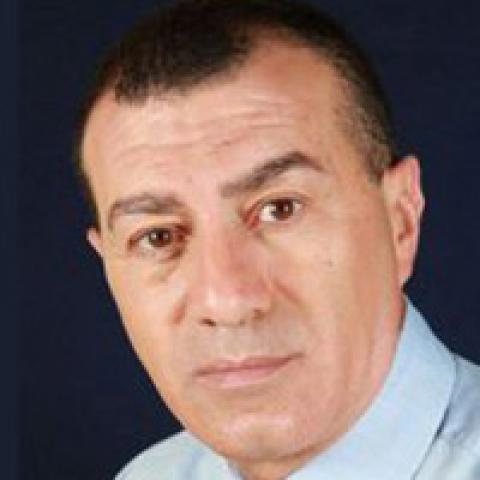

A statement by Islam Shahwan, the former spokesperson of Hamas’ Interior Ministry in Gaza, recently set off a firestorm of controversy. In a message posted on Facebook, which Shahwan has since removed, he wondered whether direct talks between representatives of his movement and the Israelis at the Erez border crossing might resolve the humanitarian crisis in Gaza. Shahwan, who no longer holds an official position but is considered a prominent Hamas activist, hinted that perhaps the time had come to think “outside the box,” as he put it. The post was shared widely, generating support from Palestinians in Gaza and the West Bank, but as was to be expected, many attacked him for even considering talks with the “Satan.”
Shahwan was obliged to respond, saying in a new post that his comments reflected his personal views and he was not giving up on the idea he had raised. “It’s time to examine whether the Gaza problem can be resolved peacefully with the enemies and whether security arrangements can be found to help prevent a humanitarian crisis,” he wrote.
While Shahwan claims he was only expressing his own opinions, this is not the first mention of possible direct talks with low-level officials of Israel’s Civil Administration, the entity tasked with implementing Israeli policy vis-a-vis Palestinian civilians. The first Hamas attempt to meet with Israeli Civil Administration officials occurred after the January 2006 Palestinian elections, when Ismail Haniyeh formed the first Hamas government in Gaza and Fatah refused to join it as a fig leaf, that is, to serve as a go-between for Hamas with Israel. Ahmed Yousef, Haniyeh’s former adviser for diplomatic affairs, and Razi Hamed, a former Hamas government spokesman and currently in charge of Gaza’s energy, headed for the Erez crossing to meet the Israelis. En route, it is unclear to this day whether on their way to the meeting or back, they came under a hail of bullets from the Izz ad-Din al-Qassam Brigades, Hamas’ armed wing. Yousef sustained light injuries to his hand and was fired along with his colleague, even though Haniyeh, as prime minister, had been apprised in advance of their meeting with the Israelis.
These two men are members of a growing faction within Hamas that understands that absent direct contacts with Israel over its 11-year blockade of Gaza, Hamas will not be able to continue ruling over Gaza’s 2 million Palestinian residents. Shahwan and his pragmatic Hamas colleagues recognize that although the mass marches along the border fence with Israel, and the incendiary kites that have blackened Israeli fields in recent weeks, have drawn international attention to the crisis, they will not be Gaza’s salvation.


