



The struggle of Egypt's transgender community
Many transgender Egyptians still run into society’s conservative wall, despite some tolerance by the younger generation.
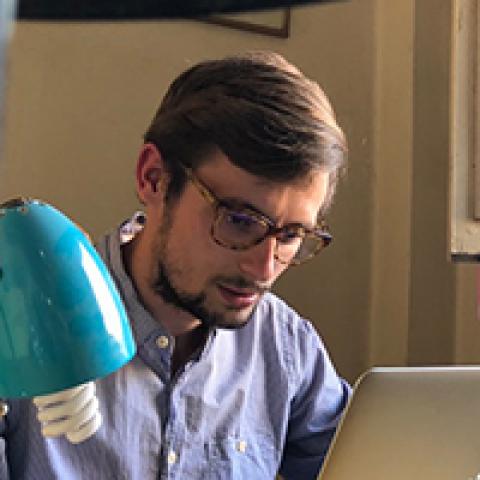

During the years he spent as a teenager in Saudi Arabia, where his father worked, Ahmed Gamal (a pseudonym used to protect his identity) recalls investing many hours studying the Holy Quran, the Fiqh (Islamic jurisprudence) and the Sunna (practices, customs and traditions of Prophet Muhammad). He was looking for answers — to see if God had only created men and women or if there was something else that escaped this duality and could explain why, since he was a kid, he systematically refused the clothing, the hairstyle and the games that girls around him devotedly reproduced. He was a male trapped in a female’s body.
When he moved back to his native Egypt, Gamal decided to talk with his father, the closest person he had, to explain to him how he was feeling. It was then, in the clinic of a renowned physician from Cairo, that both of them heard for the first time what was happening: Gamal was transgender. His gender identity did not match with his assigned sex at birth. They decided to keep it a secret and wait until he finished his studies in order to leave the country and perform gender reassignment surgery abroad.
In his last week of university, six years ago, Gamal’s father died, and with him, Gamal’s only confidant and financial support. He decided to deny his identity and go back to his earlier life to avoid economically and culturally harming his mother and sister, who knew nothing about his situation.
Gamal is just one of the many transgender Egyptians who have run into society’s conservative wall, where gender identities escaping the binary system of men and women are not understood nor tolerated. “First of all, there is a lack of knowledge. Also, people will not treat you as a normal person, and they do not know anything about the surgery,” Gamal told Al-Monitor. “The pressure of the community saying that you are weird is a bit tough,” he added, and “as happened with Mashrou’ Leila, if anyone tries to speak out for our rights, [the authorities] will catch them and send them to jail.”


