



Should Palestinians keep boycotting Jerusalem elections?
Palestinian politicians continue to pressure East Jerusalem residents to boycott the municipal elections, but voting data demonstrates an opportunity to swing political influence in the city.
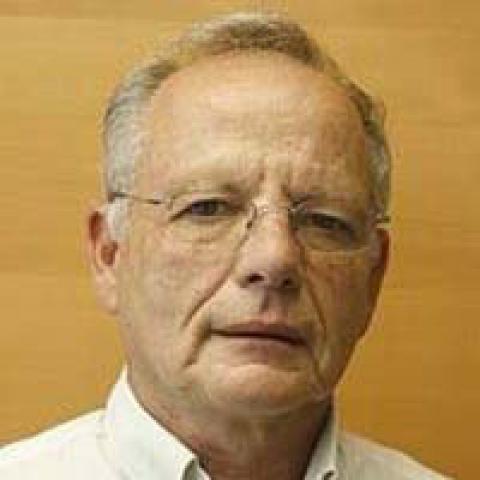

Knesset member Ahmad Tibi of the Arab Joint List party made no effort to conceal his glee at the distress of his Jewish colleagues who had a hard time digesting the population data reported by Israeli officials on March 26 indicating the loss of a Jewish majority in the area between the Jordan River and the Mediterranean. “The vision of an Arab prime minister that now appears a far-fetched idea is drawing nearer,” the veteran lawmaker declared, promising that when that happens, Israel would be “equal and democratic, not Jewish and democratic.”
But the realization of Tibi’s vision is an unlikely prospect. The prospect of a Jewish minority governing an Arab majority — in other words, apartheid — appears far more realistic than one in which an Arab majority with full civil rights rules a Jewish minority. Of the over 6 million Arabs residing between Jordan and the Mediterranean Sea, only 800,000 Israeli Arabs are eligible to vote and be elected to the Knesset.
On the other hand, the announcement this week by Jerusalem Mayor Nir Barkat that he intends to throw his hat into the national political arena and run for the Knesset makes the vision of an Arab at the helm of Israel’s capital city quite realistic. Its feasibility would depend on encouragement by the Palestinian leadership on East Jerusalem’s Palestinian residents to exercise their right to vote and influence municipal politics. According to 2015 data published by Israel’s Central Bureau of Statistics, some 325,000 Palestinian residents of “unified” Jerusalem made up more than a third of the city’s population. A significant majority are registered as permanent residents of the State of Israel and hold an Israeli identification card. However, they are not Israeli citizens; over the past 50 years, Israel has approved fewer than 5,000 applications for citizenship by East Jerusalem’s Arab residents. They are therefore not eligible to vote in Knesset elections but eligible to vote for their city’s mayor and council members and to be elected to those positions.
In local elections held in 2013, Barkat garnered approximately 111,000 votes, 51.1%, while his rival Moshe Lion, who is also running in the upcoming Oct. 30 elections, received some 95,000. In the city council balloting, the ultra-Orthodox factions won 88,000 votes; the two independent lists, that of Barkat and the Wake-up Jerusalem, won all in all 56,000 votes; and 12,000 gave their vote to a joint list of the Labor and Meretz parties.


