



How do Iran’s 'corrupt networks' operate?
The fight against corruption in Iran will remain a key challenge until new ways are devised to address this challenge.
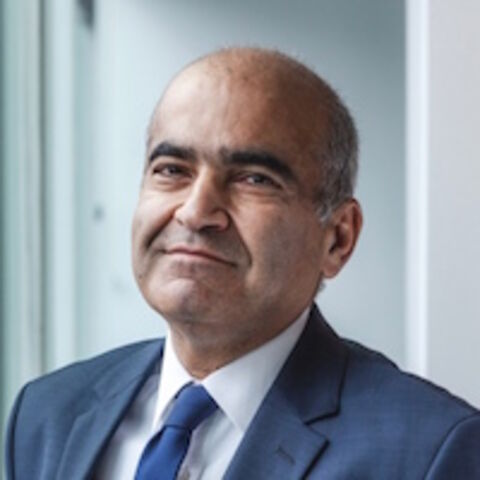

On Jan. 28, at an event celebrating 50 years of capital markets in Iran, the head of the Central Bank of Iran, Valiollah Seif, publicly stated, “The formidable power of illegal stakeholders on Iran's economy has rendered reforming the economy difficult.” These illegal stakeholders, who have also been referred to as shady interest groups, are most accurately described as “corrupt networks.”
One key question is why no Iranian government has managed to push back against these networks. Officials such as Seif only refer to “people who are addicted to free rides on the Iranian economy” without disclosing who they actually are. Occasionally, some corrupt businessmen have emerged, such as Babak Zanjani, but even in their trials, names of officials involved in the corrupt schemes in question are treated as confidential. This is a process that gives a certain degree of immunity to corrupt officials.
Recently, in light of the massive protests in Iran, there has been a greater admission by top officials that corruption has reached unprecedented levels in the country. On Feb. 8, Supreme Leader Ayatollah Ali Khamenei said, “Corruption is like the seven-headed dragon — it is difficult to eliminate, but it has to happen!” Once again, he urged all branches of power to fight this scourge.
Even Mohammad Ali Jafari, the commander in chief of the Islamic Revolutionary Guard Corps (IRGC), has pointed to corruption and poverty as the main sources of grievance against the regime. President Hassan Rouhani himself had admitted the existence of massive corruption at the beginning of his first term in 2013 and had declared corruption a “national security threat.”


