



Are days numbered for Jerusalem's Greek Orthodox patriarch?
The Greek Orthodox community in Palestine and Jordan is in open revolt against Patriarch Theophilos III over the sale of church lands to Israel and Israelis.
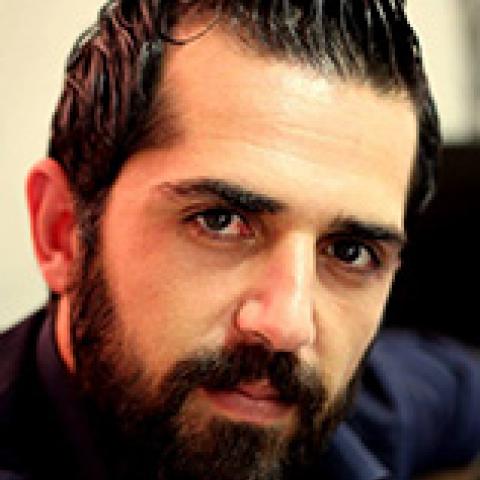

RAMALLAH, West Bank — The relationship between Patriarch Theophilos III of Jerusalem and All Palestine and the Greek Orthodox community in the Palestinian territories and Jordan is closer than ever to escalating into all-out war. Theophilos, who assumed leadership of the church in 2005, has presided over the church while a number of deals have been reached to sell or lease church property to Israel, private Israeli citizens and investors. The patriarch is responsible for the management of all church endowments as stipulated by Jordanian Law no. 27 (1958). The church owns property in the West Bank, including East Jerusalem, Gaza and in Israel. Fed-up members of the Greek Orthodox community have organized in opposition to Theophilos in an attempt to remove him and encourage Jordanian and Palestinian authorities to withdraw their recognition of him.
Haaretz reported on Oct. 13 that six dunams of land with dozens of businesses on it around the clock tower in Jaffa as well as 430 dunams in Caesarea, including large parts of the Caesarea National Park and Amphitheater and a Roman amphitheater, were sold to anonymous foreign companies. The land in Caesarea was being leased to Israel, which was not notified of the sale. This followed a deal to sell 500 dunams of land in the Talbiya and Rehavia neighborhoods in West Jerusalem. Previous deals were reached in East Jerusalem and the West Bank, including for land near the Mar Elias Monastery, in Bethlehem.
The opposition movement — spearheaded by the Arab Central Orthodox Council and Arab Orthodox Youth — received a significant boost with the participation of Palestinian and Jordanian political factions and figures in the one-day National Conference to Support the Arab-Orthodox Cause in Palestine. The more than 200 attendees confirmed their opposition to the patriarchate being represented by Theophilos and called for his dismissal and trial for his role in selling church lands. The conference, held in Bethlehem on Oct. 1, included participation by Mahmoud al-Aloul, Fatah vice president and Central Committee member; Mustafa al-Barghouti, secretary-general of the Palestinian National Initiative; Qais Abdul Karim, deputy secretary-general of the Democratic Front for the Liberation of Palestine (DFLP); and a number of leaders from the Popular Front for the Liberation of Palestine (PFLP).
The conference concluded with participants issuing 14 decisions and recommendations, including “considering the Greek Orthodox case a strategic national issue of the Palestine Liberation Organization (PLO), akin to the issues of Jerusalem and refugees” and “withdrawing the recognition of the patriarch as a first step toward removing him from his position, holding him accountable, refusing him participation in any religious ceremony and considering him and his followers outsiders to the national equation.” The conference formed a committee consisting of 17 members from Jordanian and Palestinian political factions, the Greek Orthodox Council, and the Greek Orthodox Youth Movement to follow up on conference decisions at the political, judicial and popular levels.


