



Why does Israeli Labor chief sound like Netanyahu?
The statements of Labor Party leader Avi Gabbay these last few days more so resemble the proposals by Prime Minister Benjamin Netanyahu than the peaceful principles of Zionism visionary Theodor Herzl.
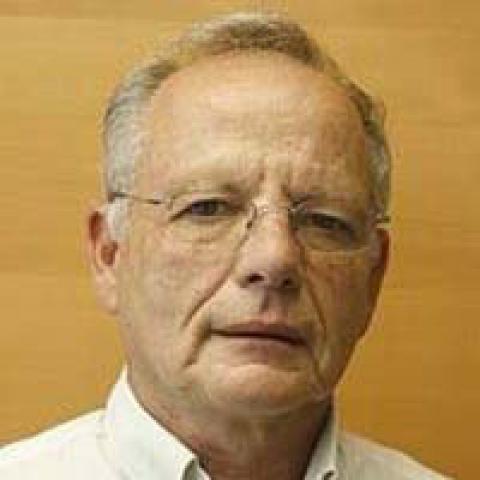

Labor Party Chairman Avi Gabbay made some controversial statements in recent days against settlement evacuation and against composing a coalition with the Joint List of predominantly Arab parties. In reaction, critics of Gabbay have dubbed him everything from “a political neophyte” to a “Trojan horse” and “a poor man’s Likudnik." What would they say if he succeeds in his bid to oust Prime Minister Benjamin Netanyahu? Would Meretz leader Zehava Gal-On and her friends in the left-wing party not drink a toast? Would supporters of the Arab Hadash Party in Israel’s Arab towns and villages not say “good riddance”? Would the Israeli peace camp not breathe a sigh of relief? To quote an old adage, you don’t argue with success. Gabbay's bitterest foes in the center-left camp would turn into his greatest fans, standing in line to reap the fruit of his labors. They would hail his initiative in veering to the right, applaud his opposition to the nuclear deal with Iran and laud his support for Israel’s withdrawal from UNESCO. When Prime Minister Gabbay saves the peace process from certain death, nongovernmental organization Peace Now will forget his courting of the West Bank settlers and his reflection that he’s “not sure there’s a Palestinian partner” for peace.
What are the prospects of such a scenario materializing? To cite the words of a popular song — "Tomorrow" — by one of Israel’s most lionized lyricists, the late Naomi Shemer, “All of this is not a fable and not a dream / It will happen tomorrow and if not tomorrow, the day after.” Speaking at an Oct. 14 event in the southern city of Beersheba, Gabbay said, "To be able to compose the next government, we need to reach some 27 seats and for [Yesh Atid leader] Yair Lapid to get 11 mandates. If we reach that and in addition the seats of Meretz and Joint List parties, we’ll get a majority-blocking bloc." And who else would he invite to join his bloc? “Anyone we want,” he said, naming the centrist Kulanu Party, the ultra-Orthodox parties, even Netanyahu’s Likud Party.
Surely, even Gabbay himself doesn’t believe he would be crowned prime minister by the likes of Likud hawks Miri Regev, Ze’ev Elkin, Yariv Levin, David Bitan, Tzipi Hotovely and David Amsalem. One can only deduce, then, that Gabbay is hinting at his willingness to share power with the Likud, ultra-Orthodox parties and Kulanu. He would not be the first to do so. Some of his predecessors as leaders of the Labor Party partnered with right-wing governments, even sitting alongside nationalists such as Defense Minister Avigdor Liberman and his Yisrael Beitenu party. Gabbay has ruled out partnership with only one party — the Joint List — saying the Zionist Camp (Labor is the major partner within the Zionist Camp) has nothing in common with this alliance that would enable collaboration in the same government. On the other hand, he failed to mention the divide between the Zionist Camp and the right-wing nationalist camp on the most critical issue — the conflict with the Palestinians. On the contrary.
More so, in a radio interview three days later, on Oct. 17, in which Gabby tried to clarify his positions, his remarks sounded very similar to Netanyahu’s credo. “I believe all of the Land of Israel is ours. After all, God promised Abraham the whole of the Land of Israel.” Gabbay does not recognize the historic affinity of the Palestinians to any part of this land and does not hope to reconcile with them. The word "peace" has disappeared from his vocabulary. “I believe that because there are 4.5 million Arabs here, we have to compromise in order for us to live in a Jewish-majority state and for them to live in their own state," he said.


