



Prominent writer unleashes controversy around sexuality in Turkey
In a recent Ted Talks presentation, Turkish writer Elif Shafak admitted being bisexual, spurring a backlash on social media.
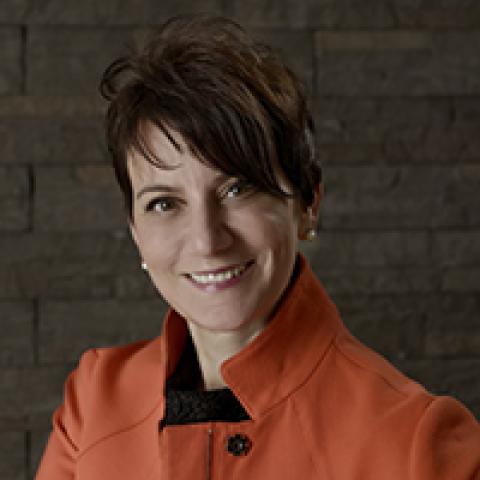

Elif Shafak, a Turkish international award-winning writer, has a steady record of courting controversy. Her novel “The Bastard of Istanbul,” in which she tackled the Armenian genocide and the deep scars it left on Turkey’s Armenians, led a public prosecutor a decade ago to launch a Kafkaesque trial against one of the characters in the novel for insulting Turks under the infamous Article 301 of the Penal Code. In “Honor,” she focused on femicide. In “The Forty Rules of Love,” arguably the most famous of the 10 novels she has written so far, she wrote about the relationship between Rumi, the 13th-century Sufi preacher/poet, and Shams of Tabriz, leaving open the question of the physical aspect of their relationship. In her latest book, “Three Daughters of Eve,” Shafak explored faith, friendship, bourgeoisie, the economic gap between the haves and have-nots, and seduction on Oxford University's campus.
Despite Shafak’s international acclaim, her relationship with the Turkish literati is one of love and hate. Although she is the undisputed queen of best-sellers, she often comes under attack because of her politics, her lifestyle, her book covers, which are alleged to be copycats of other books, and even the way she altered the spelling of her last name by changing it from Safak to Shafak so that her non-Turkish audience could pronounce it correctly.
The most recent attack against Shafak, which turned into a social media hate campaign, came following a 20-second admission during a TED Talks presentation in New York, filmed in September but released Oct. 16. Shafak started her talk, titled “The Revolutionary Power of Diverse Thought,” with the question “Can you taste words?” She proceeds talking about her favorite topics: her bittersweet feelings toward Turkey, diversity, the rejection of a “single truth” and plucking up the courage to speak up about who you are and what you believe in.
What the Turkish press and social media quote her on comes toward the end of the talk: “I have always been very vocal and written extensively about minority rights, women's rights, LGBT rights. … I have never had the courage to say in a public space that I was bisexual myself, because I so feared the slander and the stigma and the ridicule and the hatred that was sure to follow.”


