



Where do Al-Aqsa protests leave the Islamic Movement in Israel?
The Islamic Movement in Israel has tried to keep a low profile in recent weeks after three men connected to its base, Umm al-Fahm, killed two Israeli police officers, sparking deadly protests.
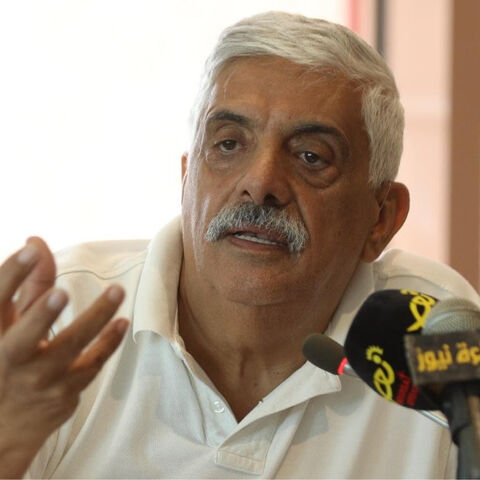

The weekslong protests surrounding Jerusalem’s Al-Aqsa Mosque have affected a variety of players connected with Islam’s third holiest site. The Islamic Movement in Israel has always been engaged, citing the need to protect the mosque. Its leader, Raed Salah, is the movement’s most prominent face and has been a vocal critic of Israeli actions at Al-Aqsa, repeatedly calling on the movement’s supporters to help protect it. As a result, he has been arrested by Israel and banned from Jerusalem on numerous occasions. Salah and his deputy, Kamal al-Khatib, were most recently detained for questioning July 11.
Umm al-Fahm, the Israeli city for which Salah served three times as mayor (in 1989, 1993 and 1997), has been in the news for the past few week as home to the three Palestinians from the Jabarin family who shot two Israeli police officers July 14 on the Haram al-Sharif, where Al-Aqsa sits. Al-Monitor spoke with people familiar with the city and the movement, who said that locals are divided about the three young men.
Mohamad Yazbak, a professor of Palestinian history at Haifa University, told Al-Monitor that the Islamic Movement has kept a “low profile” since the attack to avoid Israeli recrimination. Nevertheless, three Israeli ministers have called for Salah’s arrest.
According to Yazbak, the events at Al-Aqsa were a big boost to the Islamic Movement, especially the leader of its northern branch, Salah. He asserted, “Now Salah, whether we like it or not, he is the undisputed and highly credible leader of the Islamic Movement in Israel.”


