



Why Iran's conservatives are suddenly rooting for Rouhani's VP
First Vice President Eshaq Jahangiri’s strong performance in the first Iranian presidential debate has led conservatives to speculate about the prospect of him challenging President Hassan Rouhani. What is the real aim of this unlikely depiction?
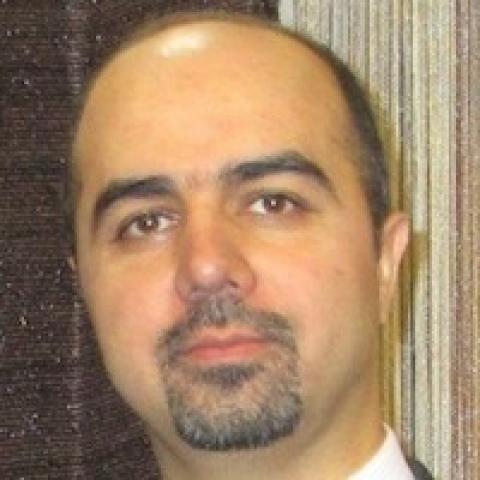

Two days after the first round of Iran’s presidential debates on April 28, an online poll indicated that First Vice President Eshaq Jahangiri attracted national attention, taking a lead over his fellow competitor, incumbent Hassan Rouhani, who is running for a second term.
Jahangiri’s booming popularity is widely attributed to his attacks against Mohammad Bagher Ghalibaf, a conservative candidate, who has been Tehran’s mayor since 2005. Ghalibaf, who is running for president for the third time in 12 years, was criticized during the debate over his management of Tehran municipality and his hard-line political approach.
According to the online poll, conducted by Tabnak news website and republished by Aftab Online on April 30, 42% of respondents believe Jahangiri took the most advantage of the debate. About 34% said Rouhani was the best, while 15% voiced support for Ghalibaf. Other candidates, including Ebrahim Raisi, the custodian of the holy shrine of the eighth Shiite Imam and believed to be favored by the supreme leader; Mostafa Mirsalim, representing the conservative Islamic Coalition Party; and Mostafa Hashemi-Taba, a marginal pro-Reform competitor got the least attention from the public, the poll showed.
During the debate, Jahangiri introduced himself as a “representative” of the Reformists, a political camp largely silenced after the disputed 2009 presidential elections. He lashed out at Ghalibaf for labeling him as a cover candidate for Rouhani. His remarks in support of the Reformists made hard-liners launch a media campaign to foist him as the main candidate of the Reformists. Hossein Shariatmadari, the managing editor of the hard-line newspaper Kayhan, claimed in an interview with Fars News Agency on April 30 that the Reformist leadership would be shifting from Rouhani to Jahangiri in the days running up to the May 19 vote.


