Will Erdogan postpone upcoming referendum?
The postponement of the constitutional referendum planned for April 16 would not be a surprising outcome.


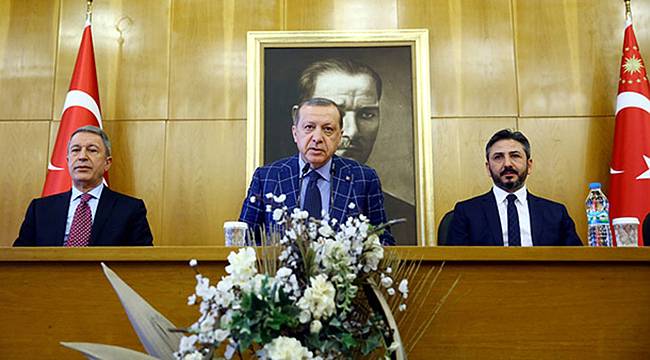
The image of President Recep Tayyip Erdogan and Chief of Staff Gen. Hulusi Akar sitting next to him is more expressive than anything else of the tremors involving the government and the military in Turkey. Dressed not in military fatigues but in an elegantly tailored civilian suit, Akar is a subservient-looking general — which has to be the case in any democratic regime, indeed — with a troubled look and a nervous expression on his face, reflecting the increasing unease in the higher echelons of power.
While the fateful date of April 16 — the day the constitutional amendments that could give Erdogan extraordinary executive powers and transform him into the "sultan president,” as many observers and his critics allege — approaches, the possibility of rejection by popular vote surprisingly increases.
This by itself is a real matter of concern for Erdogan. He has proved to be a master of winning elections over two decades, and nobody could imagine that he would gamble the biggest prize of his long and successful political career. Every precautionary measure to secure a “yes” vote on April 16 has been taken.
Turkey is moving to the polls under unprecedented waves of crackdown that saw more than 110,000 people purged, sacked or detained, with around 44,000 put behind bars, including co-chairs of the pro-Kurdish Peoples’ Democratic Party (HDP), and many prominent journalists and opinion makers in the country. Any semblance of dissent against Erdogan is under threat of being severely punished. He characterizes anybody who announces or may think of casting a “no” vote as a villain, traitor and terrorist. A state of emergency is in force and will remain in place on election day.