Gloom surrounds Rouhani’s budget for new Iranian year
Despite the relative stabilization of the Iranian economy, the Rouhani administration has no choice but to seriously address the issues in the budgeting process if it wishes to realize its goals for economic growth.


In recent decades, the budgeting process in Iran has been such that the budget’s capacity to function as the country’s most important fiscal policy document has continuously declined. In other words, budgeting has been utilized by successive administrations solely as an instrument to balance revenues and expenditures rather than setting long-term economic policies.
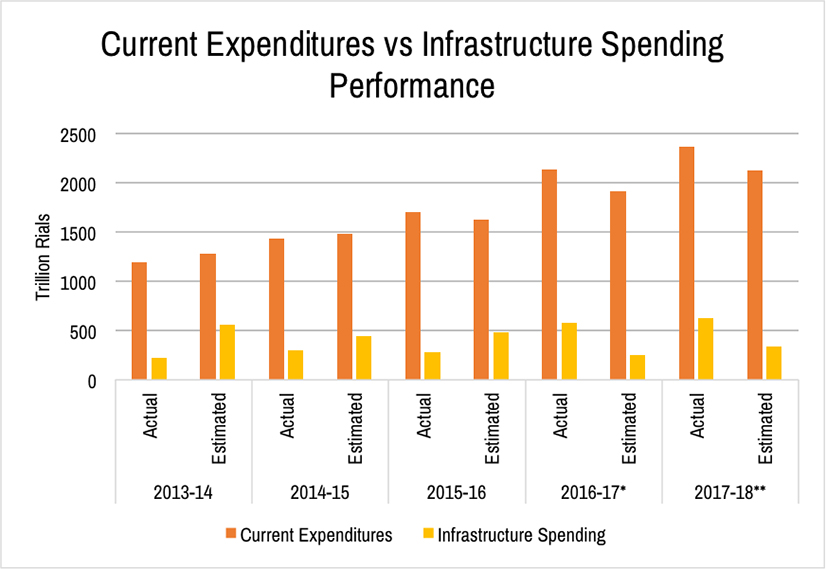
The allocation of the lion’s share of budgets to current expenditures rather than infrastructure spending greatly explains why the Iranian economy is not moving toward its sought destination. “The infrastructure programs are means of pursuing the development objectives. This is while [such programs] are always marginalized and governments only take heed of current expenditures,” leading economic daily Donya-e Eqtesad quoted Gholam Hossein Shafei, the head of Iran's Chamber of Commerce, Industries, Mines and Agriculture, as saying Jan. 18.
In the general budget law passed by parliament for the current Iranian year (beginning March 21, 2017), infrastructure expenditures stand at approximately 727 trillion rials ($22.38 billion) — or less than one-third of what is proposed for current expenditures. In this vein, it should be noted that less than 70% of the budgets earmarked for infrastructure spending were actually funded in the past 19 years, according to a study conducted by the parliamentary Research Center. Under these circumstances, hopes for a brighter economic vision for the country are reduced to a mirage.