



Palestinians need own strategy to end occupation
The disappointing Paris peace conference should convince Palestinians of the need to develop a strategy of their own and not to rely on the international community to end the Israeli occupation.

When in January 2016 French Foreign Minister Laurent Fabius announced an international conference in Paris to address the Israeli-Palestinian conflict, Palestinians were hopeful. Fabius had warned that if Israel refused to go along with the plan, France would recognize the state of Palestine. The conference called by Paris was held on Jan. 15, 2016, and attended by 70 foreign ministers from relevant countries, with the exception of those from Israel (which refused to take part) and Palestine (which was not invited after Israel's rejection). Fabius did not stay in office long enough to follow through himself, and the peace conference he announced failed to reach a breakthrough or usher in French recognition of the state of Palestine. The conference’s joint declaration merely stressed support for a two-state solution and opposition to Israeli settlements.
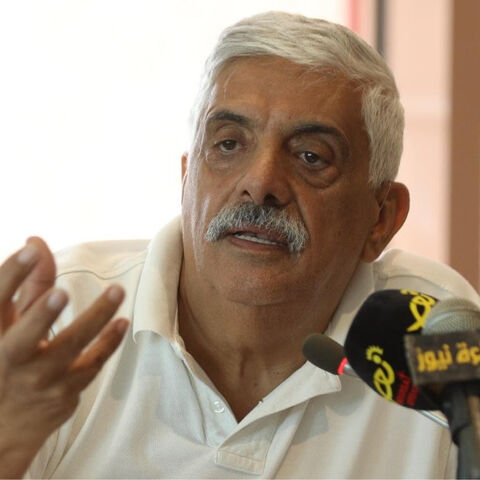
Nabil Shaath, a senior Palestinian official and former chief negotiator, told Al-Monitor that the idea of the conference, the conveyor of the plan and the conference’s conditionality seemed like the perfect forum for the Palestinians. “We supported the French plan because it came from a leading European country, included a broad international presence and it cleverly circumvented the Americans, who usually obstruct such international efforts,” Shaath said.
He also said that the Palestinians had been hopeful that if Israel rejected the conference, France would recognize Palestine, and Paris' move would be followed by 10 other European countries recognizing Palestinian statehood. Israel indeed rejected the conference idea, insisting that only direct talks can produce peace, and as of yet, no other European country has followed the example Sweden set in 2014 and recognized Palestine, based on the 1967 borders, although some national parliaments, including France's, have called on their governments to do so.
Thus, in the end, the Paris conference results were limited, and the French promise to punish Israel for not attending never materialized. Shaath said that the writing was already on the wall in May 2016, when the French prime minister visited Israel. “When Manuel Valls visited the region, he made it clear to the Israelis that France would not recognize Palestine and would not support sanctions and boycotts [against Israel],” Shaath said. Even with these promises, the Israeli government still refused to attend the Paris conference, and as Shaath noted, “France couldn’t get the EU to support even a watered-down statement because of the hesitation of Germany and the United Kingdom.”


