



Why Rafsanjani’s real lasting legacy in Iran isn’t in politics
While long considered a pillar of Iran’s post-revolutionary political establishment, Ayatollah Akbar Hashemi Rafsanjani’s most lasting legacy is more likely in higher education.
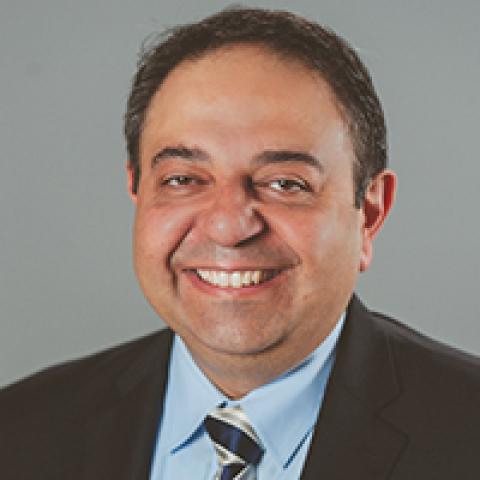

Much has been said about the political legacy of former Iranian President Akbar Hashemi Rafsanjani following his death Jan. 8 at the age of 82 from a heart attack, but his most lasting legacy will be in higher education. Ayatollah Rafsanjani was among the founders of Islamic Azad University (IAU) and served as head of its Founders' Committee, equivalent to chairman of the board, for three decades.
Iran's student population today exceeds 4.5 million, more than 5% of the population. In other words, one in every 20 Iranians is enrolled in some sort of post-secondary school diploma program. Researchers estimate that half of Iranians aged 18 to 24 are students, with 85% paying for their studies. This has created a steady revenue stream for IAU.
In addition to being an education facility, IAU, with 400 campuses, is also a major property owner. When helping to establish IAU in the 1980s as parliament speaker and Friday prayer leader in Tehran, Rafsanjani took inspiration from Iran's age-old seminaries. In one of his Friday prayer sermons, he reminded the devout, “Seminary students do not enjoy free education. They return to their towns and villages to work. When they are back in the seminary, they use their earnings to pay their tuition.” Thus, he provided the rationale tuition fees at a time when the government was unable to provide free higher education to the increasing number of students. IAU became the solution, using tuition fees to also rapidly expand.
Today, IAU dwarf's Iran’s public universities. For the fall 2016 semester, IAU enrolled 1.62 million students. It offers a wide range of majors at both the undergraduate and graduate levels, thus attracting many students but also much criticism. It has fulfilled Rafsanjani's vision of bringing higher education to every city across the country, but at the same time, many charge that its degree programs do not train professionals, but rather degree holders, who cannot be employed because they graduate without the necessary skills.


