



How political struggles are blurring Israel's national memory
Israel's love for its assassinated heroes is proving fickle, with Prime Minister Yitzhak Rabin’s legacy of peace diminishing by the year while the right builds up that of far-right tourism minister Rehavam Ze’evi.
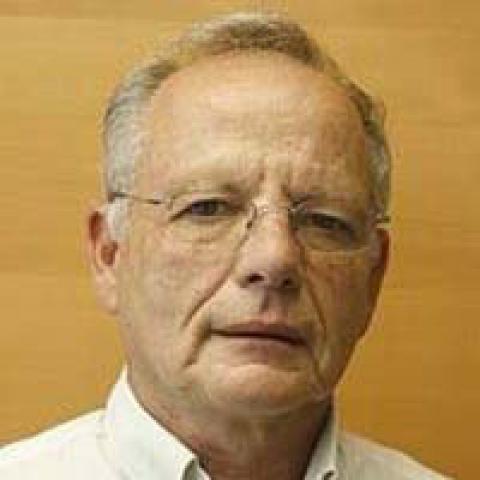

Within the space of a few days, Israel marked the 15th anniversary of the assassination of Tourism Minister Rehavam Ze’evi and the 21st anniversary of the assassination of Prime Minister Yitzhak Rabin. Both men, each a former senior military officer, have official memorial days to honor them. Both have their names on Israeli roads and city streets, and Israeli children study the legacy each left behind. But they are separated by an ideological, moral and political divide — the growing polarization tearing apart Israeli society.
Knesset members of the center-left Zionist Camp and leftist Meretz boycotted the special Knesset session memorializing Ze’evi, who was nicknamed “Gandhi.” Absent funding, the public memorial rally for Rabin held every year in Tel Aviv was canceled. “Our enemies targeted Gandhi precisely because of his ideological intensity, precisely because of his fervor, precisely because of the path he chose on this earth,” Prime Minister Benjamin Netanyahu said at the official Nov. 1 memorial ceremony on Jerusalem’s Mount Herzl. The exact same things can be said about Rabin.
Ze’evi was targeted and assassinated in 2001 by Palestinian assailants because of his ideological fervor. Central to his ideology was the idea of “transferring” Israel’s Arab citizens to Arab states. He was the equivalent of today’s Avigdor Liberman, but unlike the Soviet-born Israeli defense minister, Ze’evi was a native son, encased in the glory of a war hero and authentic patriot. His zeal was channeled into a relentless struggle against any compromise with the Palestinians. He was an ardent proponent of grabbing every piece of the biblical Land of Israel in total defiance of world opinion. Rabin was targeted and assassinated by a Jewish enemy replacing his ideological use of military force to establish and guard the State of Israel with a belief in relying on military force to protect the Jewish nature of the state and its democratic principles. In his final years he was consumed with passion for ending the bloody conflict with the state’s Arab neighbors. To do so he was willing to give up parts of the Land of Israel, and started realizing his vision of turning the Jewish state into a "light unto nations."
In the traumatic days after Rabin's assassination in November 1995, Israel's top politicians created the so-called “Rabin legacy.” Although this legacy was not made sufficiently clear, it was perceived as a type of last testament willing the completion of the peace project with the Palestinians launched with the 1993 signing of the Oslo Accord.


