



Why Palestine's 'Merry Christmas people' are not so merry
A Palestinian official caused an uproar when he described Palestinian Christians as the “Merry Christmas people.”
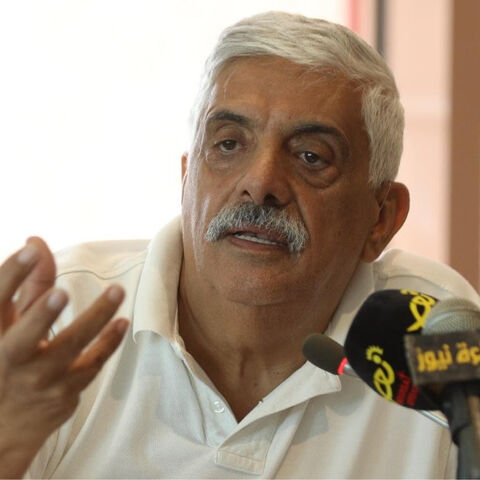

In a long interview with Egyptian ONTV Sept. 1, Jibril Rajoub, the head of the Palestinian Football Association, appeared to ridicule Palestinian Christians. Almost a week later, on Sept. 6, Rajoub insisted in an interview on Al-Quds TV that when he referred to the “Merry Christmas people,” he was merely being jovial. He claimed that he had often used the term and that no one had ever complained about it.
Many Palestinian Christians, including Atallah Hanna, a Greek Orthodox archbishop of Sebastia, weren't laughing and demanded an apology. After initially hesitating, Rajoub apologized on Palestine TV Sept. 7 after a meeting in Ramallah with Catholic bishops who accepted the apology and asked that the incident be forgotten. Regardless, the episode has left a bad taste among a Palestinian community revealed to be fragile.
The context of Rajoub's utterance was another reason it upset so many people. Talking about the 2012 municipal elections, Rajoub complained in the hour-long ONTV interview (later rebroadcast on Palestinian TV) that Palestinian Christians — or as he called them in that instance, the “Merry Christmas people” — had voted for Hamas candidates in the West Bank. The criticism was not taken lightly, with many noting that in elections, Palestinian Christians, like Palestinian Muslims, have the right to choose whomever they want and not have it used against them.
Mohammad Baraka, a former member of the Knesset and the head of the High Follow-Up Committee for Arab Citizens of Israel, had called on Rajoub to apologize Sept. 5. Baraka said that Rajoub's words, because they were rebroadcast without editing on Palestine TV, appeared to have been supported by the Palestinian government.


